




Werner Enterprises' Plans for Cummins’ 15L Hydrogen Engines
Werner Enterprises has signed a letter of intent to purchase 500 of Cummins’ 15-liter hydrogen internal combustion engines upon availability.

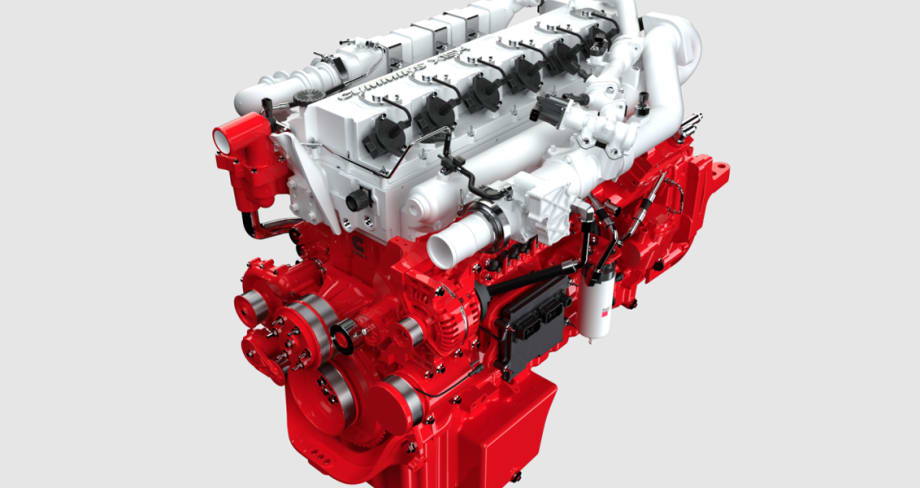
Werner intents to purchase 500 Cummins X15H engines upon availability.
Photo: Cummins
Werner Enterprises has signed a letter of intent to purchase 500 of Cummins’ 15-liter hydrogen internal combustion engines upon availability.
The two companies announced earlier this year that Werner Enterprises plans to validate and integrate Cummins’15-liter natural gas and Cummins’ X15H hydrogen engines, into their fleet.
“At Werner, we’re committed to a 55% reduction in greenhouse gas emissions by 2035 because we recognize the important role our sustainability efforts play,” said Werner Chairman, President and CEO Derek Leathers in a press release. “Our customers are showing increased interest in more sustainable choices in the marketplace, and we see significant potential in utilizing Cummins’ fuel agnostic platform to continue the momentum toward reducing our carbon footprint.”
Since announcing the fuel agnostic platform, which includes the hydrogen option in both the 15 liter and 6.7 liter displacements, Cummins has responded to customer interest globally about the potential of the platform, and hydrogen in particular.
“Our fleet customers have shown tremendous enthusiasm for hydrogen internal combustion engines, which we believe can be a breakthrough technology essential to reaching Destination Zero,” said Jim Nebergall, general manager of the Cummins hydrogen engine business. “With enough interest, we believe we can manufacture this technology at scale yet this decade providing customers with an option that is a low initial cost, extended vehicle range, powertrain installation commonality, and end user familiarity.”
Hydrogen engines offer OEMs and end-users the benefit of adaptability by continuing to use familiar mechanical drivelines with vehicle and equipment integration, Cummins officials said. This mirrors current powertrains while continuing to provide the power and capability for meeting application needs. Significant reuse of parts and components from Cummins’ existing platforms drives scale advantages on cost and is also projected to deliver reliability and durability equal to diesel.
Hydrogen engines can use zero-carbon green hydrogen fuel, produced by Cummins-manufactured electrolyzers. The projected investment in renewable hydrogen production globally will provide a growing opportunity for the deployment of hydrogen-powered fleets utilizing either Cummins fuel cell or engine power, Cummins officials said.
More Fuel Smarts

How Volvo Updated Its D13 for EPA 2027 [Watch]
Volvo’s updated D13 promises lower emissions without sacrificing performance or fuel economy. Take a closer look at what changed inside the engine in this HDT Spotlight video.
Read More →
Diesel Price Spike Shortens Payback for Natural Gas Trucks, Report Says
Energy Vision estimates fleets could recover the higher purchase price of an RNG-fueled Class 8 tractor in 1.3 to 2.8 years under current fuel-price scenarios.
Read More →
Calstart Becomes Catalyst Mobility, Reflecting Broader Focus
Calstart is now Catalyst Mobility, reflecting the nonprofit’s growing national role in clean transportation, including zero-emission trucks, infrastructure and incentive programs.
Read More →

Record Diesel Prices Squeeze Trucking Fleets
Average U.S. diesel prices have climbed to nearly $6 a gallon, surpassing the 2022 record as tight refinery capacity and Middle East disruptions keep fuel costs elevated.
Read More →
How Fuel Delivery Shapes Engine Performance
Fuel delivery depends on more than what happens at the injector. For fleet, maintenance and technical professionals, looking at the full path from pump to injector can provide useful context for understanding engine performance.
Read More →
East Coast Port Launches $45M Electric Truck Push
The Port Authority of New York and New Jersey announced millions in incentives for zero-emission drayage trucks, yard tractors, and new charging hubs near the port.
Read More →
California Bill Could Shed Light on Electric Truck Prices
Why do battery-electric Class 8 trucks remain so expensive? A California bill headed to Gov. Gavin Newsom would give fleets and state agencies more visibility into what manufacturers charge.
Read More →
Detroit Opens Orders for EPA 2027 Engines
Detroit isn’t starting from scratch to meet EPA 2027 diesel emissions standards. Its Gen 6 DD13 and DD15 engines keep much of today’s platform while updating the fuel and aftertreatment systems.
Read More →
Zero-Emission Truck Corridor Planned for West Coast
California, Oregon, Washington, British Columbia and Baja California are coordinating plans for truck charging and hydrogen fueling from Canada to Mexico.
Read More →
A Closer Look at Kenworth’s Electric T880E Vocational Truck [Video]
Learn more about Kenworth's T880E battery-electric vocational truck at the Paccar Technical Center, including its range, applications, upfitting considerations, and PTO options, in this HDT Spotlight video.
Read More →