





Dig Deeper: 10 Things to Know About Entry-Level Driver Training Rules
Entry-Level Driver Training Registry Now Available
Despite some concerns that it might not be ready by the deadline, the FMCSA's Training Provider Registry for the new entry-level driver training standards is now active.
February 8, 2022
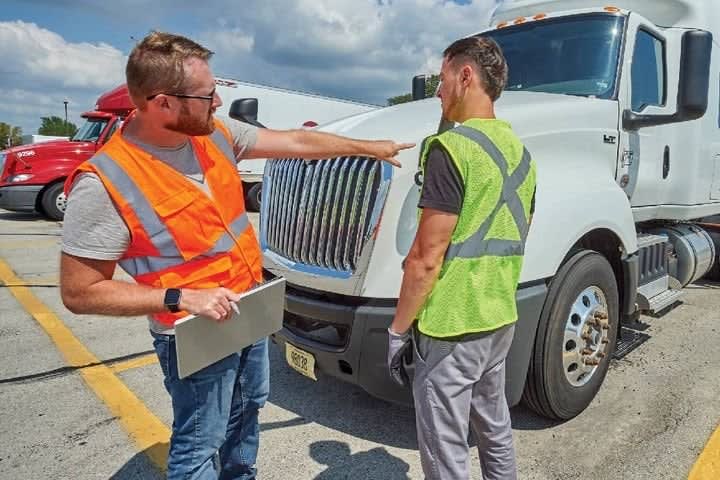
Driver trainers need to be trained on both the theory and the behind-the-wheel aspects of entry-level driver training.
File Photo: J.J. Keller
2 min to read
Despite some concerns that it might not be ready by the deadline, the Training Provider Registry for the new entry-level driver training standards is now active, according to the Federal Motor Carrier Safety Administration.
This was the final step in implementing the new entry-level driver training rules for those looking to get a commercial driver’s license (CDL) or certain endorsements.
The Training Provider Registry is an online database that aims to improve highway safety by:
maintaining the list of registered training providers that have self-certified they meet Federal training requirements; and
retaining a record of all individuals who have completed the required entry-level driver training.
As of Feb. 7, 2022, entry-level drivers subject to the entry-level driver training regulations must complete the required training from a registered training provider before obtaining a CDL or specified endorsement for the first time.
State driver licensing agencies will now use the information in the Training Provider Registry to verify that a CDL applicant has completed the required training before administering the applicable skills or knowledge test.
Individuals subject to the ELDT regulations include those applying to:
obtain a Class A or Class B CDL for the first time;
upgrade an existing Class B CDL to a Class A CDL; or
obtain a school bus (S), passenger (P), or hazardous materials (H) endorsement for the first time.
Individuals that hold a commercial learner’s permit issued before Feb. 7 are not subject to the ELDT requirements if they obtain a CDL before the learner’s permit expires. Individuals that previously held the types of licenses or endorsements listed above are not subject to EDLT regulations, even if the previously issued license or endorsement is no longer valid.
Individuals seeking to obtain entry-level driver training must search for a training provider on the Training Provider Registry.
All entities intending to provide entry level driver training, including companies, organizations, public agencies, and individuals, must visit the Training Provider Registry to register with FMCSA. Training providers can learn more about the requirements they must meet, including those related to instructor qualifications, training curricula, facilities, equipment, and state licensing, and begin registration at https://tpr.fmcsa.dot.gov/provider.
More Drivers

Truck Drivers Need More Than Another Alert
Fleets have more visibility into truck health, safety events, and driver activity than ever. The next challenge is turning all that information into useful guidance for the person who has to decide what to do next.
Read More →
FMCSA Removes 110 Truck Driver Training Schools from Certified ELDT List
Federal regulators also are targeting more than 160 additional training providers and launching a nationwide audit of third-party CDL skills testers as part of a broader crackdown on trucking fraud.
Read More →
Hours of Service Pilot Programs: FMCSA Readies for 2027 Rollout
Two pilot programs could eventually reshape hours-of-service rules, giving truck drivers options to pause their 14-hour clock or use longer split sleeper rest periods.
Read More →
Medical Cards, English Proficiency Reshape Roadcheck Violations
Medical-card violations jumped to the top of the driver out-of-service list during CVSA’s 2026 International Roadcheck, while English-language proficiency violations appeared among the leading violations for the first time.
Read More →
Driver Trust Can Make or Break the Success of Fleet Safety Technology
New Teletrac Navman research suggests that onboarding, transparency about driver data, and positive feedback can play a significant role in how commercial drivers respond to safety and coaching technology.
Read More →
EEOC Sues KLLM Over Alleged Sex Discrimination in Driver Training
KLLM is facing a federal sex-discrimination lawsuit over policies the EEOC alleges put female truck driver trainees at a disadvantage.
Read More →
FMCSA Moves to Codify English Language Requirements for Commercial Drivers
By changing regulations on English-language proficiency requirements for commercial drivers, rather than relying on a guidance memo, the FMCSA said future administrations won't be able to walk back the Trump administration's stricter enforcement with just a memo.
Read More →
Drivers Put Western Star Trucks to the Test at Star Nation Experience
Watch to get an inside look at the Western Star trucks, technology, and community behind the Star Nation Experience 2026!
Read More →
Trump Administration Looks to Put More Veterans Behind the Wheel
The Freedom Haulers program pulls together existing and expanded programs at several federal agencies to recruit veterans to drive commercial heavy-duty trucks and cut the red tape for them to get a CDL, training, and employment.
Read More →
Putting Mack’s Command Steer to the Test
A test drive of Mack’s Command Steer active steering system evaluates how it can make truck driving easier and less tiring.
Read More →