




Fate of Independent Contractors in California Has Another Day in Court
Oral arguments in front of an appeals court raise concerns that trucking’s challenge to California’s controversial AB5 independent contractor legislation could face an uphill battle.


Owner-operators protest AB5's attack on independent contractors.
Photo: California Trucking Association
Oral arguments this week in front of an appeals court raise concerns that trucking’s challenge to California’s controversial AB5 independent contractor legislation could face an uphill battle.
In January, the U.S. District Court in San Diego entered an injunction against the State of California that barred its enforcement of AB5 against motor carriers, concluding AB5 was likely preempted by federal law. The Ninth Circuit Court of Appeals is considering whether to uphold that decision.
Assembly Bill 5 was passed last fall and went into effect Jan. 1. It set up an "ABC" test for determining whether workers are employees or independent contractors, requiring that workers be regarded as employees unless they met all three “prongs” of the test. One of the requirements, the “B prong,” prohibited companies from using independent contractors unless the worker was performing work “outside the usual course of the hiring entity’s business.” Most experts believe this will largely preclude the use of owner-operator drivers by motor carriers, especially if they also use employee drivers.
The California Trucking Association and two individuals sued to enjoin AB 5, claiming that it is expressly preempted by the Federal Aviation Administration Authorization Act (FAAAA), which prohibits states from passing laws “related to a price, route, or service of any motor carrier.”
A judge agreed and issued a preliminary injunction on the eve of the law taking effect in January and reaffirmed it two weeks later.
Judge Roger Benitez, in granting that preliminary injunction, wrote, “There is little question that the state of California has encroached on Congress’ territory by eliminating motor carriers’ choice to use independent contractor drivers, a choice at the very heart of interstate trucking.”
In its appeals brief, the state of California argued that “the FAAAA preempts state and local regulation that has a significant effect on the prices, routes, or services of motor carriers. In light of this standard, this Court has held that the FAAAA does not preempt generally applicable state labor laws that protect employees, holding that such background regulations do not have the significant effect necessary for preemption… the district court ultimately made no findings on whether AB 5 has any effect on the prices, routes, or services of motor carriers, let alone whether any such effect had the requisite significance.”
Virtual Arguments
In the virtual hearing before a three-judge panel for the appeals court, lawyers for the California Trucking Association, the state attorney general's office and the International Brotherhood of Teamsters made their respective cases for their arguments in the case.
In the hearing, Deputy Attorney General Jose Zelidon-Zepeda said, “F Quad A was not intended to immunize motor carriers from all state laws.”
Transportation attorneys for the Scopelitis, Garvin, Light, Hanson & Feary legal firm shared their impressions of the hearing in an email alert:
“As in the District Court, the lawyers for the state and Teamsters could not articulate a single situation in which a motor carrier could satisfy the ABC test with respect to owner-operators,” they said. “However, questions from two of the judges suggested they thought AB5 was simply a general background labor law that is not preempted by the FAAAA. CTA’s lead counsel was quite persuasive in pointing out that while AB5 is cast as a law of general applicability, its legion of industry exceptions from the law strongly suggest it is nothing more than a law targeting certain industries (notably trucking) while exempting many others.
“The judges also questioned whether there was enough evidence in the record to support the injunction… While the firm is hopeful the Ninth Circuit will leave the injunction in place … the questioning by 2 of the 3 judges during oral argument raises some concern the court is leaning toward reversing the District Court’s order.”
The court has not given any indication as to when it will issue a ruling. No matter what it decides, it’s likely that the losing party will appeal for a re-hearing by all 12 judges on the Ninth Circuit appellate court. From there, the injunction decision could be appealed all the way to the U.S. Supreme Court.
After a decision is reached about the temporary injunction, CTA’s actual lawsuit against A.B. 5 seeking a permanent exception will be heard by the U.S. District Court in Southern California and could take a similar appeals path.
National implications
The trucking industry across the country is keeping a close eye on the case, because it has national implications.
“While presently a California issue, AB5 is really an industry issue,” said Jim Newport, president and CEO, Oklahoma Trucking Association, in announcing a $5,000 donation to CTA last month to help fund the legal battle. “Similar legislation has been attempted in some states and is likely in others. By making this contribution to the CTA’s efforts to defeat AB5, the Oklahoma Trucking Association is demonstrating that it understands the potentially widespread impact of the law, is being proactive in addressing the issue, and is willing to partner with others for the good of the industry.”
The Truckload Carriers Association joined an amicus brief in support of CTA’s lawsuit. “The decision in this case will reverberate throughout the country, and we cannot allow other states to feel empowered to pursue similar legislation in the coming years,” said Dave Heller, TCA VP of government affairs, and Kathryn Sanner, TCA manager of government affairs in an article.
“This case has vast implications for the future of the trucking industry, and we stand firm with our colleagues in California as they work to defend the livelihoods of countless professional truck drivers and small business owners.”
The Owner-Operator Independent Drivers Association, it its own amicus brief, also supported CTA, saying, “While worker misclassification is a serious issue within the motor carrier industry and many owner-operators do not realize the full benefits of the owner-operator model, AB 5 goes too far,” saying the FAAAA “does not permit the wholesale reorganization of the interstate motor carrier industry…. AB 5 will all but eliminate a common economic model for a significant component of the interstate motor carrier industry and undermine the free flow of interstate commerce upon which the FAAAA and Commerce Clause are based.”
Trucking isn’t the only group fighting AB5. The ride-share industry has been challenging it, as well. On August 10, a California court required Uber and Lyft to treat their California drivers as employees. The August 10 order held that Uber and Lyft drivers will almost certainly be found to be employees under AB5. But on August 20, the decision was stayed, and the court granted permission to Uber and Lyft to continue temporarily treating drivers as independent contractors.
“While the Uber/Lyft injunction does not concern federal preemption and the FAAAA, it does show that at least one court has taken strong steps to enforce compliance with AB-5,” said transportation law firm Taylor and Associates in an email.
More Drivers

FMCSA Removes 110 Truck Driver Training Schools from Certified ELDT List
Federal regulators also are targeting more than 160 additional training providers and launching a nationwide audit of third-party CDL skills testers as part of a broader crackdown on trucking fraud.
Read More →
Hours of Service Pilot Programs: FMCSA Readies for 2027 Rollout
Two pilot programs could eventually reshape hours-of-service rules, giving truck drivers options to pause their 14-hour clock or use longer split sleeper rest periods.
Read More →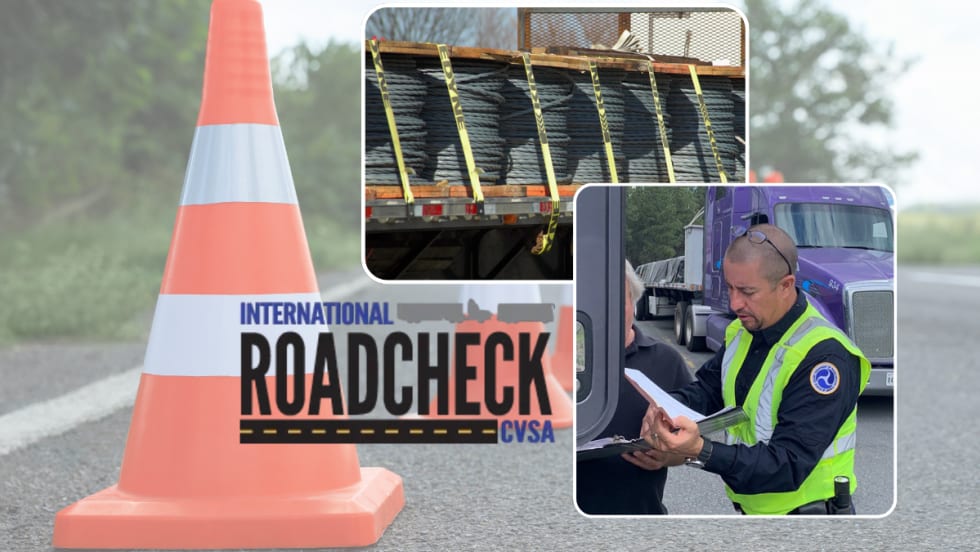
Medical Cards, English Proficiency Reshape Roadcheck Violations
Medical-card violations jumped to the top of the driver out-of-service list during CVSA’s 2026 International Roadcheck, while English-language proficiency violations appeared among the leading violations for the first time.
Read More →
Driver Trust Can Make or Break the Success of Fleet Safety Technology
New Teletrac Navman research suggests that onboarding, transparency about driver data, and positive feedback can play a significant role in how commercial drivers respond to safety and coaching technology.
Read More →
EEOC Sues KLLM Over Alleged Sex Discrimination in Driver Training
KLLM is facing a federal sex-discrimination lawsuit over policies the EEOC alleges put female truck driver trainees at a disadvantage.
Read More →
FMCSA Moves to Codify English Language Requirements for Commercial Drivers
By changing regulations on English-language proficiency requirements for commercial drivers, rather than relying on a guidance memo, the FMCSA said future administrations won't be able to walk back the Trump administration's stricter enforcement with just a memo.
Read More →
Drivers Put Western Star Trucks to the Test at Star Nation Experience
Watch to get an inside look at the Western Star trucks, technology, and community behind the Star Nation Experience 2026!
Read More →
Trump Administration Looks to Put More Veterans Behind the Wheel
The Freedom Haulers program pulls together existing and expanded programs at several federal agencies to recruit veterans to drive commercial heavy-duty trucks and cut the red tape for them to get a CDL, training, and employment.
Read More →
Putting Mack’s Command Steer to the Test
A test drive of Mack’s Command Steer active steering system evaluates how it can make truck driving easier and less tiring.
Read More →
Competition Heating Up for Truck Drivers
New report reveals rising driver hiring costs, the return of sign-on bonuses, growing AI advantages, and the operational factors shaping driver retention.
Read More →