





Related: Volvo Trucks Deploys First Pilot All-Electric VNR Truck
Volvo LIGHTS Broadens Electric Truck Charging Options
Volvo Trucks North America recently collaborated with charging connector provider REMA EV Connections to secure UL certification for its Combined Charging System CCS2 connector as part of the Volvo LIGHTS project.
August 26, 2020
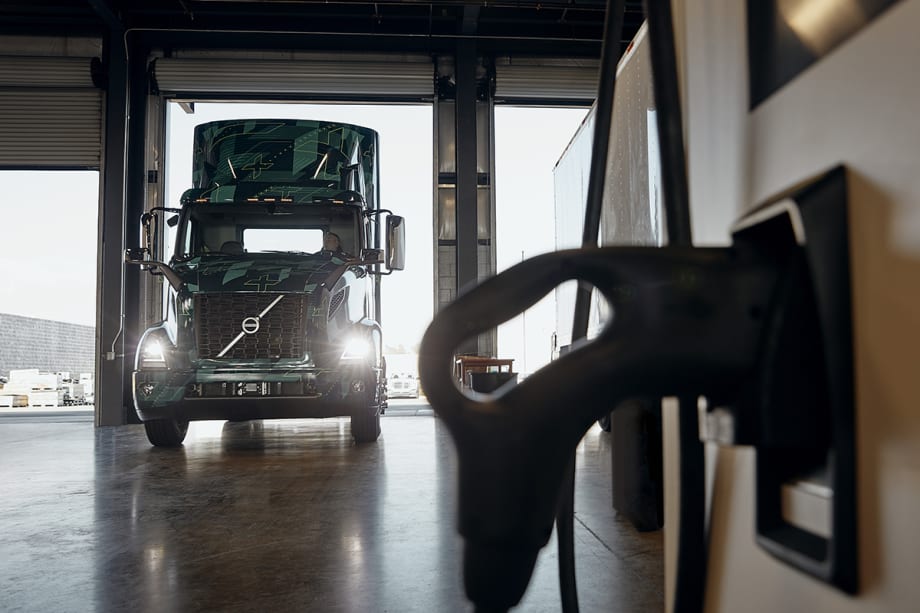
Photo: Volvo Trucks North America
2 min to read
Volvo Trucks North America recently collaborated with charging connector provider REMA EV Connections to secure UL certification for its Combined Charging System CCS2 connector as part of the Volvo LIGHTS (Low Impact Green Heavy Transport Solutions) project.
The project, which also includes the South Coast Air Quality Management District and 13 other organizations, is developing a blueprint for the introduction of battery-electric trucks and equipment into the market at scale. Based in Southern California, LIGHTS is demonstrating a range of strategies to provide flexible and cost-effective charging options to commercial fleet operators.
The CCS2 connector is new to North America, which previously utilized the CCS1 connector, unlike Europe, Australia, South America, Africa, and Asia. The certification indicates that CCS2 connectors now meet North American safety standards, enabling fleets to purchase these fast-charging systems directly from suppliers, and paves the way for utilities and other agencies to expand their list of approved charging options.
“The CCS2 UL-certification will give fleets more charging options and greater flexibility for integrating battery-electric vehicles into their fleets in a very nascent marketspace,” said Keith Brandis, vice president of partnerships and strategic solutions at Volvo Group.
The Combined Charging System combines AC and DC charging into a single port on the vehicle. The CCS1 was designed for single-phase AC charging, while the CCS2 allows for three-phase AC charging.
“This certification will continue to advance vehicle electrification in North America, paving the way for all of the electric vehicle supply equipment providers to expand their charger portfolio to meet emerging EV demands,” said Tim Rose, General Manager of REMA
ABB will be providing the charging hardware for the Volvo LIGHTS project, installing a mix of high voltage-capable public and private electric vehicle chargers that utilize the CCS2 connectors.
“Flexibility is the key to success in a dynamic industry like fleet electrification," said Bob Stojanovic, Director of EV Infrastructure for ABB North America.
Southern California Edison, another partner in the LIGHTS project, officially added the ABB CCS2 chargers to the list of approved charging equipment for its Charge Ready Transport EV charging infrastructure program for medium- and heavy-duty fleets.
The Volvo LIGHTS project was made possible by an award to South Coast AQMD of $44.8 million from CARB as part of California Climate Investments, a statewide initiative working to reduce emissions, strengthen the economy, and improve public health and the environment in disadvantaged communities.
More Fuel Smarts

How Volvo Updated Its D13 for EPA 2027 [Watch]
Volvo’s updated D13 promises lower emissions without sacrificing performance or fuel economy. Take a closer look at what changed inside the engine in this HDT Spotlight video.
Read More →
Diesel Price Spike Shortens Payback for Natural Gas Trucks, Report Says
Energy Vision estimates fleets could recover the higher purchase price of an RNG-fueled Class 8 tractor in 1.3 to 2.8 years under current fuel-price scenarios.
Read More →
Calstart Becomes Catalyst Mobility, Reflecting Broader Focus
Calstart is now Catalyst Mobility, reflecting the nonprofit’s growing national role in clean transportation, including zero-emission trucks, infrastructure and incentive programs.
Read More →

Record Diesel Prices Squeeze Trucking Fleets
Average U.S. diesel prices have climbed to nearly $6 a gallon, surpassing the 2022 record as tight refinery capacity and Middle East disruptions keep fuel costs elevated.
Read More →
Sponsored•September 9, 2026
How Fuel Delivery Shapes Engine Performance
Fuel delivery depends on more than what happens at the injector. For fleet, maintenance and technical professionals, looking at the full path from pump to injector can provide useful context for understanding engine performance.
Read More →
East Coast Port Launches $45M Electric Truck Push
The Port Authority of New York and New Jersey announced millions in incentives for zero-emission drayage trucks, yard tractors, and new charging hubs near the port.
Read More →
California Bill Could Shed Light on Electric Truck Prices
Why do battery-electric Class 8 trucks remain so expensive? A California bill headed to Gov. Gavin Newsom would give fleets and state agencies more visibility into what manufacturers charge.
Read More →
Detroit Opens Orders for EPA 2027 Engines
Detroit isn’t starting from scratch to meet EPA 2027 diesel emissions standards. Its Gen 6 DD13 and DD15 engines keep much of today’s platform while updating the fuel and aftertreatment systems.
Read More →
Zero-Emission Truck Corridor Planned for West Coast
California, Oregon, Washington, British Columbia and Baja California are coordinating plans for truck charging and hydrogen fueling from Canada to Mexico.
Read More →
A Closer Look at Kenworth’s Electric T880E Vocational Truck [Video]
Learn more about Kenworth's T880E battery-electric vocational truck at the Paccar Technical Center, including its range, applications, upfitting considerations, and PTO options, in this HDT Spotlight video.
Read More →