


 MENU
MENU SEARCHMENUSEARCH
Loading data...
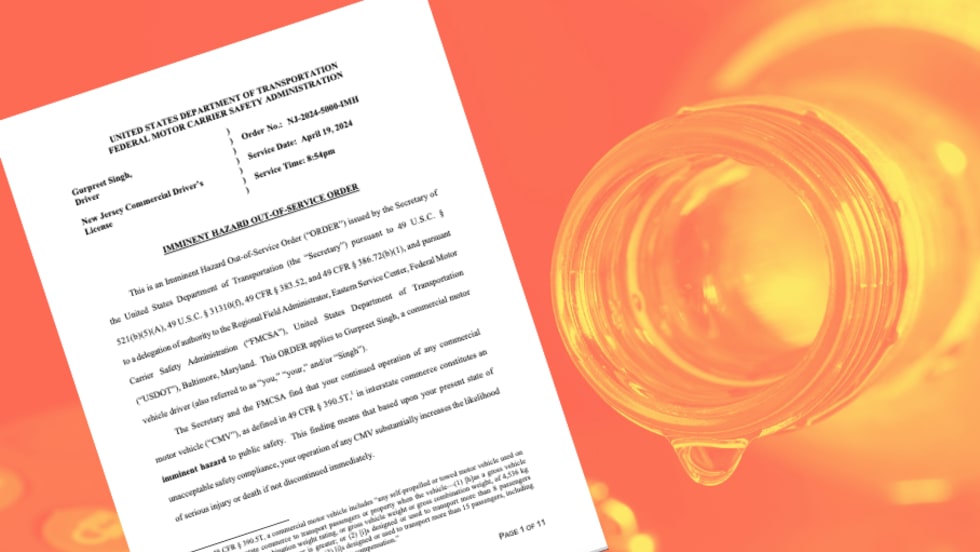
A New Jersey-licensed commercial driver has been declared an “imminent hazard” and ordered to stop operating after multiple alcohol-related safety violations came to light following a crash.
Read More →







Schneider will become the first truckload carrier to conduct a trial deployment of "lifesaving technology" developed through the Driver Alcohol Detection System for Safety Program.
Read More →The Department of Transportation has issued guidance on drug and alcohol testing for federally regulated transportation workers, as fleets and commercial drivers may face challenges complying with regulations due to the COVID-19 pandemic.
Read More →As Joe DeLorenzo, director of the Federal Motor Carrier Safety Administration’s Office of Enforcement and Compliance, sees it, there are positive reasons why all motor carriers need to be conscious of the upcoming electronic logging device mandate deadline of December 18, 2017.
Read More →The Federal Motor Carrier Safety Administration has announced that the controlled substances random testing rate for regulated motor carriers will remain at 25% for 2017.
Read More →The FMCSA declared a Tennessee-licensed driver to be an imminent hazard to public safety after reckless driving behavior, related to alcohol consumption, led to two deaths.
Read More →When a motor carrier receives an inquiry into a current or former driver’s drug and alcohol testing history, what specifically is the company required to release?
Read More →The FMCSA declared driver Robert Lee Turner an imminent hazard after he struck an officer at the Port of Savannah and was subsequently charged with driving while under the influence.
Read More →The Federal Motor Carrier Administration has begun notifying select truck and bus companies to submit drug and alcohol testing program results for its annual survey.
Read More →Bipartisan legislation was introduced in Congress today that would allow the Department of Transportation to recognize hair testing as an alternative option to give companies greater flexibility when conducting drug and alcohol testing.
Read More →