




What To Do If You Get an Unsatisfactory Rating
Starting Nov. 20, an unsatisfactory safety rating — for any carrier — can automatically put that carrier out of business. This is a significant change that makes it more important than ever for fleet managers to
Starting Nov. 20, an unsatisfactory safety rating — for any carrier — can automatically put that carrier out of business. This is a significant change that makes it more important than ever for fleet managers to understand the ratings system and the appeals process.
Under the old rules, an unsatisfactory rating could only put hazardous materials haulers and bus companies out of business -- at least technically speaking.
Once notified of the Federal Motor Carrier Safety Administration’s intent to assign the rating, carriers had 45 days to appeal and/or correct deficiencies. After 45 days the rating became final and the carrier was prohibited from hauling hazmat, more than 15 passengers, or government freight. Nothing in the rules said an “unsatisfactory” carrier couldn’t haul other types of freight, as long as it could find insurance companies and customers willing to take the risk.
The new rules, mandated by Congress, retain the 45 day deadline and prohibitions for bus companies and hazmat carriers. They also add new prohibitions for other carriers, giving them 60 days to appeal a proposed unsatisfactory rating before being ordered out of service.
Safety ratings are issued after a compliance review (CR). In most cases the investigator conducting the audit will informally advise the carrier of the proposed rating at the conclusion of the review. If the CR is a follow-up, the investigator will extend this courtesy only if the rating is something other than unsatisfactory. This informal advice should be relatively detailed, thus permitting the company to immediately take corrective actions.
Official notification of the proposed rating will come by letter from FMCSA headquarters.
The 45- or 60-day period begins on the date the official notice is issued.
It’s important to remember that the letter from FMCSA is only a notice of proposed rating. A final rating isn’t assigned, or made public, until the statutory deadline has run out. If necessary corrections aren’t made within the 45- or 60-day deadline, the carrier will receive a formal order to cease and desist.
The new regulations provide two possible responses to a proposed unsatisfactory rating. The first is to request an administrative review based upon a challenge to the investigator’s preliminary findings of fact.
As a practical matter, this approach is not likely to resolve the situation within the allowable time frame. The FMCSA administrator is likely to uphold the findings made by the investigator, which means the matter must then go before an administrative law judge. There is no chance that a hearing can be held and an ALJ decision rendered within the 60-day time frame. This does not mean that a carrier shouldn’t challenge an investigator’s findings. It simply means that you shouldn’t count on this approach to avoid a shutdown of operations.
The second response to a proposed unsatisfactory rating is to request a follow-up CR based on corrective actions taken. This is probably the best way to avoid or delay the final assignment of an unsatisfactory rating. FMCSA has said it is willing to work with carriers in avoiding that prospect. In fact, the regulations give the agency authority to extend a final decision for another 60 days if it determines that a motor carrier is making a good-faith effort to improve its safety fitness.
You might even be able to exercise both response options. FMCSA’s discussion of the new rules indicates that a carrier may pursue a request for administrative review and a request for a follow-up compliance review at the same time.
Requests for administrative review must be submitted within 15 days from the date of the written notice. The request must be addressed to the Chief Safety Officer at FMCSA and must include a list of all factual and procedural issues in dispute plus any information or documents that support the carrier’s argument.
A request for a follow-up review must also be submitted within 15 days.
Under the regulations, FMCSA promises to perform these requested follow-up reviews within 30 days for hazmat haulers and within 45 days for all other carriers. This time frame requires the agency to complete its action upon the follow up review within the statutory time limits before the unsatisfactory rating becomes final.
The new rules appeared August 22, 2000, in the Federal Register, which can be accessed on the Internet at www.nara.gov/fedreg. Regulations covering safety fitness procedures and ratings are found in Part 385 of the Federal Motor Carrier Safety Regulations, available at the FMCSA web site, www.mcs.dot.gov.
More Drivers
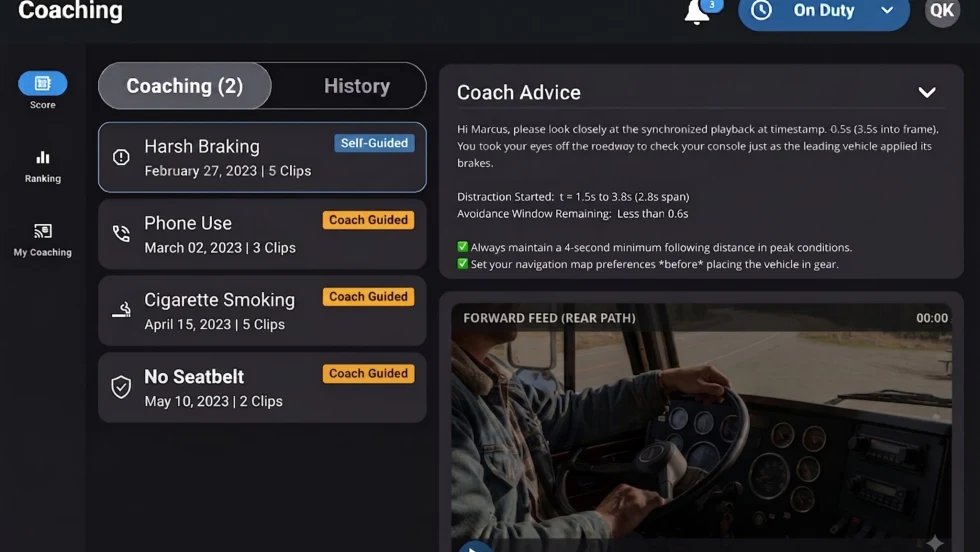
Platform Science Adds Dispatch and Safety Tools
Four additions to PS Fleet help fleets monitor loads, manage driver coaching, share truck locations and adjust video system settings.
Read More →
When Language Stops the Truck: The Return of ELP Out-of-Service Orders
English language proficiency rules for commercial drivers aren’t new, but renewed out-of-service enforcement has raised the stakes. Here’s what carriers need to know before a driver reaches a roadside inspection.
Read More →
Samsara Launches Custom AI Agent Builder
Agent Studio lets fleets create AI tools for hours-of-service monitoring, reporting and driver support, including agents that communicate by phone.
Read More →
Trucker Path Expands Reserved Parking Network
Trucker Path has added close to 6,000 more truck parking spaces to its Trucker Path Reserved Parking Network with the addition of Safe Truck Parking.
Read More →
EEOC Sues Texas Trucking Company Over Driver Age Limits
The agency says Trancasa USA rejected applicants over 65 and applied tougher driving-record standards to those over 60.
Read More →
Nussbaum, Roehl Announce Second Driver Pay Increase This Year
This year has seen a swath of major truck driver pay increases as freight capacity has tightened.
Read More →
From One Generation to the Next: How Mentorship Builds Safer Truck Drivers
After three decades in trucking, Harold Perry shares what he's learned about driver safety, mentorship, and helping the next generation build confidence behind the wheel.
Read More →
Truck Drivers Need More Than Another Alert
Fleets have more visibility into truck health, safety events, and driver activity than ever. The next challenge is turning all that information into useful guidance for the person who has to decide what to do next.
Read More →
FMCSA Removes 110 Truck Driver Training Schools from Certified ELDT List
Federal regulators also are targeting more than 160 additional training providers and launching a nationwide audit of third-party CDL skills testers as part of a broader crackdown on trucking fraud.
Read More →
Hours of Service Pilot Programs: FMCSA Readies for 2027 Rollout
Two pilot programs could eventually reshape hours-of-service rules, giving truck drivers options to pause their 14-hour clock or use longer split sleeper rest periods.
Read More →