




Weight-Distance Tax Proposal Still Alive
A proposed national weight-distance tax on trucks did not make it into the tax package Congress has been debating this summer -- but that does not mean it will go away. In fact, it is going to be around for a while and it is going to be hard to ignore
A proposed national weight-distance tax on trucks did not make it into the tax package Congress has been debating this summer -- but that does not mean it will go away. In fact, it is going to be around for a while and it is going to be hard to ignore.
The bill, introduced last May by Sen. John Chafee, R-RI, offers a trade-off calculated to get your attention. Here's the deal: You don't have to pay the 12% excise tax on new trucks, the tire tax or the Heavy Vehicle Use Tax. Plus, the diesel tax drops from 24.3 cents to 18.3 cents, the same as gasoline, and you get a credit for mileage on toll roads.
In return, you pay taxes based on axle weight and mileage -- as they go up, your tax goes up. For a typical five-axle combination registered at 80,000 pounds, the weight-distance tax becomes higher than current fees when the truck goes over 100,000 miles.
The overall tax burden on the trucking industry would remain the same, about $11 billion a year. Chafee says light and medium trucks -- almost 6 million of them -- would pay less than they do now, while 1.5 million heavier trucks would pay more.
His point: Under the current tax scheme, heavy trucks don't pay for the wear-and-tear they give the highway. He cites a study by the Department of Transportation that says combination trucks under 50,000 pounds pay 1.5 times their share, while those between 80,000 and 100,000 pay only half their share.
On its face, the bill probably sounds pretty good to some truckers.
Owner-operators, for example, are intrigued. Todd Spencer, executive vice president of the Owner-Operator Independent Drivers Assn., said his members are officially opposed to weight-distance taxes -- but they want to know if what Chafee is proposing would help them out. OOIDA has put the Chafee bill on its agenda for discussion, Spencer said.
According to Dan Corbett, lead staffer on the issue for the Senate Environment and Public Works Committee, it would not be hard for truckers to collect the information. Interstate truckers already count miles for fuel tax reciprocity, and intrastate truckers would have to file quarterly mileage reports. Weight would be determined by the truck's registration -- and the tax rate is based on statistical averages that account for the differences between registered weight and actual weight.
But many truckers will be hard to convince. The industry has been fighting state weight-distance taxes for decades, and it has a gut-level distrust of the collection method. The American Trucking Assns.' policy is simple: Highway taxes must apply equally to all kinds of trucks, they must use measures that are easy to verify, they must be hard to evade, and they must be simple and inexpensive to administer.
Weight-distance taxes don't pass the test, the association says. It told Congress's Joint Committee on Taxation that Chafee's bill would cost at least $240 to $300 million a year to administer. It would take up to 1,000 new IRS auditors to verify mileage reports, and an additional 3,700 IRS employees to handle the extra work.
Evasion, the great weakness of weight-distance taxes, would cost Highway Trust Fund from $1 to $1.75 billion a year, ATA said.
More Drivers

Trump Administration Looks to Put More Veterans Behind the Wheel
The Freedom Haulers program pulls together existing and expanded programs at several federal agencies to recruit veterans to drive commercial heavy-duty trucks and cut the red tape for them to get a CDL, training, and employment.
Read More →
Putting Mack’s Command Steer to the Test
A test drive of Mack’s Command Steer active steering system evaluates how it can make truck driving easier and less tiring.
Read More →
Competition Heating Up for Truck Drivers
New report reveals rising driver hiring costs, the return of sign-on bonuses, growing AI advantages, and the operational factors shaping driver retention.
Read More →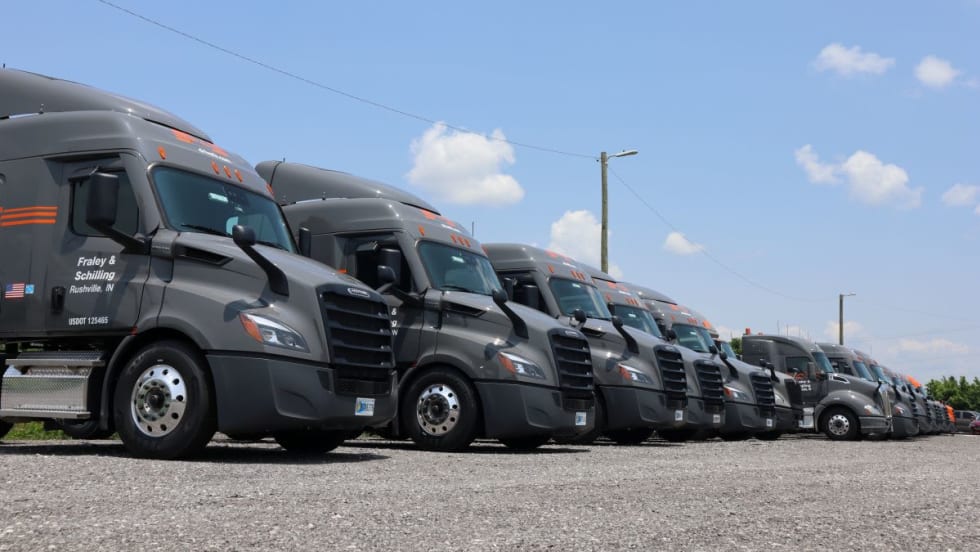
How Fraley & Schilling Improved Logbook Compliance by Over 50%
Fraley & Schilling needed a way to close a compliance workflow gap in its ELD system without adding more work from driver training, reminders, and back-office follow-ups. It found the answer in a custom driver app.
Read More →
Volvo Goes Gaming
Volvo has roared into American Truck Simulator with two new flagship trucks.
Read More →
What the Best Fleets to Drive For Teach About Driver Retention
Survey fatigue, AI-powered routing, owner-operator expectations, and the decline of social media all emerged as themes from this year's Best Fleets to Drive For program.
Read More →
Driver Retention Lessons From the Best Fleets to Drive For
What separates trucking's best workplaces from the rest? Jane Jazrawy shares the biggest lessons from this year's Best Fleets to Drive For program on driver retention, communication, AI, and workforce trends on the HDT Talks Trucking podcast.
Read More →
Farewell, CDL: Why I'm Giving Up My Commercial Driver's License
After more than 20 years as a CDL holder, HDT Executive Editor Jack Roberts is letting his commercial license expire. Not because he wants to — but because trucking's nuclear verdict crisis has made the risks of public-road test drives too great for editors, manufacturers, and everyone involved.
Read More →
How Top Trucking Fleets Improve Driver Retention [Video]
What do healthy snacks, optimized routing, and just picking up the phone have in common? They're all strategies the Best Fleets to Drive For are using to retain truck drivers.
Read More →
Trucker Path Adds Verisk CargoNet Theft Data to Navigation Platform
Trucker Path’s new cargo theft risk overlays give drivers and fleets visibility into high-risk areas, stolen commodity trends, and theft hotspots.
Read More →