




Waymo Begins Autonomous Mapping Runs in New Mexico and Texas
Waymo has begun carrying out interstate mapping operations by a fleet of minivans in New Mexico and Texas – a move that is seen by many tech observers as a prelude to long-haul evaluation runs of tractor-trailers under autonomous control.

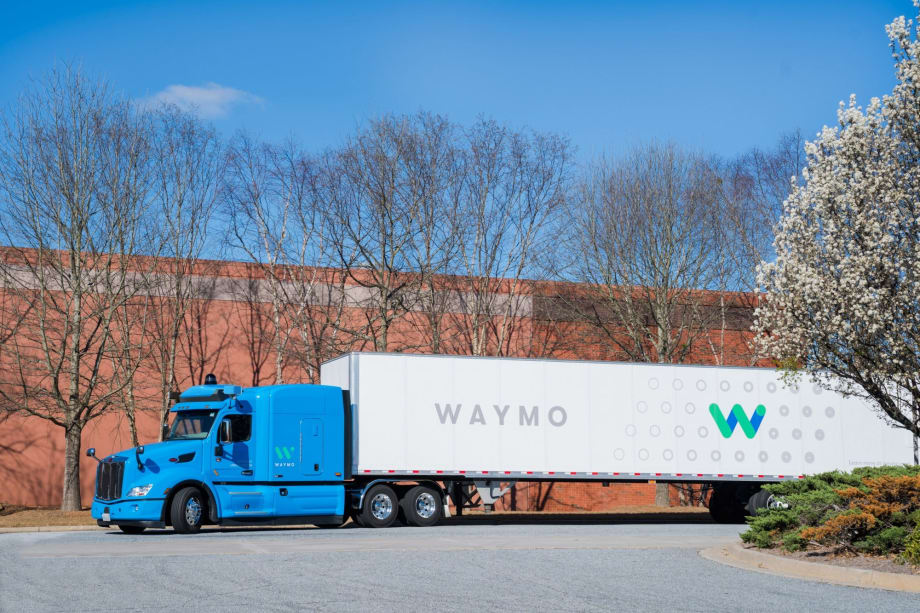
Waymo has begun mapping operations in New Mexico and Texas as a prelude to autonomous Class 8 truck testing in those states.
Photo: Waymo
Waymo, the autonomous car and truck technology division of Google’s parent company, Alphabet, has begun mapping interstate highways in New Mexico and Texas. The move is seen by many tech observers as a prelude to long-haul evaluation runs of tractor-trailers under autonomous control systems.
According to reports in various news outlets, including USA Today, the mapping operations are being carried out by a fleet of minivans, which will soon be followed by Class 8 trucks. The minivans are currently mapping sections of Interstates 10, 20 and 45, including metropolitan areas such as Dallas, El Paso and Houston.
In a statement to HDT, Alexis Georgeson, corporate and policy communications officer for Waymo, said, “We’ve tested our self-driving vehicles in a wide variety of cities and environments, and this week, we’ll start driving our Chrysler Pacifica minivans and long-haul trucks in Texas and parts of New Mexico. We’ll be driving along many of the interstates, like I-10, I-20, and I-45, mapping the interesting and promising commercial route between the states and exploring how our tech might be able to create new transportation solutions. Texas has high freight volume and is a favorable environment for deploying AVs and is therefore very interesting to Waymo for future operations.”
Looking specifically at trucking operations and autonomous technology, Georgeson noted that to date, the company has logged over 20 million miles on public roads with vehicles under autonomous control. Those trips include runs through more than 25 major U.S. cities and include four generations of the technology on passenger vehicles, as well as Class 8 truck testing, which began in 2017, in a wide range of environments from California, to Georgia and Arizona. Additionally, Georgeson said, the company has logged another 10 billion miles in autonomous simulation runs.
As the technology is evaluated and refined, Georgeson said, Waymo's autonomous system will be capable of deployment across a number of different commercial applications, from ride-hailing to trucking and logistics, to delivery, to public transportation.
“Our trucks use the same suite of custom-built sensors (configured differently), benefit from the same advanced self-driving software as our vehicles, and leverage the millions of miles we’ve already self-driven on public roads, plus the billions of miles we’ve driven in simulation,” Georgeson added. “Our trucks test every day on the freeways in the areas in which we already operate with our fleet of Chrysler Pacificas (in Arizona and California) to gain meaningful experience in all different types of situations. We have the benefit of building off of our drivers' 20 million miles of experience on public roads and continue to learn more about tackling challenges as they relate specifically to trucking.”
Looking specifically at its current mapping operations, Georgeson told HDT that the Chrysler Pacifica minivans being used are the same vehicles the company uses its public ride-hailing service, Waymo One, to map Texas and New Mexico for our trucks.
The mapping process begins by driving Waymo vehicles on public roads and collecting information with sensor array. “Next, we take that information and clean it up and add salient information to it, features such as crosswalks, road edges, curb heights, boundary paint, intersections, etc.,” Georgeson said. “Then we put our newly created map through quality control testing to ensure there are no errors. And lastly, we test our map on our vehicles. This process is the same no matter where we go, and is also the same process we follow when updating our maps.”
Georgeson noted that these are not “normal” maps in the way that most people think of them. “The things that our cars care about are quite different than someone trying to find their way to a restaurant via Google Maps or Waze,” she said. "For example, it’s far more important for us to know the speed limit of the road than the name of it. However, a human needs the name in order to navigate to their destination correctly. Our maps provide our vehicles with the base information they need to safely and smoothly navigate the world. Maps explain what the world looks like without other cars, pedestrians, or objects on the road and give our cars a baseline of understanding and orientation to build from in every location where we drive. Once our maps are ready to go and installed onboard our vehicle, our system can then focus on the parts of the environment that change dynamically around it, such as other road users.”
Waymo has not given any indication of its further plans for autonomous truck testing or development, but noted in its press statement that its work is important due to the fact that according to the American Trucking Associations, trucks carry 70% of U.S. domestic freight by tonnage – a figure that rose 3.3% last year, for the 10th annual increase in a row. Plus, the company said, long-haul trucking involves interstates that represent a less complicated environment for self-driving, which eases real-world testing and implementation.
More Equipment

How Volvo Updated Its D13 for EPA 2027 [Watch]
Volvo’s updated D13 promises lower emissions without sacrificing performance or fuel economy. Take a closer look at what changed inside the engine in this HDT Spotlight video.
Read More →
Michelin Tire Improves Efficiency and Durability for Regional Fleets
The Michelin X Multi Energy D2 is a regional haul drive tire engineered to help fleets improve fuel efficiency, durability and traction in demanding stop-and-go operations.
Read More →
ZF Expands Commercial Vehicle Push in North America
ZF is expanding its North American commercial-vehicle presence with new transmission applications, electrification, trailer technology and autonomous-driving systems.
Read More →
Tesla Wants a Self-Driving Semi. Are Cameras Enough?
Could Tesla’s camera-only autonomous driving technology work on an 80,000-pound Semi? In this commentary, HDT's Deborah Lockridge takes a look at Tesla, Cybercab, and how autonomous trucks see the road.
Read More →
Kodiak: Driverless Long-Haul Truck Launch on Track for 2026
Kodiak AI says its driverless long-haul safety case is 93% complete and it remains on track to begin commercial operations by year-end 2026.
Read More →
What DOT’s Automated Vehicle Strategy Means for Trucking
The U.S. Department of Transportation issued a new automated-vehicle strategy that outlines plans for driverless-truck regulations, cross-state freight corridors, and federal safety standards.
Read More →
East Coast Port Launches $45M Electric Truck Push
The Port Authority of New York and New Jersey announced millions in incentives for zero-emission drayage trucks, yard tractors, and new charging hubs near the port.
Read More →
PlusAI Going Public to Fund Autonomous Truck Launch
A SPAC deal could provide PlusAI with up to $300 million as it works toward a 2027 commercial launch of factory-built autonomous trucks.
Read More →
NHTSA Moves to Rewrite Truck Fuel-Economy Rules
The National Highway Traffic Safety Administration says it lacks authority to regulate medium- and heavy-duty truck engines separately from complete vehicles, but the existing standards have not yet been eliminated.
Read More →
Detroit Opens Orders for EPA 2027 Engines
Detroit isn’t starting from scratch to meet EPA 2027 diesel emissions standards. Its Gen 6 DD13 and DD15 engines keep much of today’s platform while updating the fuel and aftertreatment systems.
Read More →