




Vnomics Announces Improved Fuel Scoring Model
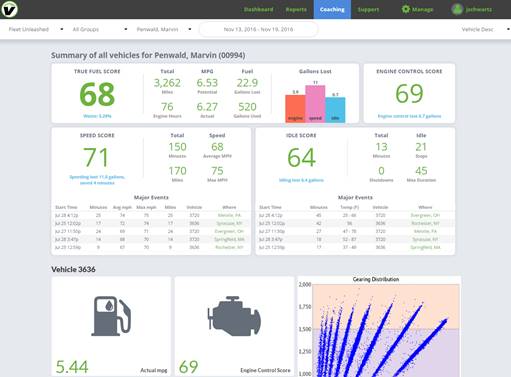
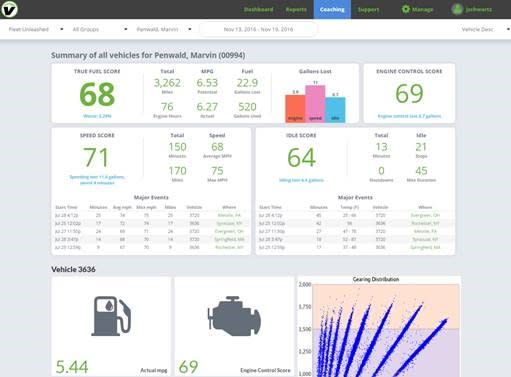
Vnomics' new driver scoring model for True Fuel, its stand-alone, fuel optimization solution, is designed to give drivers a score tailored to actual driving conditions.
Screenshot via Vnomics
Screenshot via Vnomics
Vnomics is releasing a new driver scoring model for True Fuel, its stand-alone, fuel optimization solution.
The new scoring model is called True Fuel Score and it includes distinct, normalized assessments of driver fuel efficiency in three key areas, engine control, speeding, and idling as well as a blended overall True Fuel score. It is designed to give drivers a fairer score, based on the types of real-world driving and driving conditions they encounter.
The True Fuel Score gives users a composite rating of the three highest fuel wasting behaviors, combining the idling and speeding scores with the current Vnomics engine control score. Drivers are scored only on what they can control, according to Vnomics.
For example, a highway driver has fewer opportunities to idle, whereas a city pickup and delivery driver has fewer opportunities to speed, so the new Vnomics scoring model does not lump them together into the comparisons, and those two groups of drivers are not benchmarked against each other.
In the case of highway drivers, True Fuel Score looks at how much opportunity they had to speed and compare that to the number of times they were actually speeding along with the severity of the event. On a two hour trip, for example, if a driver went a few miles per hour over the limit a couple of times, the event will be logged. But now, that data will also be compared against fuel consumed during that timeframe. If the speeding event took place while descending a hill, for example, fuel consumption drops accordingly. Vnomics can see where the event occurred on Google maps and see that the driver was on a hill.
For the pickup and delivery driver, the system looks at opportunities where idling could have been eliminated, such as when stopping at a customer, running inside to speak to the receiver, then coming back out to back the truck into a dock.
In the new scoring model that would be considered unnecessary idling, as would time spent after a truck was backed into a loading dock if the engine was left running. Being stopped in traffic would still be logged as "idling" but because Vnomics can discriminate between moving in traffic and backing into a dock, the driver won't be penalized for the event.
“We look at the next action to determine if the event was a driver choice or not,” said Bob Magnant, vice president of product management and strategy at Vnomics. “We only go after what is within the driver's ability to control.”
All of the scores can be accessed on the Vnomics customer web portal, which now includes detailed analyses of engine control, idling and speeding behaviors. With these changes, fleet managers can provide key information to drivers on how they can improve fuel efficiency in these areas. This detailed accounting of fuel loss can also be used to augment Vnomics’ in-cab driver coaching to change behavior.
“True Fuel Score provides detailed insight into how and when drivers excessively speed or idle or employ fuel wasting driving techniques,” said Magnant “Over the next several months, we will be extending the capabilities of True Fuel Score by adding other scoring dimensions in new areas of fuel waste that can be assessed and minimized by optimizing driver fuel efficiency behaviors. As a driver's score improves, fuel loss will decrease, lowering costs and ultimately driving MPG improvement across the fleet.”
More Drivers

Truck Drivers Need More Than Another Alert
Fleets have more visibility into truck health, safety events, and driver activity than ever. The next challenge is turning all that information into useful guidance for the person who has to decide what to do next.
Read More →
FMCSA Removes 110 Truck Driver Training Schools from Certified ELDT List
Federal regulators also are targeting more than 160 additional training providers and launching a nationwide audit of third-party CDL skills testers as part of a broader crackdown on trucking fraud.
Read More →
Hours of Service Pilot Programs: FMCSA Readies for 2027 Rollout
Two pilot programs could eventually reshape hours-of-service rules, giving truck drivers options to pause their 14-hour clock or use longer split sleeper rest periods.
Read More →
Medical Cards, English Proficiency Reshape Roadcheck Violations
Medical-card violations jumped to the top of the driver out-of-service list during CVSA’s 2026 International Roadcheck, while English-language proficiency violations appeared among the leading violations for the first time.
Read More →
Driver Trust Can Make or Break the Success of Fleet Safety Technology
New Teletrac Navman research suggests that onboarding, transparency about driver data, and positive feedback can play a significant role in how commercial drivers respond to safety and coaching technology.
Read More →
EEOC Sues KLLM Over Alleged Sex Discrimination in Driver Training
KLLM is facing a federal sex-discrimination lawsuit over policies the EEOC alleges put female truck driver trainees at a disadvantage.
Read More →
FMCSA Moves to Codify English Language Requirements for Commercial Drivers
By changing regulations on English-language proficiency requirements for commercial drivers, rather than relying on a guidance memo, the FMCSA said future administrations won't be able to walk back the Trump administration's stricter enforcement with just a memo.
Read More →
Drivers Put Western Star Trucks to the Test at Star Nation Experience
Watch to get an inside look at the Western Star trucks, technology, and community behind the Star Nation Experience 2026!
Read More →
Trump Administration Looks to Put More Veterans Behind the Wheel
The Freedom Haulers program pulls together existing and expanded programs at several federal agencies to recruit veterans to drive commercial heavy-duty trucks and cut the red tape for them to get a CDL, training, and employment.
Read More →
Putting Mack’s Command Steer to the Test
A test drive of Mack’s Command Steer active steering system evaluates how it can make truck driving easier and less tiring.
Read More →