




U.S. Xpress Founders Look Back, Forward During 25th Anniversary Event
U.S. Xpress Enterprises celebrated the 25th anniversary of its first load of freight Friday — but its co-chairmen said it would be very difficult to duplicate their accomplishments in today's business and regulatory environment

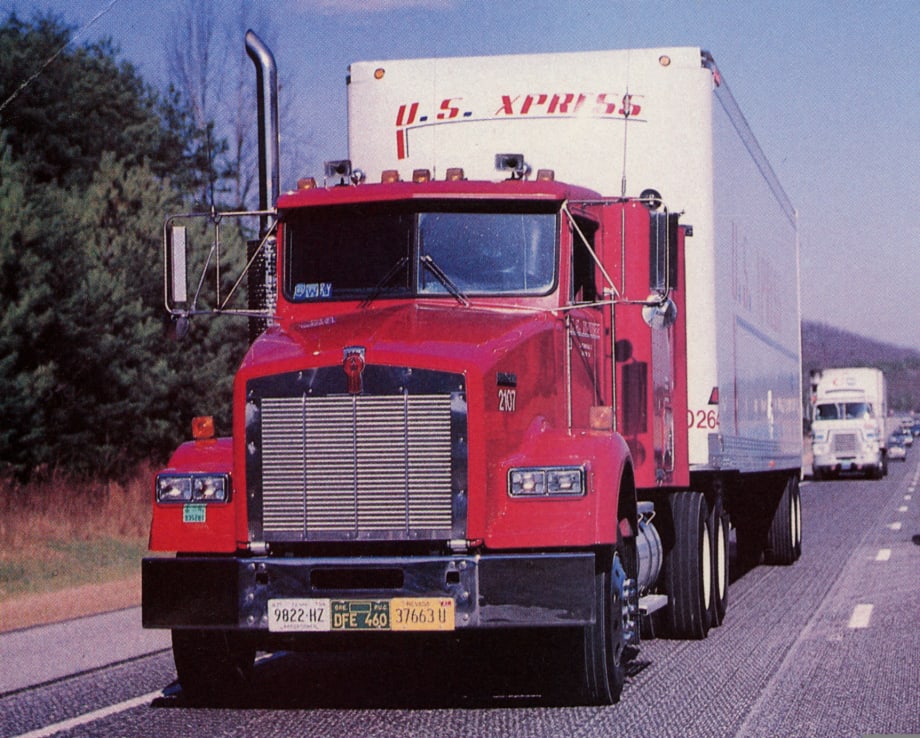
U.S. Xpress began operations in 1986 as a cross-country truckload provider with 48 trucks.
File photo: U.S. Xpress
U.S. Xpress Enterprises celebrated the 25th anniversary of its first load of freight Friday - but its co-chairmen said it would be very difficult to duplicate their accomplishments in today's business and regulatory environment.
To commemorate the milestone, Co-Chairmen and Co-Founders Max Fuller and Patrick Quinn hosted a celebration at the U.S. Xpress corporate headquarters in Chattanooga, Tenn. In attendance were drivers, employees, and local dignitaries, including Congressman Chuck Fleischmann and Hamilton County Mayor Jim Coppinger.
"The U.S. Xpress story is a classic example of how two hard-working, risk-taking, smart young men created a terrific company that has provided economic opportunity for thousands of employees - while also serving the needs of thousands of customers," said Bill Graves, president & CEO of the American Trucking Associations.
U.S. Xpress began operations in 1986 as a cross-country truckload provider with 48 trucks and has grown to a fleet of more than 8,000 trucks and 22,000 trailers with international operations.
The carrier's annual revenue in 2010 was in excess of $1.5 billion, and it has experienced a compounded annual growth of 16 percent since 1994. U.S. Xpress is now recognized as the second largest privately owned truckload carrier in the United States.
A Different World from 1986
During the event, as well as in an interview with the press the day before, Fuller and Quinn recalled the highs and lows of 25 years in the industry and what they see for the future of the company.
"The whole transportation environment has changed so drastically from what we started with in 1986, it's almost like being in a totally different industry," Fuller said.
When asked by a reporter if they could build this company as far and as fast today, Quinn replied, "I think it would be very, very challenging. We hauled our first load of freight when fuel had taken the biggest drop in history. When you'd already negotiated with customers based on a higher level, that's a huge windfall."
Fuller chimed in, "It's almost a can't do unless you start with millions of dollars."
Some of the challenges the two identified were equipment financing — trucks are more expensive today and right now the credit market is still fairly tight — and the increased amount of regulation.
Quinn pointed out that they founded the company in the 1980s, when the truckload business was in a major growth period following deregulation of the industry in 1980.
Hours of Service
Quinn also had some frank words about the hours-of-service proposal currently being considered by the Federal Motor Carrier Safety Administration. The company has calculated that the new rule could affect productivity by 4 percent to 8 percent if it is finalized as currently written. But he's skeptical as to how much the final rule will resemble the proposal announced last month.
"It's so convoluted, it's so confusing; Gov. Graves has called it out and out stupid," Quinn said. He said he doesn't know how drivers or enforcement are going to be able to understand the new rules, and believes it's even too complex for makers of on-board electronic logs to write software for.
"Even Joan Claybrook [board chairman for the Truck Safety Coalition and longtime trucking critic] came out and said this is too confusing. It's a nightmare right now. There may be a different version, but this version is just awful."
Keeping Ahead of Changes
The company has diversified greatly since it started out as a primarily coast-to-coast, long-haul driver team operation with 48 trucks.
Today, that business makes up at most 15 percent of its operations, as the company offers a range of transportation solutions, including Solo Truckload, Team, Dedicated, Demand Critical, Intermodal, Logistics, Brokerage, Specialty LTL, and International.
"Our average length of haul 10 years ago was probably 1,400 to 1,500 miles," Fuller said. "Today we're barely under 500 miles per trip."
Some of the supply chain trends driving the changes include more products coming into the country from Asia or Mexico, and a move to build more, smaller warehouses closer to the customer.
"We continue to look at changes taking place in the marketplace and continue to evolve our business in those directions, and I can tell you that's not simple by any means," Fuller said.
"You can read 20 articles and 20 different people have 20 different ideas, so you have to pick the one or two that probably has the most merit, and go in that direction. I probably spend three hours a day reading, and you'll find some nugget of gold in almost every article you read."
It's especially challenging right now as the industry recovers from the worst recession in memory.
"This was the ninth downturn we've been through," Quinn said. "But the other ones all rolled together don't look like this one. It's not that we haven't learned how to manage in good times and bad, but this one's left some scar tissue that's going to take time for everyone to recover from."
More Drivers

Platform Science Adds Dispatch and Safety Tools
Four additions to PS Fleet help fleets monitor loads, manage driver coaching, share truck locations and adjust video system settings.
Read More →
When Language Stops the Truck: The Return of ELP Out-of-Service Orders
English language proficiency rules for commercial drivers aren’t new, but renewed out-of-service enforcement has raised the stakes. Here’s what carriers need to know before a driver reaches a roadside inspection.
Read More →
Samsara Launches Custom AI Agent Builder
Agent Studio lets fleets create AI tools for hours-of-service monitoring, reporting and driver support, including agents that communicate by phone.
Read More →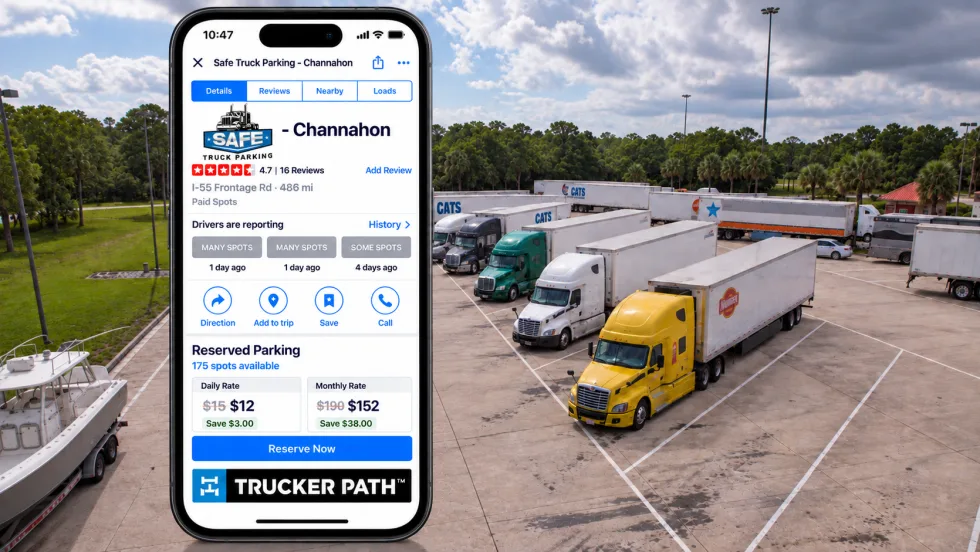
Trucker Path Expands Reserved Parking Network
Trucker Path has added close to 6,000 more truck parking spaces to its Trucker Path Reserved Parking Network with the addition of Safe Truck Parking.
Read More →
EEOC Sues Texas Trucking Company Over Driver Age Limits
The agency says Trancasa USA rejected applicants over 65 and applied tougher driving-record standards to those over 60.
Read More →
Nussbaum, Roehl Announce Second Driver Pay Increase This Year
This year has seen a swath of major truck driver pay increases as freight capacity has tightened.
Read More →
From One Generation to the Next: How Mentorship Builds Safer Truck Drivers
After three decades in trucking, Harold Perry shares what he's learned about driver safety, mentorship, and helping the next generation build confidence behind the wheel.
Read More →
Truck Drivers Need More Than Another Alert
Fleets have more visibility into truck health, safety events, and driver activity than ever. The next challenge is turning all that information into useful guidance for the person who has to decide what to do next.
Read More →
FMCSA Removes 110 Truck Driver Training Schools from Certified ELDT List
Federal regulators also are targeting more than 160 additional training providers and launching a nationwide audit of third-party CDL skills testers as part of a broader crackdown on trucking fraud.
Read More →
Hours of Service Pilot Programs: FMCSA Readies for 2027 Rollout
Two pilot programs could eventually reshape hours-of-service rules, giving truck drivers options to pause their 14-hour clock or use longer split sleeper rest periods.
Read More →