





How U.S. Xpress is Using Artificial Intelligence to Recruit Drivers
U.S. Xpress Invests in Autonomous Truck Tech
Although the carrier said there will always be a need for human drivers, the ongoing driver shortage and other market forces have led U.S. Xpress to make investments in autonomous technology provider TuSimple.
January 22, 2021
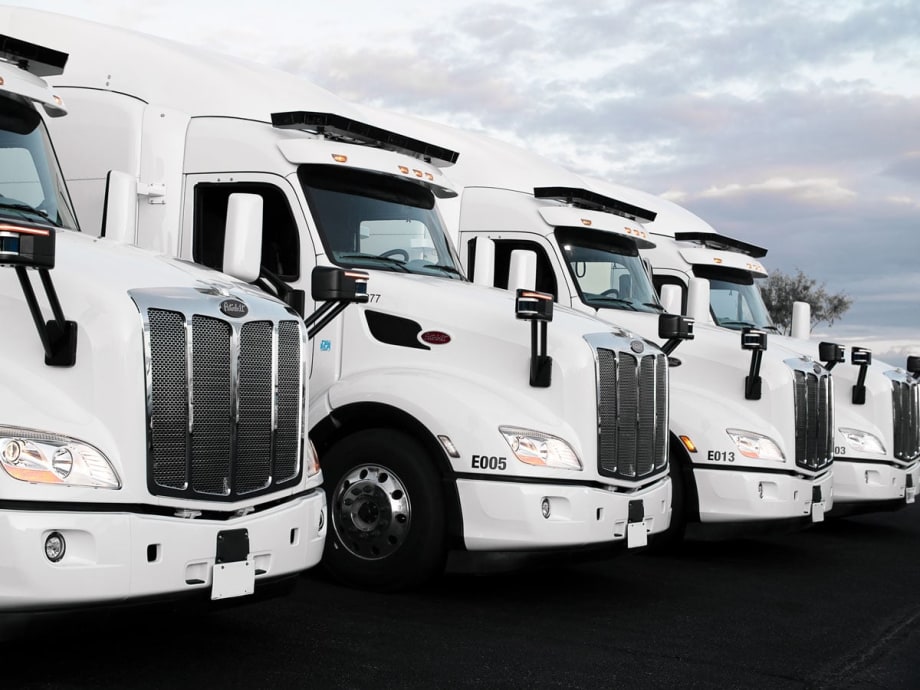
TuSimple teamed up with UPS, Penske Truck Leasing, U.S. Xpress, and McLane to launch the Autonomous Freight Network, which it says will lay the groundwork for self-driving autonomous trucks to become commercially available by 2024.
Photo: TuSimple
2 min to read
U.S. Xpress announced an investment in TuSimple, a self-driving technology company developing autonomous solutions for long-haul freight transportation. In addition to a significant financial investment, U.S. Xpress is actively testing the technology on select shipping lanes, and President and CEO Eric Fuller has joined TuSimple’s Executive Advisory Board.
The amount of the investment was not disclosed.
“We’re passionate about finding innovative solutions to industry challenges, and investing now will give us a clear advantage when this technology matures in the years to come,” said Fuller in the announcement. “Additionally, the Executive Advisory Board is bringing together market-specific insight from across the industry to help drive the development and adoption of this important technology.”
U.S. Xpress has been working with TuSimple since 2019 and has recently begun testing the autonomous technology on select lanes for some of its major customers. From this testing, TuSimple can gather vital information and benchmark safety and efficiency standards which will help bring the technology to market safely and reliably.
“U.S. Xpress has been a valuable partner in the testing of our autonomous technology, and Eric will continue to provide expert guidance in helping drive the adoption of autonomous trucks as a member of our Executive Advisory Board,” said Cheng Lu, CEO, TuSimple.

U.S. Xpress President and CEO Eric Fuller is on TuSimple's recently announced Executive Advisory Board,
Photo: U.S. Xpress
In a press statement, U.S. Xpress said that although the industry will always have a need for professional drivers, shortages caused by reduced CDL school graduates and the Drug and Alcohol Clearinghouse are impacting the industry in both the near- and long-term (see the company’s recent economic forecast). Autonomous trucks will give U.S. Xpress additional options for its shippers and "fold into a robust portfolio of solutions," the company added.
Last year, the company introduced its tech-enabled digital fleet and in coming months will be rolling out a new brokerage offering. The Chattanooga, Tennessee-based truckload carrier said the TuSimple partnership is part of its transformation from a traditional trucking company to a true digital transportation solutions provider.
More Fleet Management

Sponsored•September 16, 2026
Color Match Smarter: Tools That Restore & Perform
For fleet managers and collision repair professionals keeping heavy-duty trucks on the road, getting the color right the first time isn't just about appearance — it's about efficiency, turnaround time, and bottom-line results. Discover how today's digital color tools are transforming the repair process from guesswork to precision.
Read More →
FMCSA Pauses Biennial-Update Enforcement Amid Motus Transition
Carriers whose updates were due on or after June 1 have more time, while FMCSA works to stabilize its new registration system and warns of phishing sites impersonating its new carrier registration system, Motus.
Read More →
Sponsored•September 14, 2026
2026 Blueprint for Countering Smarter Supply Chain Theft
Cargo theft is no longer just the cost of doing business. It's a multi-billion-dollar criminal enterprise exploiting vulnerabilities across your fleet, drivers, and supply chain.
Read More →


Sponsored•September 1, 2026
How Telematics Improves Visibility, Control, and Performance in Refrigerated Fleets
Explore how telematics help refrigerated fleets improve visibility, uptime, efficiency, compliance, and cargo protection across connected cold chain operations.
Read More →
What the U.S.-Canada Trade War Means for Trucking
Escalating U.S.-Canada tariffs could disrupt cross-border freight, reduce truck volumes, raise costs, and create new uncertainty for carriers on both sides of the border.
Read More →
What Are Trucking’s Top Concerns for 2026?
The American Transportation Research Institute wants to know what's worrying trucking fleet managers, drivers, and other stakeholders in its annual Industry Issues survey.
Read More →
American Trucking Associations Looks for a New Leader
ATA President and CEO Chris Spear abruptly left his job at the association on August 21, at a pivotal time for the trucking industry.
Read More →
Public Wi-Fi Cybersecurity Risks: How Truck Drivers and Fleets Can Protect Their Data
Public Wi-Fi can expose truck drivers and fleets to credential theft, malware, and other cyber threats. Here’s how to reduce the risk on the road.
Read More →
For Nicky Cupp, Fleet Innovation Starts With Frustration
HDT Truck Fleet Innovator Nicky Cupp turns everyday pain points at Fraley & Schilling into opportunities for better technology and smarter processes.
Read More →
Adam Buttgenbach’s Approach to Electric Trucks: Start With Where They Fit
HDT Truck Fleet Innovator Adam Buttgenbach helped PepsiCo build one of North America’s largest EV fleets by focusing on where electric trucks make operational sense.
Read More →