




Truckstops Fight Amendment in Highway Bill
(UPDATED) Truckstop and convenience store interests are opposed to a provision of the House transportation bill that would allow states to privatize interstate rest areas
(UPDATED) Truckstop and convenience store interests are opposed to a provision of the House transportation bill that would allow states to privatize interstate rest areas.
The Partnership to Save Highway Communities urged members of Congress to oppose Amendment 217 of the American Energy and Infrastructure Jobs Act of 2012, which it says could jeopardize thousands of businesses operating at the exits along the nation's Interstate Highway System.
Amendment 217, sponsored by Republican Rep. Steven LaTourette and Democratic Rep. Dennis Kucinich, of Ohio, seeks to overturn the 50-year-old law prohibiting the sale of food, fuel and convenience items at interstate rest areas and instead allow states to use rest areas on interstate highways for non-highway uses, including commercial activities. (Ohio Republican Steve Stivers originally was a sponsor but has withdrawn his support for the bill.)
This amendment goes beyond language in the bill that would open rest areas up to advertisers, and let them sell a variety of goods "serving the traveling public," including "tourism-related" products, ATMS and lottery machines, reports the Huffington Post.
"This amendment is the biggest threat small business owners have ever faced under a highway bill," says Lisa Mullings, president and CEO of truckstop group Natso, and a member of the Partnership to Save Highway Communities. "This highway bill was intended to create jobs, but if this amendment is allowed to pass it will pull the rug out from under the nation's Interstate-based fast food franchisees, convenience stores, gas stations and truck stops.
"Commercializing Interstate rest areas would put exit-based businesses at a considerable disadvantage, likely forcing many out of business," Mullings says. "This will have a substantial effect on local communities, increase unemployment, decrease local tax revenues and impede overall economic growth."
In a recent study of commercial rest areas, the Virginia Tech Transportation Institute found that commercializing rest areas nationwide could cause a 46% decrease in sales at interstate-serving gas stations, a 44% decrease in sales at interstate-serving restaurants, and a 35% decrease in truck service sales at truckstops.
Statistics in Rep. LaTourette's, Rep. Stivers' and Rep. Kucinich's home state of Ohio bear this out, says the group. Along the Ohio Turnpike, where commercialization is permitted, 109 businesses operate along the 239 miles of the Turnpike. Along I-75, where commercial rest area are prohibited, 1,036 businesses operate along 212 miles. Similarly, I-70 has 870 businesses along 248 miles and I-70 has 718 businesses along 226 miles.
Currently, nearly 97,000 small businesses operate within a quarter mile of the Interstate Highway System and employ more than 2 million people, according to the partnership.
UPDATED 11:10 a.m. EST 2/16/2012 to indicate Rep. Stivers' withdrawal of his name from support of the bill.
More Drivers
When Language Stops the Truck: The Return of ELP Out-of-Service Orders
English language proficiency rules for commercial drivers aren’t new, but renewed out-of-service enforcement has raised the stakes. Here’s what carriers need to know before a driver reaches a roadside inspection.
Read More →
Samsara Launches Custom AI Agent Builder
Agent Studio lets fleets create AI tools for hours-of-service monitoring, reporting and driver support, including agents that communicate by phone.
Read More →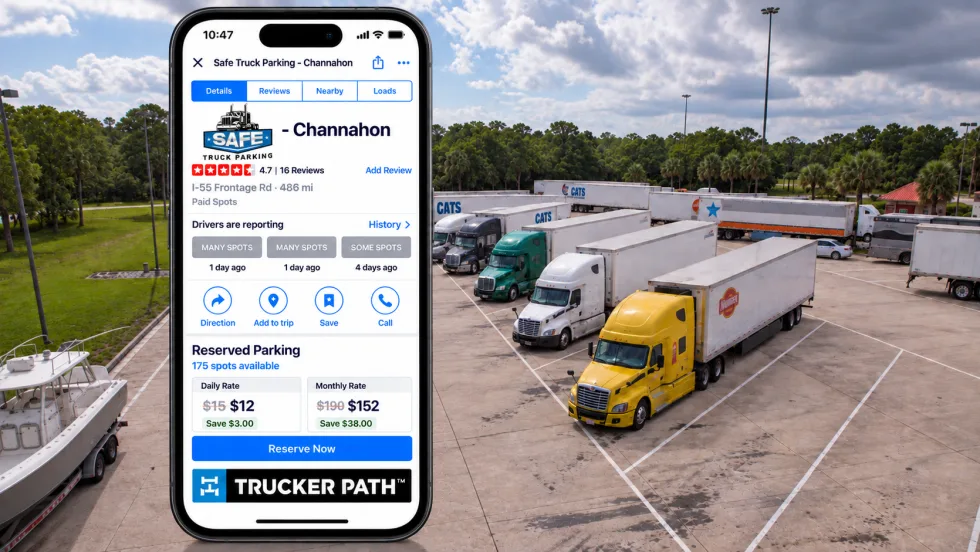
Trucker Path Expands Reserved Parking Network
Trucker Path has added close to 6,000 more truck parking spaces to its Trucker Path Reserved Parking Network with the addition of Safe Truck Parking.
Read More →
EEOC Sues Texas Trucking Company Over Driver Age Limits
The agency says Trancasa USA rejected applicants over 65 and applied tougher driving-record standards to those over 60.
Read More →
Nussbaum, Roehl Announce Second Driver Pay Increase This Year
This year has seen a swath of major truck driver pay increases as freight capacity has tightened.
Read More →
From One Generation to the Next: How Mentorship Builds Safer Truck Drivers
After three decades in trucking, Harold Perry shares what he's learned about driver safety, mentorship, and helping the next generation build confidence behind the wheel.
Read More →
Truck Drivers Need More Than Another Alert
Fleets have more visibility into truck health, safety events, and driver activity than ever. The next challenge is turning all that information into useful guidance for the person who has to decide what to do next.
Read More →
FMCSA Removes 110 Truck Driver Training Schools from Certified ELDT List
Federal regulators also are targeting more than 160 additional training providers and launching a nationwide audit of third-party CDL skills testers as part of a broader crackdown on trucking fraud.
Read More →
Hours of Service Pilot Programs: FMCSA Readies for 2027 Rollout
Two pilot programs could eventually reshape hours-of-service rules, giving truck drivers options to pause their 14-hour clock or use longer split sleeper rest periods.
Read More →
Medical Cards, English Proficiency Reshape Roadcheck Violations
Medical-card violations jumped to the top of the driver out-of-service list during CVSA’s 2026 International Roadcheck, while English-language proficiency violations appeared among the leading violations for the first time.
Read More →