




Trucking Interests Prepare for New Committee Lineups on the Hill
The election did not change the balance of power in Washington, but committee leadership in Congress is in flux and trucking lobbyists are alert for what that might mean. They also are watching for a possible change at the Department of Transportation
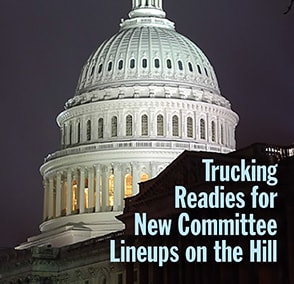
The election did not change the balance of power in Washington, but committee leadership in Congress is in flux and trucking lobbyists are alert for what that might mean.
They also are watching for a possible change at the Department of Transportation.
Transportation Secretary Ray LaHood has said he will stay on at least through the current negotiations on the "fiscal cliff," according to published reports. If he does leave, the speculation for possible replacements includes Los Angeles Mayor Antonio Villaraigosa, former Pennsylvania Gov. Ed Rendell and retiring Rep. Steve LaTourette, R-Ohio.
Hill committee assignments are particularly important, because during the next couple of years trucking will have to track implementation of this years highway law, and prepare for the drafting of the next version, due in 2014.
The more immediate concern, not just for trucking but for all Americans, is how President Obama and Congress will deal with the cliff, a combination of tax increases and spending cuts designed to be so unpalatable that legislators will be forced to come to terms on long-term debt reduction and tax reforms.
Among transportation experts there is the glimmer of a hope that the cliff negotiations could include a revenue stream to provide stability for infrastructure funding.
They look to the several high-level infrastructure commissions that have called for more highway money, and to the 2010 Simpson-Bowles plan for solving the fiscal crisis, which recommended a 15-cent gas tax increase.
The idea is not dead on arrival, said Peter Ruane, president of the American Road & Transportation Builders Association, in remarks last week at a Bipartisan Policy Center forum.
"Politicians should have to have the debate," he said. "The fuel tax is the most efficient, proven form of financing. The only time weve gotten any increase in funding has been as part of a grand agreement on deficit reduction. It should be considered and it is being considered."
It would be helpful if the public viewed transportation as a utility, the same type of service as telephone, gas, electricity and cable, said Doug Foy, CEO of the consulting firm Serrafix and Massachusetts Secretary of Commonwealth Development under former Gov. Mitt Romney.
If people compared what they pay in fuel taxes to what they pay for other utilities, they would see the transportation network as a great deal, Foy said at the forum.
He personally paid on the order of $160 in federal and state gas taxes last year, versus an average of $2,000 for the utilities, he said.
"It's crazy. We need to get people to understand the scope of that network. People hate (the fuel tax) because they think it's gigantic."
Trucking interests also are hoping that cliff negotiations will include a revenue stream for highways, said Mary Phillips, senior vice president of legislative affairs at American Trucking Associations, in an interview.
"If something were done to address the solvency of the Highway Trust Fund, it would take a lot of pressure off the next reauthorization," she said.
A carbon tax does not appear likely, but the fuel tax should be on the table, as should the idea of a fee on oil production, she said.
Rep. Bill Shuster, R-Pa., who is replacing Rep. John Mica, R-Fla., as chairman of the House Transportation and Infrastructure Committee, has been reported saying that hes willing to look at all funding options, including a fuel tax hike, a vehicle-mile tax and public-private partnerships.
"I think people are just testing the waters right now," Phillips said.
Shuster's T&I Committee is the key truck-related panel in the House, with oversight over the Department of Transportation and the Federal Motor Carrier Safety Administration.
The first item on Shuster's agenda is a water resources bill, followed by a railroad reauthorization measure.
"Then he's planning to start laying the groundwork for the next highway reauthorization," said Phillips.
She applauded Shuster's appointment. "We think he'll be a great chairman," she said. "He has said he will reach across the aisle, and I think that's the kind of person he is. Things will be more bipartisan."
Other trucking lobbyists take a similar view.
Todd Spencer, executive vice president of the Owner Operator Independent Drivers Association, said Shuster is familiar with highway issues and understands trucking concerns.
Lane Kidd, president of the Arkansas Trucking Association, represents a new truck interest group on Capitol Hill, the Alliance for Driver Safety & Security, known for short as The Trucking Alliance.
Kidd said Shuster is inclined to view highways as bipartisan and in need of more funding.
It is not yet clear who will chair the panel's Highway Subcommittee, Phillips said. The current chairman, Rep. James Duncan, R-Tenn., is term-limited, as Mica was, but his replacement has not been announced.
On the Democratic side, Rep. Nick Rahall of West Virginia will remain as ranking member of the committee, and Peter DeFazio of Oregon is expected to stay on as ranking member of the Highway Subcommittee.
Phillips added that the committee will get at least a dozen new members, as a consequence of the election and assignment changes.
In the Senate, Barbara Boxer, D-Calif., a key author of this year's highway bill, will remain at the helm of the Environment and Public Works Committee. The ranking member, Sen. James Inhofe, R-Okla., is term-limited out of that job and is to be replaced by Sen. David Vitter, R-La.
There will a change, as well, at the Senate Commerce, Science and Transportation Committee, which has jurisdiction over truck safety.
Sen. Jay Rockefeller, D-W.Va., will continue as chairman, but the ranking minority member, Sen. Kay Bailey Hutchison, R-Texas, is leaving the Senate.
Hutchison was to be replaced by Sen. Jim DeMint, R-S.C., but he unexpectedly announced yesterday that he is leaving the Senate. Sen. John Thune, R-S.D, may be in line for the position but no decisions have been announced.
Reauthorization of the federal highway program will be the heavy lift over the next couple of years, but in the near term trucking lobbyists will be focused on implementation of this years highway law, Moving Ahead for Progress in the 21st Century (MAP 21).
The law kick-starts 29 safety-related initiatives, including the eobr mandate and a field study on the 34-hour restart in the hours of service rule, as well as important initiatives such as creation of the first national freight policy.
The CSA safety enforcement program will be of ongoing interest to the Transportation and Infrastructure Committee, which has held one hearing already and has requested an audit by the Transportation Departments Inspector General.
Phillips said she will be keeping a close eye on the 34-hour restart study.
"ATA strongly supports the study and wants it to stay on track, but the administration supports the rule it put out so I'm not sure they would naturally put it at the top of the priority list," she said.
The study is due next September. The law does not tell FMCSA how, or whether, to apply the results of the study to the rule, although presumably a finding that the rule is, say, ineffective, would influence the agency's approach.
Meanwhile, briefs have been filed in a lawsuit against the rule. Oral arguments are not yet scheduled but are likely some time in the first quarter of next year. Once they are held the court typically takes two to three months to hand down a decision.
Phillips also is concerned about how DOT will implement the freight policy provision of MAP 21.
The law tells DOT to establish a 27,000-mile national freight highway network based on freight volumes and flow. Inland and maritime ports must be included.
The department then must come up with a national freight strategic plan based on the condition of the freight network. Specifically, the plan must look at bottlenecks, forecasts of freight volume, and trade corridors.
In addition, DOT must develop new ways to evaluate freight-related infrastructure projects.
There's a lot of money at stake. The federal government will pick up a greater share of the tab for projects that meet the new freight standards. It will boost the federal payout from 80% to 95% of the cost for projects on the Interstate System, and to 90% for any project DOT certifies as meeting the standards.
Eligible projects include highway construction to eliminate freight bottlenecks, intelligent transportation systems, environmental improvements, highway-rail grade separation, runaway truck lanes and truck parking facilities.
Phillips wants to make sure that DOT adheres to the letter of congressional intent, first building off of the highway system and then including other modes. She foresees a risk that the plan will become more multi-modal than highway-based.
More Drivers

Nussbaum, Roehl Announce Second Driver Pay Increase This Year
This year has seen a swath of major truck driver pay increases as freight capacity has tightened.
Read More →
From One Generation to the Next: How Mentorship Builds Safer Truck Drivers
After three decades in trucking, Harold Perry shares what he's learned about driver safety, mentorship, and helping the next generation build confidence behind the wheel.
Read More →
Truck Drivers Need More Than Another Alert
Fleets have more visibility into truck health, safety events, and driver activity than ever. The next challenge is turning all that information into useful guidance for the person who has to decide what to do next.
Read More →
FMCSA Removes 110 Truck Driver Training Schools from Certified ELDT List
Federal regulators also are targeting more than 160 additional training providers and launching a nationwide audit of third-party CDL skills testers as part of a broader crackdown on trucking fraud.
Read More →
Hours of Service Pilot Programs: FMCSA Readies for 2027 Rollout
Two pilot programs could eventually reshape hours-of-service rules, giving truck drivers options to pause their 14-hour clock or use longer split sleeper rest periods.
Read More →
Medical Cards, English Proficiency Reshape Roadcheck Violations
Medical-card violations jumped to the top of the driver out-of-service list during CVSA’s 2026 International Roadcheck, while English-language proficiency violations appeared among the leading violations for the first time.
Read More →
Driver Trust Can Make or Break the Success of Fleet Safety Technology
New Teletrac Navman research suggests that onboarding, transparency about driver data, and positive feedback can play a significant role in how commercial drivers respond to safety and coaching technology.
Read More →
EEOC Sues KLLM Over Alleged Sex Discrimination in Driver Training
KLLM is facing a federal sex-discrimination lawsuit over policies the EEOC alleges put female truck driver trainees at a disadvantage.
Read More →
FMCSA Moves to Codify English Language Requirements for Commercial Drivers
By changing regulations on English-language proficiency requirements for commercial drivers, rather than relying on a guidance memo, the FMCSA said future administrations won't be able to walk back the Trump administration's stricter enforcement with just a memo.
Read More →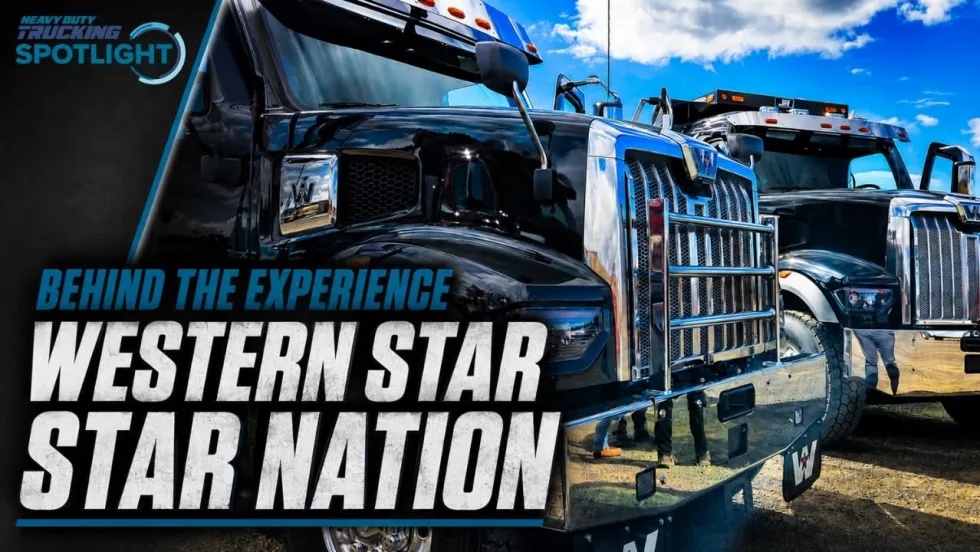
Drivers Put Western Star Trucks to the Test at Star Nation Experience
Watch to get an inside look at the Western Star trucks, technology, and community behind the Star Nation Experience 2026!
Read More →