




Trucking Groups Forward Event Data Recorder Comments To NHTSA
Three trucking associations have submitted their comments regarding event data recorders to the National Highway Traffic Safety Administration (NHTSA),
Three trucking associations have submitted their comments regarding event data recorders to the National Highway Traffic Safety Administration (NHTSA),
expressing concerns about the accuracy and reliability of such equipment, while praising the intent.
The American Trucking Assns. (ATA), Truckload Carriers Assn. (TCA) and the Distribution & LTL Carriers Assn. (DLTLCA) said they strongly support reliability performance standards for safety related equipment.
For an analysis and commentary on the issue of event data recorders, see the February issue of Heavy Duty Trucking magazine.
Following is the full statement released to the NHTSA Thursday by the organizations:
The ATA, DLTLCA, and TCA appreciate the care that NHTSA has placed upon using the definition of electronic Event Data Recorders (EDR) and generally concurs with the use of the term to describe devices that are installed in motor vehicles to record technical vehicle and occupant-based information for a brief period of time (i.e. seconds, not minutes) before, during, and after a crash. We suggest that with the further development and proliferation of smarter vehicle systems, the definition should be expanded to include road / environment based information as well. Time of day, icy conditions, precipitation, temperature, et cetera are well within the realm of available technology. In addition, the definition should be expanded to include events that may not constitute a "crash" but some other event that if re-occurring, could result in a crash or harmful event. Such events or incidents, could include near rollover events, hard braking events, active braking events, and tractor-trailer jackknifes.
The following is our response to the invitation for comments on the supplied questions in the section of the request for comments entitled "Related to Safety Benefits."
-- The American Trucking Associations believes that some information collected by EDRs can aid in the investigation of causes of incidents and crashes and could therefore be used constructively, to develop preventive countermeasures, that would increase highway safety and trucking productivity. Information recorded and retrieved would be helpful, if and only if, the data fully complied with a data reliability and accuracy standard, which still must be developed. Erroneous and inaccurate data would be misleading and very harmful to the development of safety enhancement and incident prevention programs.
-- In the context of crash reconstruction, data from all vehicles (either involved or in proximity) to the incident or crash is essential for accurate causation and prevention analysis. Data from only commercial or for-hire vehicles would result in false conclusions and inaccurate liability assignment. Because of the differing architecture and performance of vehicle types, appropriate recorded data would indeed be type specific. For instance, a small passenger car EDR would not record trailer air brake pressures. In addition, because of the open communication data busses in heavy vehicles, the use of J1939 and other appropriate protocols is essential. Developing any standardized data monitoring and recording protocol, not based upon the existing and successful SAE standards would result in added complexity, costs, operational and reliability problems.
-- The ATA is concerned with how the EDR data will be analyzed and managed. In aviation crashes, comprehensive EDR data is available from a multitude of aircraft systems. Important points to remember are that extremely specialized / highly trained scientists and engineers analyze a very limited number of events annually. Sadly, there are over 900 fatal crashes per week in the USA involving vehicles. This would result in an enormous analysis burden. Typically, local or state law enforcement officers investigate crashes and are currently not trained or equipped to analyze the level of data that is possible to collect from a highway vehicle EDR, nor are they trained to form conclusions from much of the data. Some of the data recorded in currently available EDRs are used by the heavy vehicle operator/ motor carrier, but often with the technical assistance from Original Equipment Manufacturers (OEMs) and suppliers, and on a limited basis. Use of such data at times has been and may be helpful to operators to define vehicle specifications, assist with equipment purchase decisions, and to develop safety programs and incident countermeasures. Inappropriate use of data can include misunderstanding or incorrect interpretation of data, use of erroneous data and obtaining and using data for purposes other than to improve vehicle, driver, and highway safety.
-- There may be certain safety benefits to motor carriers, other motorists and highway users, and the ATA suggests that the NHTSA engage in a dialog with those entities currently attempting to use EDR data for safety enhancement. ATA would welcome the opportunity to help facilitate such dialog.
-- EDR data would be much improved if a reliability / data quality standard was in place and enforced. Erroneous data, false or inaccurate data points, performance levels, indications impede and harm the analysis process of incidents and crashes and could result in inaccurate conclusions concerning liability.
-- We suggest that NHTSA approach the measuring of effectiveness of driver behavior on EDR presence alone, in a similar manner as discussed in Question 4, by engaging in dialog with those that may have direct and applicable experience with the devices used in the appropriate application.
-- The ATA firmly believes that prior to any national data collection / database expansion, the NHTSA, in conjunction with motor carriers that currently use EDRs, must evaluate the accuracy of the data supplied to and recorded by EDRs. A performance standard for the recorded data must be established.
-- The ATA has been monitoring the Institute of Electrical and Electronics Engineers (IEEE) process but has not directly participated in their activities. Actual participant comments on this question would be more appropriate and useful to the NHTSA.
-- Standardization of certain elements of the data sets would be extremely helpful. This would facilitate motor carriers interested in using EDR for safety management/development activities the added capability of complete comparability of their data should they operate in a mixed fleet. In fact, without standardized parameters, EDR data can vary by make, model, year, if the motor carrier does not require or achieve continuity in their purchase specification.
-- We support the Society of Engineers Truck and Bus EDR working group's recommendations of a data set and as such suggest that the NHTSA continue to participate in that group to further refine the 28 parameters as technologies emerge. In addition we suggest that NHTSA work with the Technology & Maintenance Council (TMC) of the ATA, Study Group S.12 and use the recommended practice RP 1214 "Guidelines for Event Data Collection, Storage and Retrieval" as the foundation of further development.
-- The ATA encourages NHTSA to consider the duration of events and how they differ among types of vehicles. NHTSA has extensively evaluated durations of events including first harmful events and subsequent events. EDRs may be developed with decision capabilities that will enable them to capture or filter appropriate data sets based upon the type of event. Also, beyond the duration is the sampling rate, which will differ by parameter. The duration of certain parameters may appropriately vary. This is not a trivial analysis. Please refer to TMC RP 1214.
-- The present EDRs require physical connection to the vehicle for a variety of technological and operational reasons. One important point to remember is that the data belongs to the vehicle owner, and access to the vehicle device should not occur without the owner?s knowledge and consent. Unlike
More Drivers

How Top Trucking Fleets Improve Driver Retention [Video]
What do healthy snacks, optimized routing, and just picking up the phone have in common? They're all strategies the Best Fleets to Drive For are using to retain truck drivers.
Read More →
Trucker Path Adds Verisk CargoNet Theft Data to Navigation Platform
Trucker Path’s new cargo theft risk overlays give drivers and fleets visibility into high-risk areas, stolen commodity trends, and theft hotspots.
Read More →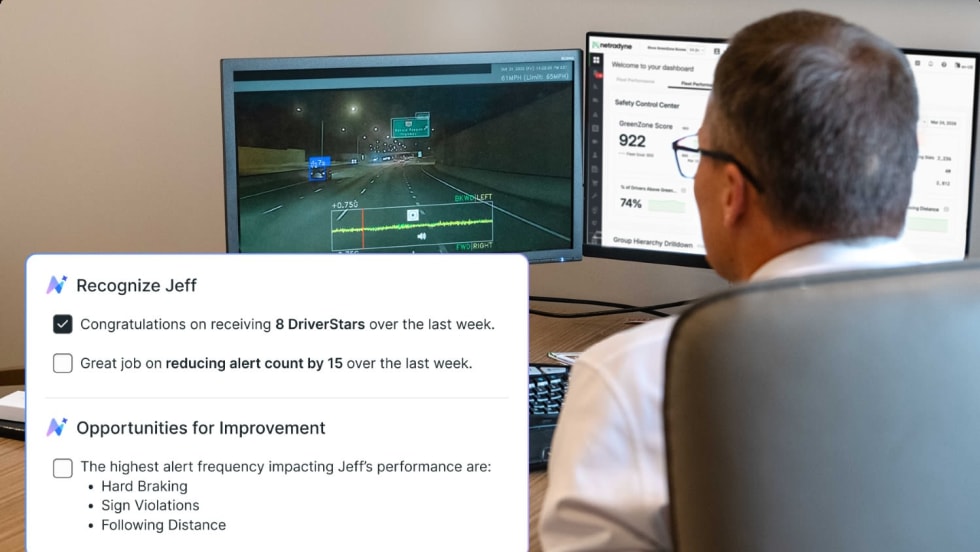
Netradyne Intelligence Uses New AI Agents to Automate Response to In-Cab Camera Data
The company called the next-generation in-cab camera safety platform "a fundamental shift from systems that report on what happened to systems that actively drive what should happen next."
Read More →
Why Truck Detention Keeps Costing Fleets Time and Money
A 2024 ATRI study found detention affects nearly 40% of truckload stops and costs the industry more than $15 billion annually. Despite the toll on drivers, fleets, and supply chains, the problem remains stubbornly persistent.
Read More →
Prime Inc. to Open $7.9M Flagship Used-Truck Dealership
A new driver-focused facility to sell Prime Inc's used trucks and trailers will be the first purpose-built location in the company's history.
Read More →
Short Takes: Inside K&B’s Truck Safety Tech
Listen to learn how K&B Transportation uses cellphone-blocking technology, speed management systems, weather geofencing, bridge avoidance tools, and more to improve driver safety.
Read More →
Nussbaum Expands Driver Compensation with Pay Raises, Profit Sharing
Nussbaum Transportation said its latest compensation package could push first-year driver earnings above $90,000 in key hiring markets.
Read More →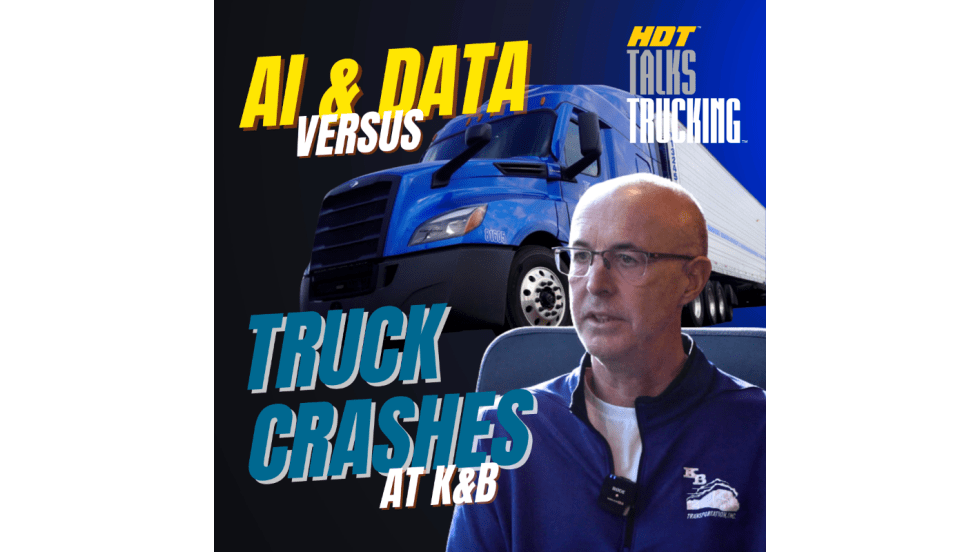
Listen: Inside Modern Fleet Safety: AI, Cameras & Speed Control at K&B Transportation
Fleet safety is evolving fast—and technology is at the center of it. Learn how a former commercial vehicle enforcement officer turned director of safety at K&B Transportation is embracing real-world safety technology.
Read More →
Maverick Announces 2026 Driver Pay Raises
New raises for Maverick Transportation drivers will take effect on May 31, 2026.
Read More →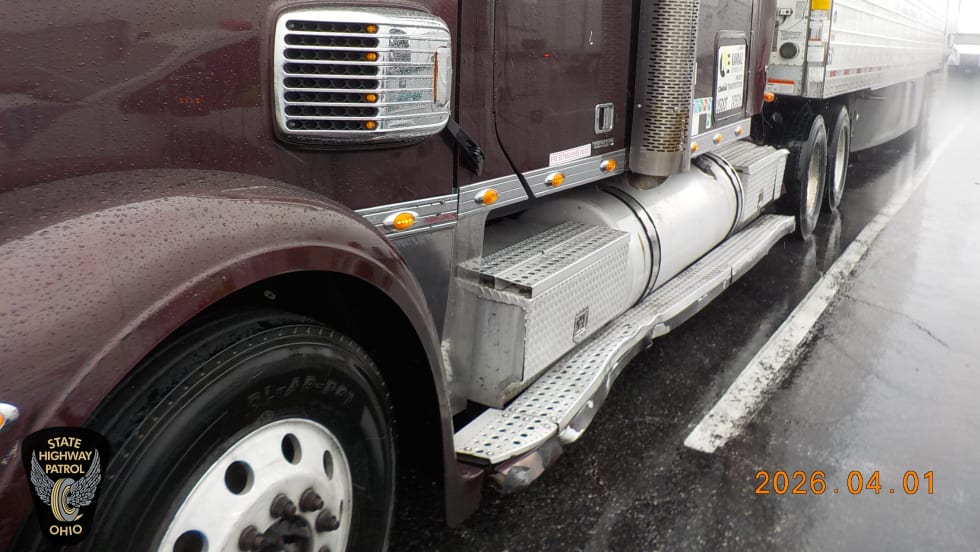
Illinois Trucker Indicted for Nearly $22,000 in Ohio Turnpike Toll Evasion
Authorities say an Illinois trucker avoided paying tolls for two years, and now faces felony charges, possible prison time, and forfeiture of his Freightliner tractor.
Read More →