




Related: Truck Platooning System Offers Fuel Savings Potential
Truck Platooning Report Shows Fuel Economy Gains
A report on the first phase of research into the possible benefits of truck platooning technologies showed that all trucks in a platoon gained fuel efficiencies, with the lead truck gaining as much as a 5 percent improvement while the trailing truck got up to 10 percent improvement.
by Staff
May 27, 2015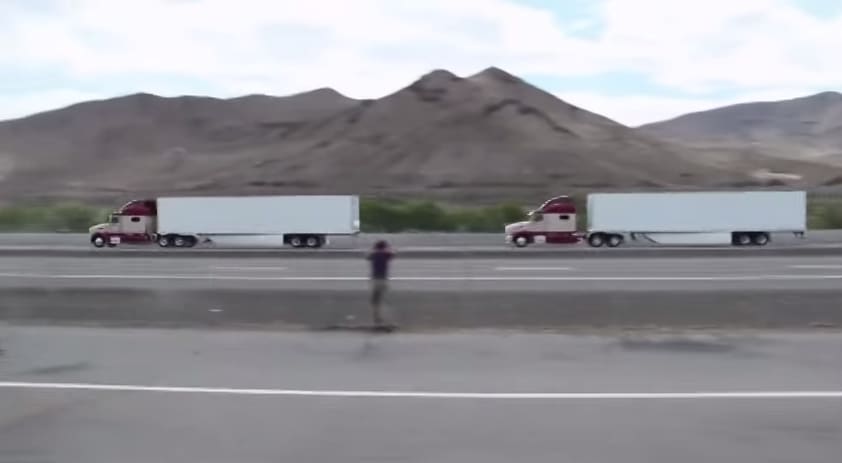
3 min to read
A report on the first phase of research into the possible benefits of truck platooning technologies showed that all trucks in a platoon gained fuel efficiencies, with the lead truck gaining as much as a 5 percent improvement while the trailing truck got up to 10 percent improvement.
The study, which was conducted by Auburn University’s GPS and Vehicle Dynamics Laboratory, along with partners Peloton Technologies, Peterbilt Motors, Meritor-Wabco and the American Transportation Research Institute.
As part of the Federal Highway Administration’s advanced research project on heavy truck cooperative cruise control, the first phase of the study looked at the commercial feasibility of driver assistive truck platooning, or DATP.
DATP makes use of available vehicle-to-vehicle communications and other technologies such as adaptive cruise control, collision avoidance systems, radar, GPS data and other systems to allow two or more trucks to “platoon” in a very tight formation at highway speeds, thereby reducing drag and helping all trucks in the platoon gain mpg benefits. The trucks constantly maintain a communication link which allows them to share data. If the lead truck’s collision avoidance system activates its adaptive cruise control to slow down, the following truck or trucks will do the same.
The first phase gathered industry input for a preliminary case analysis and also looked at technical issues such as system modeling, aerodynamics modeling, research for developing algorithms for platooning formation, human-machine interface evaluations and other aspects of the technology.
According to the report on the research released by ATRI, “the going-in hypothesis was that DATP technology is near market-ready for industrial use and will provide value in specific roadway and operating conditions for heavy truck fleet operations.”
DATP technology builds on adaptive cruise control, which has been available in the trucking industry for several years. The report said there were approximately 100,000 Class 8 trucks on the road now with adaptive cruise control. Adding to the functionality are collision mitigation systems, which have also been on the market for some time.
Some key findings:
Truckload and line-haul LTL operations would be the most likely fit for early adoption of DATP.
A majority of fleet managers contacted said such a system would have either a positive impact or no impact on driver retention and 39% said they felt drivers were likely to use a DATP system.
Owner-operators response was more toward the “negative end of the scale” the report said and owner-operators would want a ROI payback within 10 months, while fleet respondents expected a payback within 18 months.
Using models based on historical traffic slows, researchers at Auburn found that platoon formation would not cost truckers excess time.
The “most challenging aspect,” of DATP, according the report comes down to who to platoon with. Most fleets would prefer platooning with their own trucks, while owner-operators would prefer platooning with other owner-operators, with only 7% of surveyed owner-operators willing to platoon with large fleets and 5% of large fleets willing to platoon with owner operators.
Phase II of the study will focus on system testing using donated Peterbilt tractors equipped with the Peloton system and performance testing systems, specifically wireless communications, vehicle control, positioning, driver comfort and safety.
Additional information can be found at www.atri-online.org.
More Drivers

FDA Eases Path for Oral-Fluid Testing
Federal actions could advance oral-fluid drug testing for truck drivers, but lab certification delays and marijuana rescheduling questions remain.
Read More →
Why Hiring Truck Drivers Is Getting Harder
Higher recruiting costs, a shrinking driver pool, and renewed pay competition are raising the stakes for fleets heading into 2027.
Read More →
Roehl Offers Truck Drivers $10,000 Retention Incentive
Payments begin after the first load and continue in mileage-based installments for eligible experienced drivers joining the fleet.
Read More →
Platform Science Adds Dispatch and Safety Tools
Four additions to PS Fleet help fleets monitor loads, manage driver coaching, share truck locations and adjust video system settings.
Read More →
When Language Stops the Truck: The Return of ELP Out-of-Service Orders
English language proficiency rules for commercial drivers aren’t new, but renewed out-of-service enforcement has raised the stakes. Here’s what carriers need to know before a driver reaches a roadside inspection.
Read More →
Samsara Launches Custom AI Agent Builder
Agent Studio lets fleets create AI tools for hours-of-service monitoring, reporting and driver support, including agents that communicate by phone.
Read More →
Trucker Path Expands Reserved Parking Network
Trucker Path has added close to 6,000 more truck parking spaces to its Trucker Path Reserved Parking Network with the addition of Safe Truck Parking.
Read More →
EEOC Sues Texas Trucking Company Over Driver Age Limits
The agency says Trancasa USA rejected applicants over 65 and applied tougher driving-record standards to those over 60.
Read More →
Nussbaum, Roehl Announce Second Driver Pay Increase This Year
This year has seen a swath of major truck driver pay increases as freight capacity has tightened.
Read More →
From One Generation to the Next: How Mentorship Builds Safer Truck Drivers
After three decades in trucking, Harold Perry shares what he's learned about driver safety, mentorship, and helping the next generation build confidence behind the wheel.
Read More →