




Truck Emissions Nonprofit Cascade Sierra Solutions Closes Up
A nonprofit company whose mission was to reduce diesel exhaust from heavy-trucks is no more following a federal audit and financial problems.

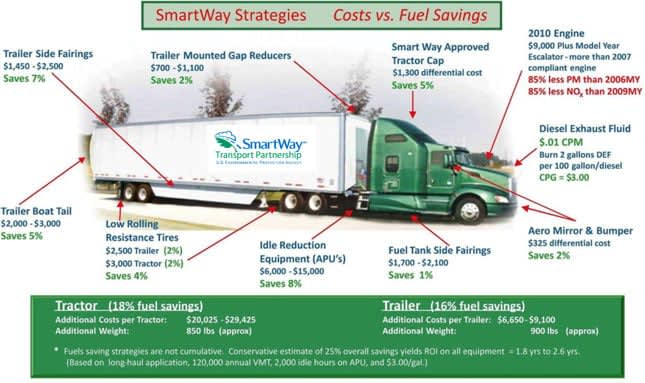
Cascade Sierra Solutions helped truck owners pay for EPA SmartWay equipment, update port trucks, electrify truckstops and other "green" technology.
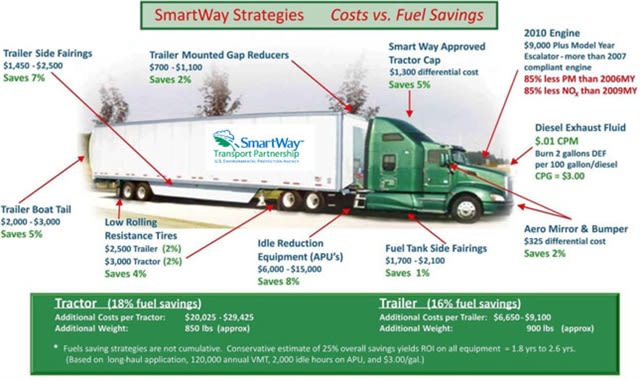
Cascade Sierra Solutions helped truck owners pay for EPA SmartWay equipment, update port trucks, electrify truckstops and other "green" technology.
A nonprofit company whose mission was to reduce diesel exhaust from heavy-trucks is no more following a federal audit and financial problems.
Cascade Sierra Solutions is winding down operations owing $19 million to banks and other creditors, after it took in more than $60 million from various government agencies along with private money, according to The Register Guard newspaper in Eugene, Ore. A receiver has been appointed.
Founded in 2006, the Oregon-based company served as a bridge between truck owners and government agencies to arrange grants or low-interet loans for truck owners to purchase "green" equipment. The money was for anti-idling devices such as auxiliary power units and shore power connections, as well as diesel particulate filters and other emissions technology.
Cascade Sierra Solutions also partnered with various companies offering products and services designed to help reduce truck emissions, including Shorepower Technologies, which offers at electrical power for trucks at more than 50 truckstops.
Shorepower Technologies Vice President of Marketing, Alan Bates, told Truckinginfo.com that it partnered with Cascade Sierra Solutions in 2009 to successfully deploy its Truck Stop Electrification Network using government money.
“In the DOE grant, CSS was the program administrator, with Shorepower handling equipment, construction, operations and maintenance,” he said. “Going forward, Shorepower will continue to operate the network with no anticipated disruptions. In fact, the company is seeking to expand the network."
The beginning of the end for Cascade Sierra Solutions reportedly began during the Great Recession, as truck owners defaulted on loans. The situation was made worse two years ago following an U.S. Environmental Protection Agency audit, which found fault with the company’s accounting and recommended that the federal government seek the return of a $9 million grant, according to the Statesman Journal newspaper in Salem, Ore. The government also said the nonprofit agency was unable to show that it was spending the public dollars in an allowed way.
At its peak Cascade Sierra Solutions employed nearly 60 people and helped upgrade some 12,000 trucks.
Founder Sharon Banks, whose background includes work as an air-quality regulator in Lane County, Ore., reportedly made more than $200,000 per year as Cascade Sierra Solutions president before leaving the company nearly a year ago, due to what she said were health problems.
Related Stories:
9/6/2013 -- STEP Completes Deployment of 50 New Plug-in Locations
7/11/2012 -- Driving the Green Revolution
2/9/2011 -- New Program Aims to Jump-Start Truckstop Electrification
More Fuel Smarts

How Volvo Updated Its D13 for EPA 2027 [Watch]
Volvo’s updated D13 promises lower emissions without sacrificing performance or fuel economy. Take a closer look at what changed inside the engine in this HDT Spotlight video.
Read More →
Diesel Price Spike Shortens Payback for Natural Gas Trucks, Report Says
Energy Vision estimates fleets could recover the higher purchase price of an RNG-fueled Class 8 tractor in 1.3 to 2.8 years under current fuel-price scenarios.
Read More →
Calstart Becomes Catalyst Mobility, Reflecting Broader Focus
Calstart is now Catalyst Mobility, reflecting the nonprofit’s growing national role in clean transportation, including zero-emission trucks, infrastructure and incentive programs.
Read More →

Record Diesel Prices Squeeze Trucking Fleets
Average U.S. diesel prices have climbed to nearly $6 a gallon, surpassing the 2022 record as tight refinery capacity and Middle East disruptions keep fuel costs elevated.
Read More →
How Fuel Delivery Shapes Engine Performance
Fuel delivery depends on more than what happens at the injector. For fleet, maintenance and technical professionals, looking at the full path from pump to injector can provide useful context for understanding engine performance.
Read More →
East Coast Port Launches $45M Electric Truck Push
The Port Authority of New York and New Jersey announced millions in incentives for zero-emission drayage trucks, yard tractors, and new charging hubs near the port.
Read More →
California Bill Could Shed Light on Electric Truck Prices
Why do battery-electric Class 8 trucks remain so expensive? A California bill headed to Gov. Gavin Newsom would give fleets and state agencies more visibility into what manufacturers charge.
Read More →
Detroit Opens Orders for EPA 2027 Engines
Detroit isn’t starting from scratch to meet EPA 2027 diesel emissions standards. Its Gen 6 DD13 and DD15 engines keep much of today’s platform while updating the fuel and aftertreatment systems.
Read More →
Zero-Emission Truck Corridor Planned for West Coast
California, Oregon, Washington, British Columbia and Baja California are coordinating plans for truck charging and hydrogen fueling from Canada to Mexico.
Read More →
A Closer Look at Kenworth’s Electric T880E Vocational Truck [Video]
Learn more about Kenworth's T880E battery-electric vocational truck at the Paccar Technical Center, including its range, applications, upfitting considerations, and PTO options, in this HDT Spotlight video.
Read More →