




‘Tri-gen’ System to Fuel Toyota Sustainability at Port of Long Beach
A new facility that Toyota says is the first of its kind will produce renewable electricity, renewable hydrogen, and water from directed biogas for its logistics operations at the Port of Long Beach in California.

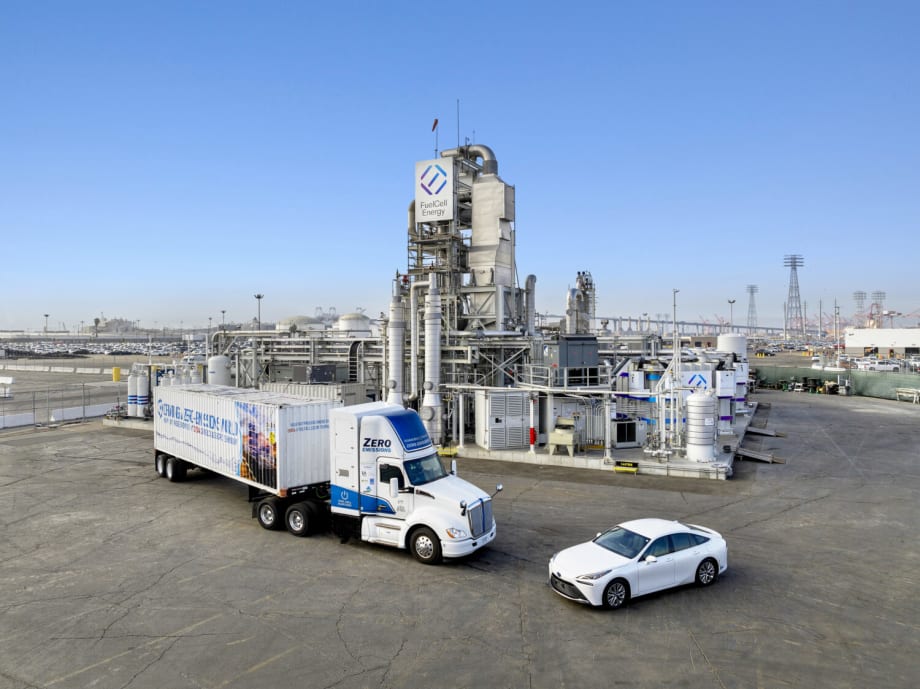
Biogas is a product of both food and green waste. Directed biogas is essentially a purified biogas that is created offsite and then delivered to the station. It is used to power the Tri-gen fuel cell system, which then converts it into renewable electricity and hydrogen, with water as a byproduct.
Photo: Toyota
A new facility that Toyota says is the first of its kind will produce renewable electricity, renewable hydrogen, and water from directed biogas for its logistics operations at the Port of Long Beach in California.
FuelCell Energy and Toyota Motor North America announced the completion of this “Tri-gen" system, which will enable Toyota Logistic Services Long Beach to be the company’s first port vehicle processing facility in the world powered by onsite-generated, 100% renewable energy.
The products produced by the Tri-gen system (which is owned and operated by FuelCell Energy) will be supplied to Toyota under a 20-year purchase agreement.
“By utilizing only renewable hydrogen and electricity production, TLS Long Beach will blaze a trail for our company,” said Chris Reynolds, chief administrative officer, Toyota. “Working with FuelCell Energy, together we now have a world-class facility that will help Toyota achieve its carbon reduction efforts, and the great news is this real-world example can be duplicated in many parts of the globe.”
Tri-gen Supports Toyota’s Port Facilities and Operations
FuelCell Energy’s fuel cell technology will support Toyota’s operations at the port, using an electrochemical process that converts directed renewable biogas sourced from agricultural waste into electricity, hydrogen, and usable water.
Tri-gen produces 2.3 megawatts of renewable electricity, part of which will be used by TLS Long Beach to support its operations at the port, which processes approximately 200,000 new Toyota and Lexus vehicles annually.
The FuelCell Energy Tri-gen system can produce up to 1,200 kg/day of hydrogen, which will provide for TLS Long Beach’s fueling needs for its incoming light-duty fuel cell electric vehicle (FCEV) Mirai, while also supplying hydrogen to the nearby heavy-duty hydrogen refueling station to support TLS logistics and drayage operations at the port. Hydrogen production can be ramped up and down based on needs/requirements.
In addition, 1,400 gallons of water will be co-produced per day from Tri-gen’s hydrogen production process and will be used by TLS Long Beach for car wash operations for vehicles that come into port prior to customer delivery. This will help decrease the use of constrained local water supplies by approximately half a million gallons per year.
By supporting TLS operations at the Port of Long Beach, Tri-gen’s carbon-neutral products are expected to reduce more than 9,000 tons of CO₂ emission from the power grid each year.
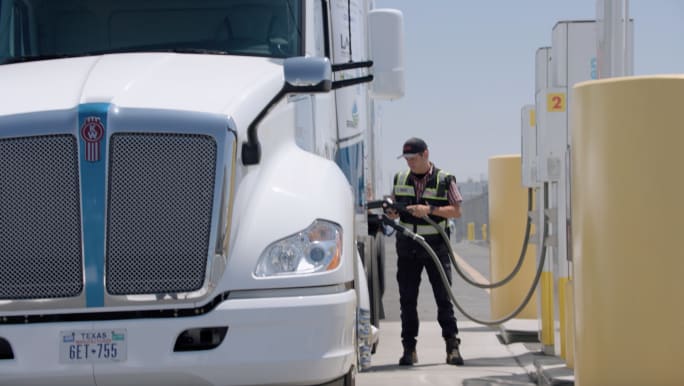
Toyota partnered wth Shell to create both public and internal hydrogen fueliing facilties.
Photo: Screen capture of Toyota video
“Renewable hydrogen is an important fuel for the future of the Port of Long Beach and the shipping industry,” said Port of Long Beach CEO Mario Cordero. “The renewable hydrogen generated by the ‘Tri-gen’ system that Toyota commissioned, and similar projects, is part of our multi-strategy approach to help fuel the transition of equipment like locomotives, harbor craft, cargo-handling equipment and trucks to zero emissions.”
Tri-gen will also help to avoid more than 6 tons of grid NOx emissions, which are harmful to both people and the environment, and has the potential to reduce diesel consumption by more than 420,000 gallons per year by using hydrogen-powered fuel cell trucks in port operations.
Excess electricity not used by TLS will be delivered to the local utility, Southern California Edison, adding a renewable, resilient, and affordable baseload electric generation resource to the electric grid.
Toyota Long Beach Facility Nears Carbon Neutrality
The Tri-Gen facility is part of an overall renovation of the TLS Long Beach facility.
The Portal Truck / Heavy-Duty Vehicle Hydrogen Fueling Station will be part of a five-station heavy-duty fueling network for the Los Angeles basin that provides multiple sources of hydrogen throughout the region.
The Tri-generation (Tri-gen) Direct Fuel Cell Power Plant will supply the hydrogen to the fueling stations. Bio-gas sourced from agricultural waste will produce high-quality, 100% renewable hydrogen fuel for the Portal heavy-duty fuel cell electric trucks and FCEV Mirai.
At full utilization, Tri-gen is expected to produce 1.2 tons of renewable hydrogen daily, capable of supporting 10,000 Mirai processed by the port annually, and a fleet of 20 or more Class 8 fuel cell electric trucks operating drayage routes.
More Fuel Smarts

How Volvo Updated Its D13 for EPA 2027 [Watch]
Volvo’s updated D13 promises lower emissions without sacrificing performance or fuel economy. Take a closer look at what changed inside the engine in this HDT Spotlight video.
Read More →
Diesel Price Spike Shortens Payback for Natural Gas Trucks, Report Says
Energy Vision estimates fleets could recover the higher purchase price of an RNG-fueled Class 8 tractor in 1.3 to 2.8 years under current fuel-price scenarios.
Read More →
Calstart Becomes Catalyst Mobility, Reflecting Broader Focus
Calstart is now Catalyst Mobility, reflecting the nonprofit’s growing national role in clean transportation, including zero-emission trucks, infrastructure and incentive programs.
Read More →

Record Diesel Prices Squeeze Trucking Fleets
Average U.S. diesel prices have climbed to nearly $6 a gallon, surpassing the 2022 record as tight refinery capacity and Middle East disruptions keep fuel costs elevated.
Read More →
How Fuel Delivery Shapes Engine Performance
Fuel delivery depends on more than what happens at the injector. For fleet, maintenance and technical professionals, looking at the full path from pump to injector can provide useful context for understanding engine performance.
Read More →
East Coast Port Launches $45M Electric Truck Push
The Port Authority of New York and New Jersey announced millions in incentives for zero-emission drayage trucks, yard tractors, and new charging hubs near the port.
Read More →
California Bill Could Shed Light on Electric Truck Prices
Why do battery-electric Class 8 trucks remain so expensive? A California bill headed to Gov. Gavin Newsom would give fleets and state agencies more visibility into what manufacturers charge.
Read More →
Detroit Opens Orders for EPA 2027 Engines
Detroit isn’t starting from scratch to meet EPA 2027 diesel emissions standards. Its Gen 6 DD13 and DD15 engines keep much of today’s platform while updating the fuel and aftertreatment systems.
Read More →
Zero-Emission Truck Corridor Planned for West Coast
California, Oregon, Washington, British Columbia and Baja California are coordinating plans for truck charging and hydrogen fueling from Canada to Mexico.
Read More →
A Closer Look at Kenworth’s Electric T880E Vocational Truck [Video]
Learn more about Kenworth's T880E battery-electric vocational truck at the Paccar Technical Center, including its range, applications, upfitting considerations, and PTO options, in this HDT Spotlight video.
Read More →