




Transportation Community Urges FCC to Protect Critical Spectrum
The Intelligent Transportation Society of America along with major automakers, safety advocates and transportation officials from across the country, are joining together to urge the Federal Communications Commission to protect the 5.9 GHz band of spectrum.
The Intelligent Transportation Society of America along with major automakers, safety advocates and transportation officials from across the country, are joining together to urge the Federal Communications Commission to protect the 5.9 GHz band of spectrum.
The spectrum is set aside for connected vehicle technology – which is expected to save thousands of lives each year – from potentially harmful interference that could result from allowing unlicensed Wi-Fi-based devices to operate in the band.
The Wi-Fi expansion plan, announced by FCC Chairman Julius Genachowski at the Consumer Electronics Show last month, will be the topic of a Feb. 20 commission meeting in which the FCC plans to consider a Notice of Proposed Rulemaking to substantially increase the amount of unlicensed spectrum available for unlicensed devices in the 5 GHz band.
The 5.9 GHz band – one of two bands under consideration – was allocated by the FCC for development of vehicle-to-vehicle and vehicle-to-infrastructure communications technology which the U.S. Department of Transportation estimates could potentially address 80% of all unimpaired crash scenarios, saving thousands of lives each year.
According to the ITS America-led coalition, “We support efforts to identify spectrum that may be utilized to expand Wi-Fi applications. But with over 30,000 deaths on our nation’s roads every year, we also believe it is critical that efforts to open up additional spectrum do not come at the expense of revolutionary life-saving technologies.”
“The U.S. DOT, automakers and high-tech leaders have invested hundreds of millions of dollars to develop connected vehicle technology based on the availability of spectrum in the 5.9 GHz band,” said ITS America President and CEO Scott Belcher. “We are at the cusp of it becoming reality, and we owe it to the American taxpayers to protect their investment and see this life-saving innovation through to implementation.”
A study by the National Telecommunications & Information Administration recognized that connected vehicle technology “could help prevent the majority of types of crashes that typically occur in the real world, such as crashes at intersections or while changing lanes.”
It concluded that “further analysis is required to determine whether and how the identified risk factors can be mitigated,” and that “While the state-of-the-art of existing and proposed spectrum sharing technologies is advancing at a rapid pace, NTIA recognizes the importance of these bands to the federal agencies…and the transportation industry and the potential risks of introducing a substantial number of new, unlicensed devices into them without proper safeguards.”
In the letter to FCC Chairman Genachowski, the transportation leaders ask the commission to allow for due diligence by ensuring that any timelines contained in a proposed rulemaking relating to the 5.9 GHz band are consistent with the NTIA schedule for completing its quantitative evaluation and issuing final recommendations. It was also asked that that the commission not precede a decision by the U.S. DOT regarding implementation of a connected vehicle network which has the potential to greatly reduce the 6 million crashes and more than 30,000 deaths which occur on U.S. roads annually.
“We stand ready to work with NTIA, the wireless industry, and other federal and non-federal stakeholders to evaluate the feasibility of existing, modified, proposed and new spectrum-sharing technologies and approaches,” according to the transportation leaders.
“However, this process should be allowed to proceed without a predetermination by the FCC that spectrum sharing in the 5.9 GHz should be the ultimate outcome.”
ITS America was joined on the letter by AAA, the Alliance of Automobile Manufacturers, Association of Global Automakers, American Association of State Highway and Transportation Officials, American Highway Users Alliance, American Public Transportation Association, Commercial Vehicle Safety Alliance, American Traffic Safety Services Association, Transportation for America, and numerous other public and private sector leaders.
The letter and a complete list of signatories is available by clicking here.
More Drivers
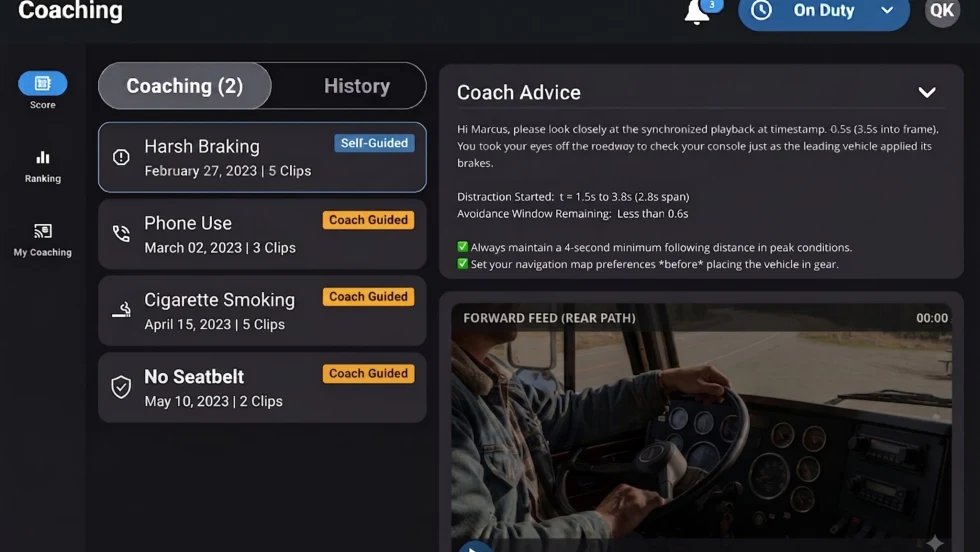
Platform Science Adds Dispatch and Safety Tools
Four additions to PS Fleet help fleets monitor loads, manage driver coaching, share truck locations and adjust video system settings.
Read More →
When Language Stops the Truck: The Return of ELP Out-of-Service Orders
English language proficiency rules for commercial drivers aren’t new, but renewed out-of-service enforcement has raised the stakes. Here’s what carriers need to know before a driver reaches a roadside inspection.
Read More →
Samsara Launches Custom AI Agent Builder
Agent Studio lets fleets create AI tools for hours-of-service monitoring, reporting and driver support, including agents that communicate by phone.
Read More →
Trucker Path Expands Reserved Parking Network
Trucker Path has added close to 6,000 more truck parking spaces to its Trucker Path Reserved Parking Network with the addition of Safe Truck Parking.
Read More →
EEOC Sues Texas Trucking Company Over Driver Age Limits
The agency says Trancasa USA rejected applicants over 65 and applied tougher driving-record standards to those over 60.
Read More →
Nussbaum, Roehl Announce Second Driver Pay Increase This Year
This year has seen a swath of major truck driver pay increases as freight capacity has tightened.
Read More →
From One Generation to the Next: How Mentorship Builds Safer Truck Drivers
After three decades in trucking, Harold Perry shares what he's learned about driver safety, mentorship, and helping the next generation build confidence behind the wheel.
Read More →
Truck Drivers Need More Than Another Alert
Fleets have more visibility into truck health, safety events, and driver activity than ever. The next challenge is turning all that information into useful guidance for the person who has to decide what to do next.
Read More →
FMCSA Removes 110 Truck Driver Training Schools from Certified ELDT List
Federal regulators also are targeting more than 160 additional training providers and launching a nationwide audit of third-party CDL skills testers as part of a broader crackdown on trucking fraud.
Read More →
Hours of Service Pilot Programs: FMCSA Readies for 2027 Rollout
Two pilot programs could eventually reshape hours-of-service rules, giving truck drivers options to pause their 14-hour clock or use longer split sleeper rest periods.
Read More →