




Related: Clean Hydrogen-Powered Vehicles - Are We There Yet?
Toyota’s Hydrogen Fuel Cell Truck to Run Routes in California
Toyota Motor North America has announced that its Project Portal Class 8 hydrogen fuel cell truck has completed initial testing and development and will begin regular drayage routes at ports in Southern California starting in late October.
by Staff
October 13, 2017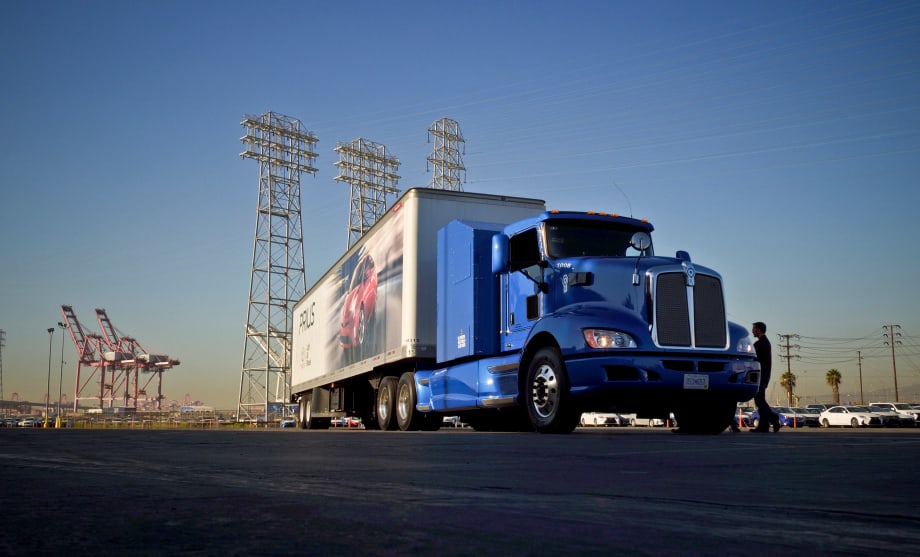
2 min to read
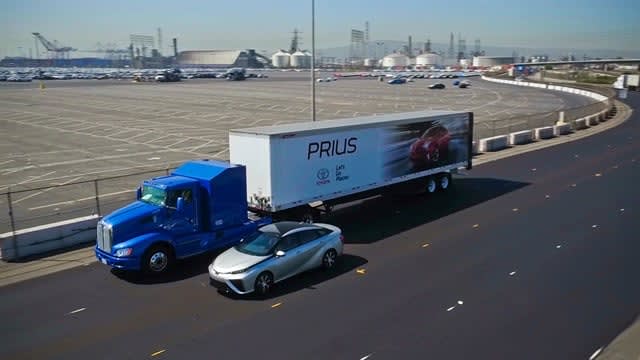
Toyota’s Hydrogen Fuel Cell powered Class-8 proof-of-concept is seen operating in the Port of Long Beach.Photos: Toyota
Toyota Motor North America has announced that its Project Portal Class 8 hydrogen fuel cell truck has completed initial testing and development and will begin regular drayage routes at ports in Southern California starting in late October.
Project Portal has already completed more than 4,000 successful miles of testing while pulling drayage-rated cargo and will begin moving goods from select Port of Los Angeles and Long Beach terminals to surrounding rail yards and warehouses for distribution on Oct. 23. Project Portal was originally announced in April of this year as a proof of concept to determine the feasibility of fuel cell technology for heavy-duty trucks in drayage operations.
With initial testing complete, the truck will log around 200 miles worth of daily trips from the twin ports. The localized, frequent route patterns are designed to test the drayage duty-cycle capabilities from the fuel cell system while capturing real-world performance data. As the study progresses, Toyota will introduce the truck to longer-haul routes.
The initial feasibility study operations will be managed by the TMNA Project Portal team in collaboration with Toyota’s Service Parts Accessories Operations group and its drayage provider, Southern Counties Express.
“Toyota has led the way in expanding the understanding and adoption of fuel cell technology,” said Bob Carter, TMNA executive vice president. “From the introduction of the Mirai passenger vehicle to the creation of the heavy-duty fuel cell system in Project Portal, Toyota continues to demonstrate the versatility and scalability of the zero-emission fuel cell powertrain.”
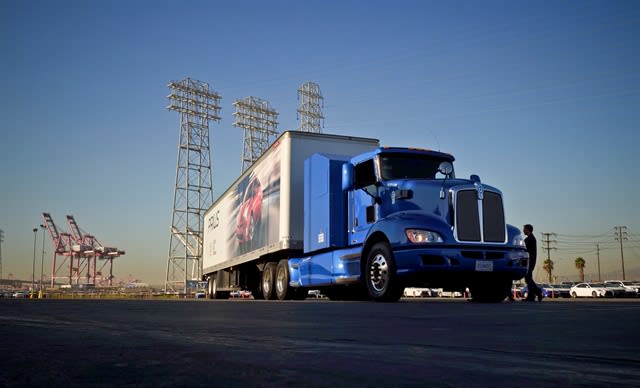
Project Portal is a fully functioning heavy-duty truck concept that generates more than 670 horsepower and 1,325 lb.-ft. of torque from two Mirai fuel cell stacks and a 12kWh battery - a relatively small battery to support Class 8 load operations. The concept’s gross combined weight capacity is 80,000 pounds and its estimated driving range is more than 200 miles per fill, under normal drayage operation.
More Fleet Management

Sponsored•September 16, 2026
Color Match Smarter: Tools That Restore & Perform
For fleet managers and collision repair professionals keeping heavy-duty trucks on the road, getting the color right the first time isn't just about appearance — it's about efficiency, turnaround time, and bottom-line results. Discover how today's digital color tools are transforming the repair process from guesswork to precision.
Read More →
FMCSA Pauses Biennial-Update Enforcement Amid Motus Transition
Carriers whose updates were due on or after June 1 have more time, while FMCSA works to stabilize its new registration system and warns of phishing sites impersonating its new carrier registration system, Motus.
Read More →
Sponsored•September 14, 2026
2026 Blueprint for Countering Smarter Supply Chain Theft
Cargo theft is no longer just the cost of doing business. It's a multi-billion-dollar criminal enterprise exploiting vulnerabilities across your fleet, drivers, and supply chain.
Read More →


Sponsored•September 1, 2026
How Telematics Improves Visibility, Control, and Performance in Refrigerated Fleets
Explore how telematics help refrigerated fleets improve visibility, uptime, efficiency, compliance, and cargo protection across connected cold chain operations.
Read More →
What the U.S.-Canada Trade War Means for Trucking
Escalating U.S.-Canada tariffs could disrupt cross-border freight, reduce truck volumes, raise costs, and create new uncertainty for carriers on both sides of the border.
Read More →
What Are Trucking’s Top Concerns for 2026?
The American Transportation Research Institute wants to know what's worrying trucking fleet managers, drivers, and other stakeholders in its annual Industry Issues survey.
Read More →
American Trucking Associations Looks for a New Leader
ATA President and CEO Chris Spear abruptly left his job at the association on August 21, at a pivotal time for the trucking industry.
Read More →
Public Wi-Fi Cybersecurity Risks: How Truck Drivers and Fleets Can Protect Their Data
Public Wi-Fi can expose truck drivers and fleets to credential theft, malware, and other cyber threats. Here’s how to reduce the risk on the road.
Read More →
For Nicky Cupp, Fleet Innovation Starts With Frustration
HDT Truck Fleet Innovator Nicky Cupp turns everyday pain points at Fraley & Schilling into opportunities for better technology and smarter processes.
Read More →
Adam Buttgenbach’s Approach to Electric Trucks: Start With Where They Fit
HDT Truck Fleet Innovator Adam Buttgenbach helped PepsiCo build one of North America’s largest EV fleets by focusing on where electric trucks make operational sense.
Read More →