




The Software Providers's View, Part 2: Sunset for EDI?
Whatever happens in trucking technology, trucking software makers deal -- and interface -- with it first. So Truckinginfo.com recently asked four major truckload software executives their take on today's hot technologies. Today's subject: EDI. Kristy Conerly, General Manager, Innovative Computing Corp., Oklahoma City. For Conerly, it's still high noon for EDI (Electronic Data Interchange). "We definitely see EDI as a driving force," said Conerly

Whatever happens in trucking technology, trucking software makers deal -- and interface -- with it first. So Truckinginfo.com recently asked four major truckload software executives their take on today's hot technologies. Today's subject: EDI.
Kristy Conerly, General Manager, Innovative Computing Corp., Oklahoma City.
For Conerly, it's still high noon for EDI (Electronic Data Interchange).
"We definitely see EDI as a driving force," said Conerly.
What Innovative's carrier customers want is the ability to change EDI vendors without major hassle, she explained. So Innovative provides a solution called Flex EDI, which puts a carrier's mapping (the alignment of their own database with a customer's or vendor's electronic documents) into a format that can be easily used by participating EDI vendors.
But EDI itself?
"I don't see it going away," said Conerly. "My customers that I hear find EDI necessary between shippers and carriers. I don't see them letting go of that right now."
Tom Weisz, President, TMW Systems, Beachwood, Ohio
The end of EDI is a matter of time, according to Weisz.
"EDI is one of those things that nobody likes," he said. "Everybody knows that there are alternatives, but they are still using it."
One reason, he explained, is the continuing lack of standards for XML (eXtensible Markup Language), a likely replacement for EDI.
XML formats electronic document data fields much the way HTML (HyperText Markup Language) defines a web document's type and physical appearance. XML fields can represent things like addresses, billing codes, number of pieces in a shipment, etc. A shipper would enter the variables in an XML document, which would be understood by a carrier or trading partner.
But the business community has yet to arrive at standards for those XML fields.
"All the promise of XML is still a promise. There's still a lot of work left to be done. XML is just the skeleton of a standard. The muscle and sinews are still being put on," said Weisz.
Randall Burrell, vice president, Maddocks Systems, Vancouver, B.C., Canada
"EDI will be in the industry for the foreseeable future, but there will be other technologies that will be much more viable," said Burrell. "EDI still has a place, but it's static and it's in its sunset years."
Prominent among those other technologies is XML, which can be shared among trading partners over the Internet, helping provide the supply chain visibility we hear so much about, Burrell said.
"So you're not tied into this tight little file going across the phone line between two people," said Burrell. "You have a broader scope you can deal with."
Tom McLeod, President, McLeod Software, Birmingham, Ala.
Mcleod sees a future for XML, perhaps beginning as soon as next year. But for now, it's an EDI world.
"What we're seeing is a lot of standard EDI activity," said McLeod. In fact, McLeod said that in 2000, "EDI took off."
One reason, he explained, was that EDI projects in many big corporations were on hold during 1998 and 1999 while IT departments dealt with Y2K concerns.
"So the year 2000 clicks over and now there's a pretty good flurry of companies saying, okay, let's get this thing going that we've had in the works for a couple of years," McLeod explained.
"My gut estimate is the average EDI implementation for a large corporation takes anywhere from two to four years from conception to actual implementation," he said.
"A more standardized XML could shorten those times, but if an XML initiative were undertaken at a large corporation last year, say, I feel that 2002 would be the first time we'd see that shipper come out and say to its core carriers, okay, I want you in this new format and here's your deadline. That's typically how carriers get the word to get on board with EDI."
But widespread XML use awaits the adoption of standards, said McLeod.
Meanwhile, the gathering EDI-XML confrontation is not without irony.
McLeod said that many companies, particularly carriers, are rooting for XML so they can lower expenses.
"What they're talking about is they don't want to go through the third-party VAN (Value Added Network) because there's an incremental cost in terms of session charges and character charges."
VANs frequently provide the EDI channel between carriers and major corporate customers. In the process a VAN typically checks for errors, follows up where necessary and bundles transmissions for the shipper's convenience. VANs also supply valuable statistics.
"The large corporations don't want to do that for themselves, so the third-party VANs are already set up to do XML. They'll do XML to EDI or EDI to XML. They're very good at that kind of thing."
And to complicate matters, popular commercial software packages are having an influence.
"Of course, Microsoft in their Office XP is building in a lot of XML support," said McLeod.
"But a lot of the high-end accounting packages that a lot of large companies use are now being sold with built-in EDI support. So it actually will be easier for many small to mid-sized or decent volume shippers to actually crank up standard EDI projects than it was before," said McLeod.
For the complete software provider's perspective, see the October issue of Heavy Duty Trucking magazine.
More Aftermarket
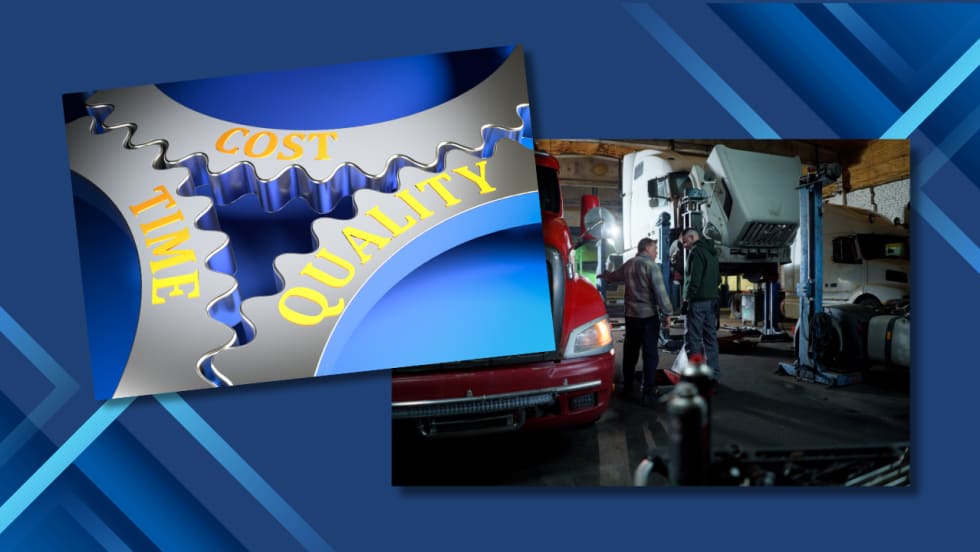
What Three Fleets Are Doing Differently When Buying Truck Parts in 2026
With freight improving but costs still climbing, fleet maintenance executives explain how they're balancing price, quality, and supplier relationships.
Read More →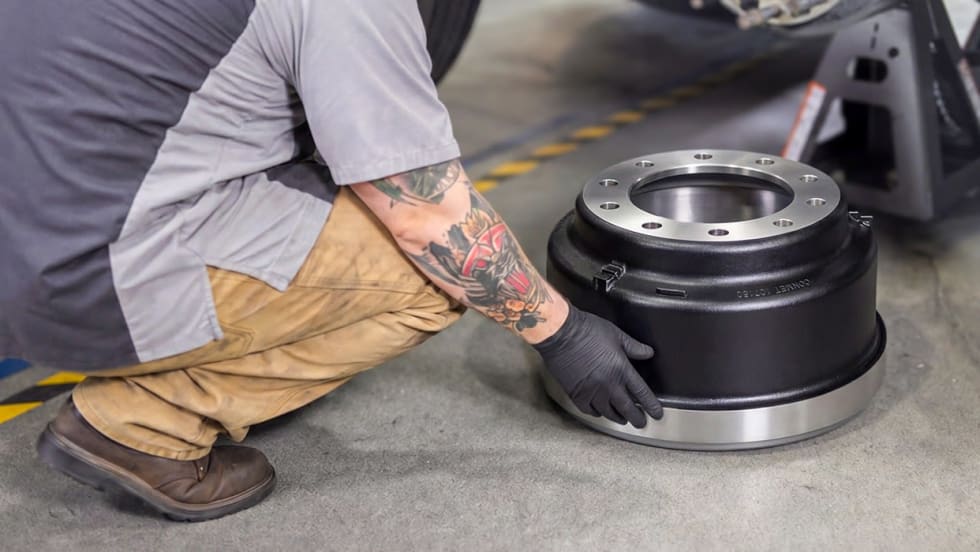
ConMet Expands Aftermarket Brake Drum Lineup With TruCast
A new heavy-duty truck brake drum option in the aftermarket gives customers more flexibility within the ConMet product family.
Read More →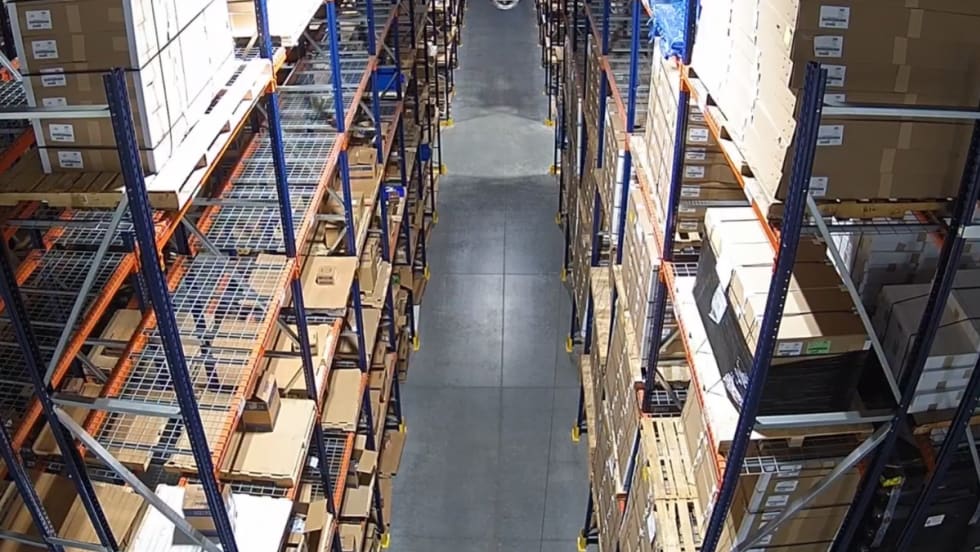
Phillips Opens High-Tech Distribution Center for Faster Parts Delivery
Phillips Industries’ new Cincinnati-area distribution center is now shipping aftermarket trucking parts nationwide, aiming to speed up delivery times for customers.
Read More →
Volvo to Sponsor America’s Road Team for 2025
Volvo Trucks announced that it is extending its exclusive sponsorship of America’s Road Team for 2025.
Read More →
Webb to Start Taking Orders for UltraSet Pre-Adjusted Wheel Hubs
Webb, which recently acquired the Stemco Trifecta pre-adjusted hub program, will soon start taking orders for its replacement pre-assembled hub, the UltraSet.
Read More →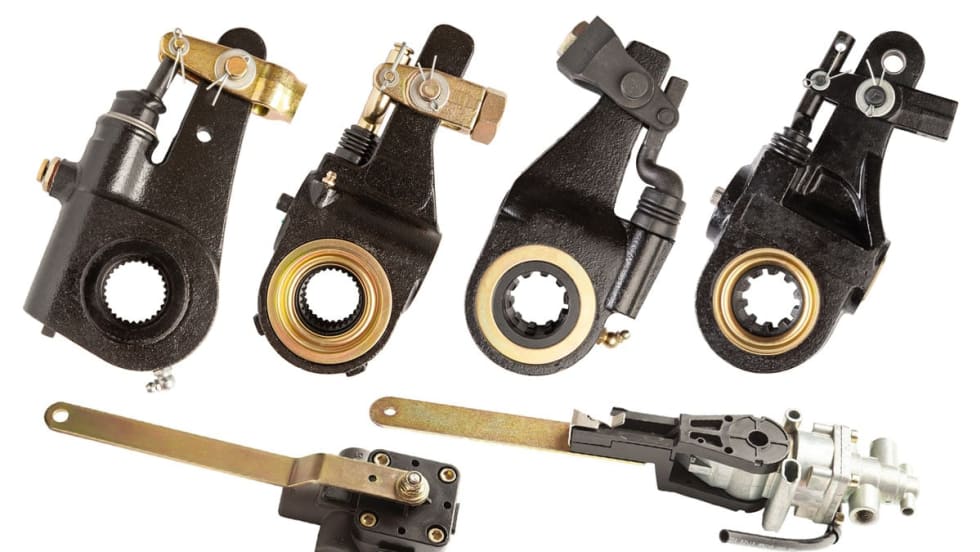
All-Makes Automatic Brake Adjusters, Ride Height Control Valves from Midland
SAF-Holland has added automatic brake adjusters and ride height control valves to its Midland All-Makes Program.
Read More →
ZF Aftermarket Expands [pro]Academy Training
ZF Aftermarket said it is expanding its ZF [pro]Academy training and will be adding 40 new modules this year.
Read More →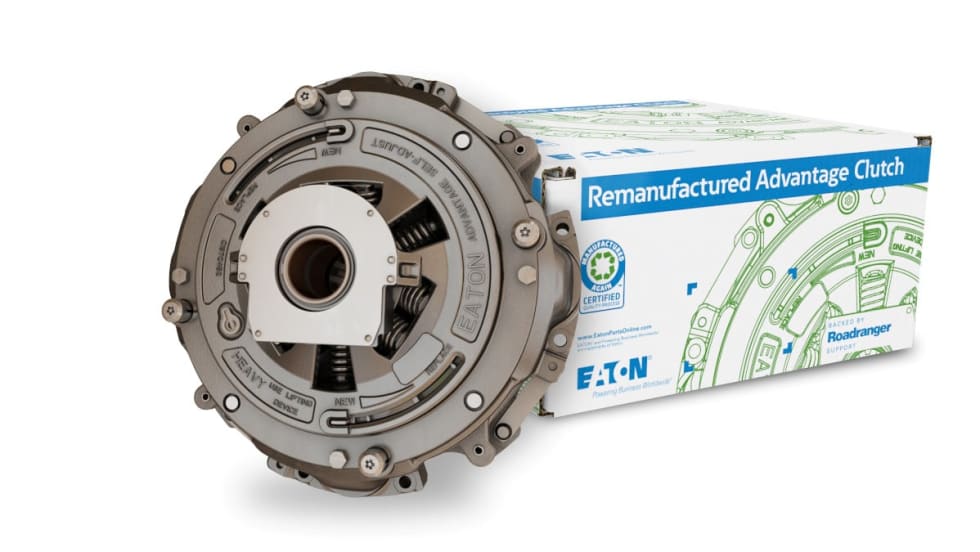
Eaton Adds Remanufactured Advantage Line of Clutches
Eaton has added its Advantage clutches to its remanufactured product line. The clutches feature a unique strap drive intermediate plate designed to allow customers to choose the latest OE specification
Read More →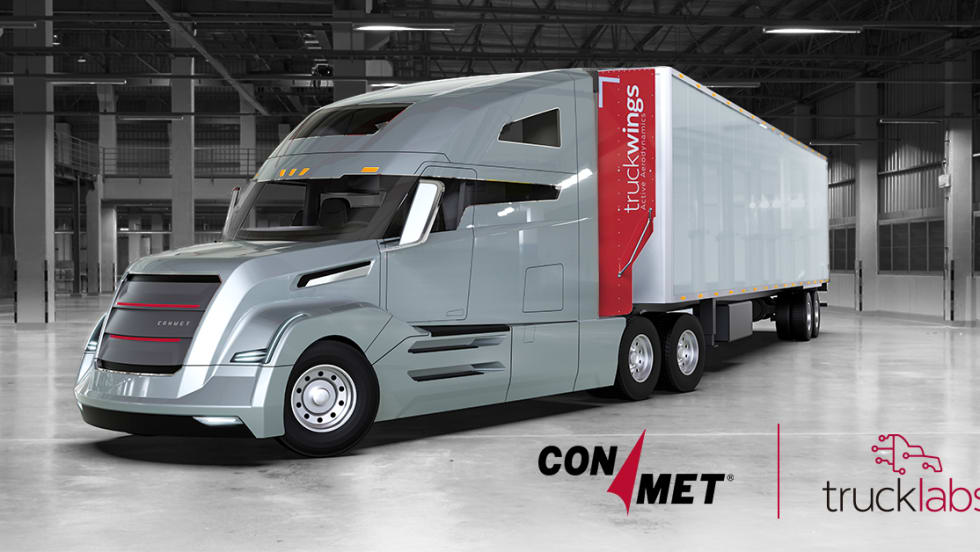
ConMet Acquires TruckLabs, the Creator of TruckWings
Commercial truck and trailer parts provider ConMet acquired TruckLabs, the company that created TruckWings, an aerodynamic device that attaches to truck cabs and deploys to close the gap between truck and trailer. TruckLabs now operates as a subsidiary of ConMet.
Read More →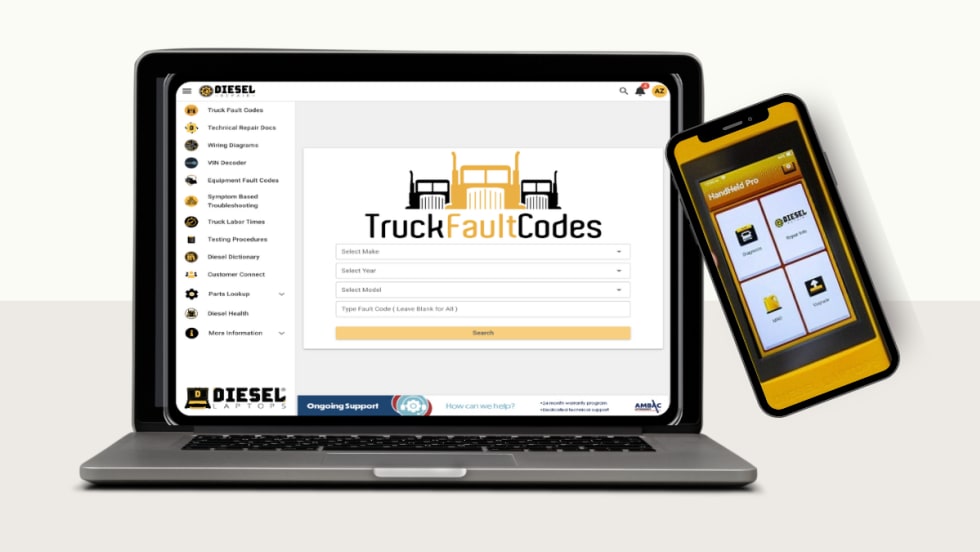
Diesel Laptops Releases Fault-Code-to-Part-Number Tool
Diesel Laptops said its Truck Fault Codes allows users to input a fault code and immediately identify and order the parts needed to complete repair work.
Read More →