




The Logic Behind HOS: Part 2
All of the research into the causes and effects of fatigue -- or more precisely, driver alertness behind the wheel -- reveals little more than this: Drivers are humans, a diurnal species, and generally require about
All of the research into the causes and effects of fatigue -- or more precisely, driver alertness behind the wheel -- reveals little more than this: Drivers are humans, a diurnal species, and generally require about eight consecutive hours of sleep every night, and a catch-up or recovery period after a longer interval.
From comments made by carriers and drivers alike, the biggest problem with the current rules is that they do not require enough time off for drivers to obtain adequate sleep. The primary fault lies in the present 18-hour drive-rest cycle, which totally ignores the human's circadian rhythm that has a substantial impact on driver alertness. Recent studies show that drivers average a little more than five hours of sleep in an eight-hour break.
Why that break must only be eight hours can only be attributed to the inability of carriers and drivers to regulate themselves, because even the present rules in no way prevent a longer off-duty period.
Ignoring unreasonable schedule demands and, to a lesser extent, poor time-management skills, the secondary fault in the present rules is that they often cause drivers to run out of the 60- and 70-hour driving limitations at inconvenient times and locations.
The rules allow drivers to cover about 3,000 miles in a little more than four days. If the driver goes to the limit, the rules require a three-day break before he can resume work. That the driver has to maximize the allowable time and paint himself into that box is once again taken for granted, and the regulations are the convenient scapegoat.
Consequently, the proposal is structured around a normal 24-hour day and 7-day week. Each daily cycle must include 10 consecutive hours off duty. Also, each weekly cycle must provide a recovery period of at least two nights.
The principal targets of the proposed rules, as with the existing rules, are drivers who travel long distances. After all, the risk we are attempting to minimize is the propensity for sleep, drowsiness and fatigue-induced inattention while driving.
The proposed rules, therefore, are more precise and more stringent when it comes to this category of drivers. For example, one might say that if the rules provide for decent sleep and recovery periods, they shouldn't concern themselves with the remainder of the waking day or workweek. We have proposed a safety net, however, for long-distance drivers in the form of an additional requirement for two hours off duty in each 24 hours.
Other options would encourage longer weekends at home, and allow shorter weekends while away from home, to enhance driver quality-of-life.
The proposal takes a bold step forward by requiring electronic on-board recorders in longhaul and regional operations. The terms of this requirement are intended to encourage a rapid shift to available technology, and to make it clear that the agency no longer intends to engage in the gamesmanship of record fudging. This is a serious business, and either the carriers and drivers account completely and accurately for their compliance with the rules, or they risk the sanctions for failing to comply.
Unlike the maximum-hours-of-work provisions in the Fair Labor Standards Act of 1937, which merely mandates extra compensation for those who are required to work more than 40 hours a week, the control over the number of hours a person may work in many positions in the transportation industry is much more direct. While one provides protection against the economic exploitation of labor, the more direct regulatory approach presumes to dictate just how long a person may work before creating an unacceptable risk to public safety.
In sum, this new proposal would make the hours of service regulations substantially more effective by requiring motor carriers and drivers to adhere to the following standards and enforcing them.
· Promote scheduling, dispatching, and operating practices that minimize the use of tired, inattentive drivers.
· Give drivers a consecutive minimum off-duty period of time each workday and workweek for restorative sleep.
· Make available for each driver an additional minimum off-duty period of time each workday for personal necessities and rest at the driver's discretion.
· Empower the driver to accept or refuse dispatch or continuation of a trip based upon the driver's assessment of his or her alertness level.
· Enhance company and driver awareness of how to avoid driver impairment due to lack of sleep.
· Improve compliance with reasonable work-rest standards.
· Require the use of automated EOBR technology to monitor the work-rest cycles of long-haul and regional drivers and compliance with the rules, as well as encourage the use of technology for other drivers.
The government has now laid its cards on the table, and it's time for the industry, drivers, advocates, enforcers, critics and others interested in this subject to come forward and make their comments known.
I strongly recommend that the proposal be read carefully before reacting to this or that report. It may not be the perfect answer to the troubling issue of driver fatigue and alertness, but a lot of care and attention went into its presentation. It is worthy of careful consideration, especially in terms of practicality, acceptance, enforceability, driver protections, and, of course, attainment of safety improvements.
Paul Brennan, former Director of Research and Standards at the Office of Motor Carriers, is the principal author of the hours of service proposal. He retired from the Department of Transportation at the end of last year.
More Drivers

Competition Heating Up for Truck Drivers
New report reveals rising driver hiring costs, the return of sign-on bonuses, growing AI advantages, and the operational factors shaping driver retention.
Read More →
How Fraley & Schilling Improved Logbook Compliance by Over 50%
Fraley & Schilling needed a way to close a compliance workflow gap in its ELD system without adding more work from driver training, reminders, and back-office follow-ups. It found the answer in a custom driver app.
Read More →
Volvo Goes Gaming
Volvo has roared into American Truck Simulator with two new flagship trucks.
Read More →
What the Best Fleets to Drive For Teach About Driver Retention
Survey fatigue, AI-powered routing, owner-operator expectations, and the decline of social media all emerged as themes from this year's Best Fleets to Drive For program.
Read More →
Driver Retention Lessons From the Best Fleets to Drive For
What separates trucking's best workplaces from the rest? Jane Jazrawy shares the biggest lessons from this year's Best Fleets to Drive For program on driver retention, communication, AI, and workforce trends on the HDT Talks Trucking podcast.
Read More →
Farewell, CDL: Why I'm Giving Up My Commercial Driver's License
After more than 20 years as a CDL holder, HDT Executive Editor Jack Roberts is letting his commercial license expire. Not because he wants to — but because trucking's nuclear verdict crisis has made the risks of public-road test drives too great for editors, manufacturers, and everyone involved.
Read More →
How Top Trucking Fleets Improve Driver Retention [Video]
What do healthy snacks, optimized routing, and just picking up the phone have in common? They're all strategies the Best Fleets to Drive For are using to retain truck drivers.
Read More →
Trucker Path Adds Verisk CargoNet Theft Data to Navigation Platform
Trucker Path’s new cargo theft risk overlays give drivers and fleets visibility into high-risk areas, stolen commodity trends, and theft hotspots.
Read More →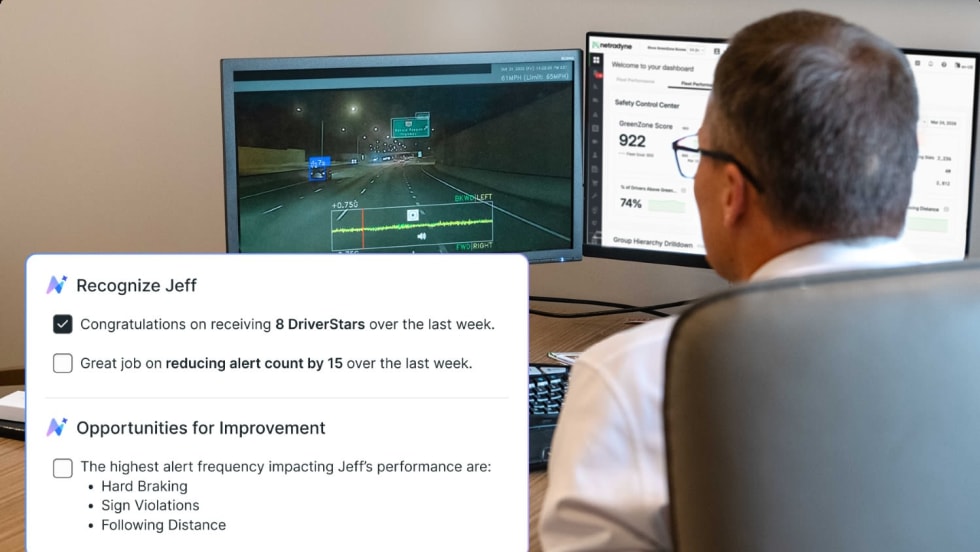
Netradyne Intelligence Uses New AI Agents to Automate Response to In-Cab Camera Data
The company called the next-generation in-cab camera safety platform "a fundamental shift from systems that report on what happened to systems that actively drive what should happen next."
Read More →
Why Truck Detention Keeps Costing Fleets Time and Money
A 2024 ATRI study found detention affects nearly 40% of truckload stops and costs the industry more than $15 billion annually. Despite the toll on drivers, fleets, and supply chains, the problem remains stubbornly persistent.
Read More →