




The Impact of Ecommerce on Trucking: Part 1
The ecommerce marketplace changes practically from hour to hour, but here are three observations that help keep things in perspective. First, this internet-based technology will revolutionize the way trucking does business. Second, no one knows exactly
The ecommerce marketplace changes practically from hour to hour, but here are three observations that help keep things in perspective. First, this internet-based technology will revolutionize the way trucking does business. Second, no one knows exactly how the revolution will unfold. Third, if you wait until you've got it figured out, it will be too late.
These themes highlighted a recent ecommerce conference sponsored by the National Small Shipments Traffic Conference, a trade group representing companies that ship their products mainly in less-than-truckload lots. Carriers and shippers alike were frank about their struggle to keep their balance as the ground shifts beneath their feet. Freight is still freight - it has to be put on a truck and moved - but the networked computers of ecommerce are creating new ways of buying and selling transportation services.
Said David Stubblefield, president and CEO of ABF Freight System, "Ecommerce will cause a more dramatic change than deregulation."
You can see the scope of the revolution in the numbers. Alan Amling, director of electronic commerce at United Parcel Service, said the overall volume of ecommerce will increase almost five thousand times over the next three years - from 130 billion transactions in 1999 to 6.3 trillion in 2003.
"Online demographics are beginning to look like the overall population," he said. "This technology is weaving into the fabric of society." And just wait, he warned, until your kids can order products directly off the TV screen.
Stubblefield noted that only a third of U.S. households will be connected to the Internet by end of this year, so the biggest changes are yet to come.
He cited estimates that business-to-consumer transactions - B2C, for short - will grow from 30 billion to 2 trillion in the next two years. Half of the purchases on the Internet are made by men, but most shopping is done by women - so look for more delivery trucks in neighborhoods as women become more comfortable with the Internet.
The lion's share of the growth will go to business-to-business commerce. Stubblefield cited estimates of 145 billion transactions last year, rising to 7.3 trillion by 2004. Thomas H. Weidemeyer, senior vice president of transportation operations for UPS, projected that by the end of this year, 91% of U.S. businesses will do their purchasing on the Internet - compared to 31% now.
We're also talking about trillions of dollars. Trucking analysts at Deutsche Bank Alex. Brown forecast B2C growth from $20 billion in 1999 to $144 billion in 2003, and B2B growth from $109 billion in 1999, rising to $1.3 trillion by 2003.
This is not new money or new freight. It represents a shift in the way business is transacted - a shift that will create only modest increases in transportation revenue. The real change, say the Alex. Brown analysts, will be who handles the freight.
By giving truckers and their customers a new way to communicate, ecommerce changes important aspects of the transportation marketplace.
It has a tendency to take the distribution middleman out of the picture. Via the Internet, truckers and their customers can find each other quickly and with relative ease. That connection does not necessarily mean all the problems are solved, but it does create the possibility that the middleman can be avoided.
One effect of this "disintermediation," as the pundits call it, is to give the customer more control.
As Weidemeyer put it, the Internet gives customers the power to demand, rather than choose from what is offered to them.
"With the tap of a keyboard, customers can research products, compare features, share information with other users, collaborate with partners, and dictate terms conditions and, increasingly, price, for just about any product or service under the sun," he said.
Right now, the B2B transportation marketplace is in its infancy, said Amling of UPS. Different kinds of transactions are emerging, depending on nature of the exchange. If, for example, there are many buyers and few sellers, the transaction is likely to be an auction. On the other hand, if there are few buyers and few sellers, the transaction is likely to be built around pre-negotiated price lists.
Examples of these and other styles proliferate among the logistics dotcoms popping up on the Internet - more than 250 at latest count, said Braxton Vick, senior vice president of corporate planning and development for Southeastern Freight Lines.
Nothing has really changed about what sellers and buyers want in this new marketplace. Amling's list is familiar to everyone in transportation: sellers are looking for bigger markets, competitive intelligence, preferred placement and back-office efficiency, while buyers want the best information, prices, assurance of service, convenience, ease of use - and back-office efficiency.
But the electronic communications link puts the balance of power in the hands of the buyer, Amling said. It eliminates geographic barriers, distributes price information and allows buyers to share their experiences. Formerly, information, products and money flowed from the supplier to the manufacturer to the distributor to the retailer to the customer. Now they flow in all directions.
"The consumer wants what he wants, when he wants it, on his own terms, which means a more flexible supply chain," Amling said.
It also means a change in the scope of competition. Formerly, one product competed with another - my washing machine is better than yours. Now, from the shipper's perspective, the competition is between supply chain and supply chain - my information, price, service, convenience, efficiency, delivery and (by the way) washing machine are better than yours.
Amling explained it this way: In B2B commerce, transportation has to be part of the process; in B2C commerce, transportation has to be part of the product.
From the shipper's perspective, the reward for all of this work is money, in the form of less inventory.
Weidemeyer pointed out that the giant retailer WalMart has used ecommerce to cut $1.4 billion from inventory cost in each of past two years. This while sales rose 12% just last year.
According to Ted Scherck, president of the research firm Colography Group, inventory management is the pot at the end of the ecommerce rainbow. Just-in-time systems have not taken all the slack out of inventory - partly because products are getting lighter and more valuable. The 40-pound, $600 typewriter has been replaced by the four-pound, $1,500 laptop.
In the future, Scherck said, 51% of every dollar spent on distribution will go to inventory carrying costs - and another 20% will go to warehousing. The key objective for shippers and carriers, he said, is to use ecommerce lower those costs.
But how, precisely? The one commodity that ecommerce delivers in abundance is questions. Said Stubblefield of ABF: "This is a dramatic change that is taking place. We spend a lot of time every day, people focusing and determining how to respond. It will change all of us . . . it will surpass anything we've seen."
Stubblefield freely admits he does not know exactly how ecommerce will change the marketplace. "We don't know how to respond until we see our customers respond. All we can do is provide the information."
Tomorrow: Part 2 - Changes on Many Levels
More Aftermarket
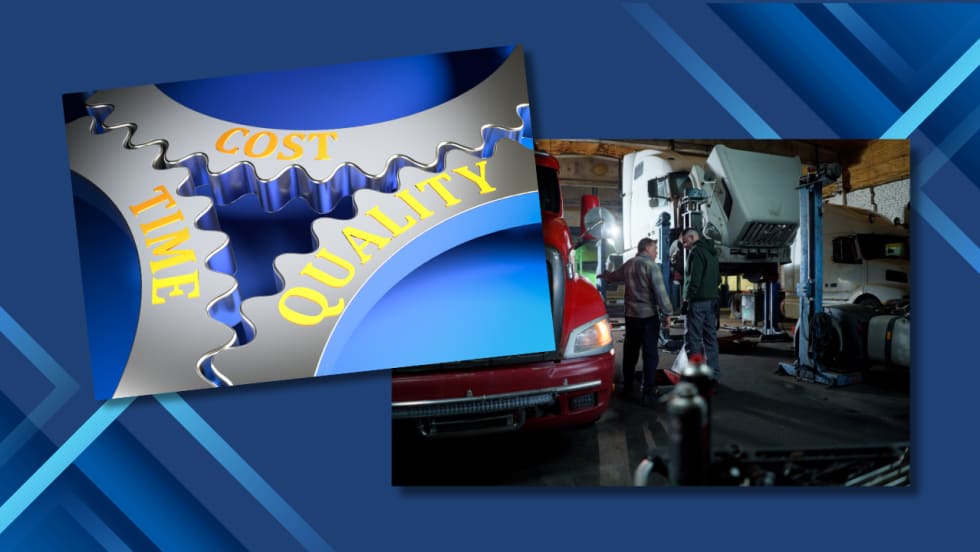
What Three Fleets Are Doing Differently When Buying Truck Parts in 2026
With freight improving but costs still climbing, fleet maintenance executives explain how they're balancing price, quality, and supplier relationships.
Read More →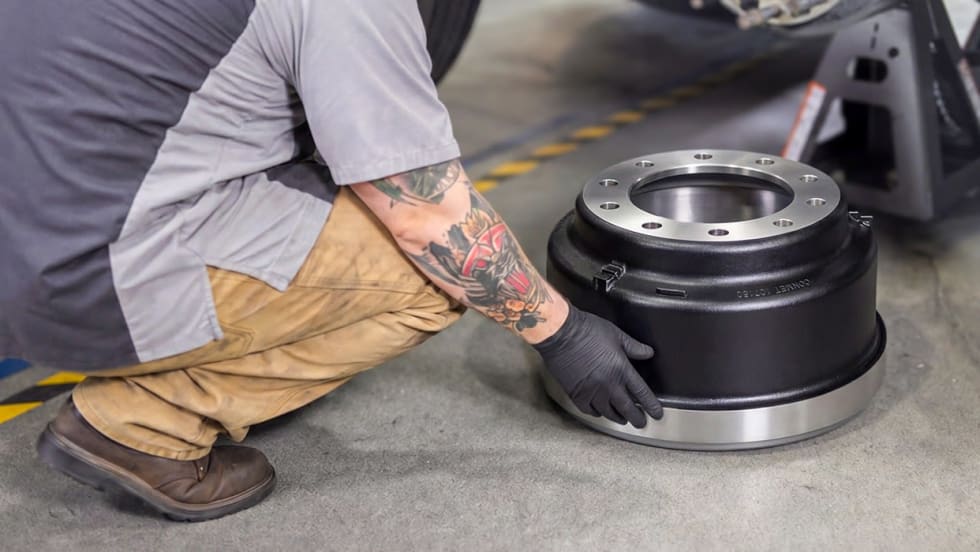
ConMet Expands Aftermarket Brake Drum Lineup With TruCast
A new heavy-duty truck brake drum option in the aftermarket gives customers more flexibility within the ConMet product family.
Read More →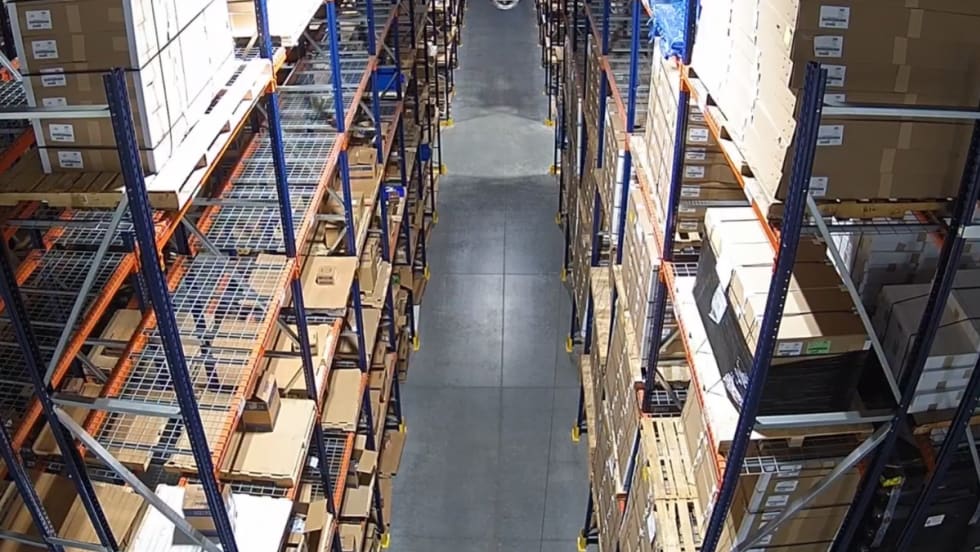
Phillips Opens High-Tech Distribution Center for Faster Parts Delivery
Phillips Industries’ new Cincinnati-area distribution center is now shipping aftermarket trucking parts nationwide, aiming to speed up delivery times for customers.
Read More →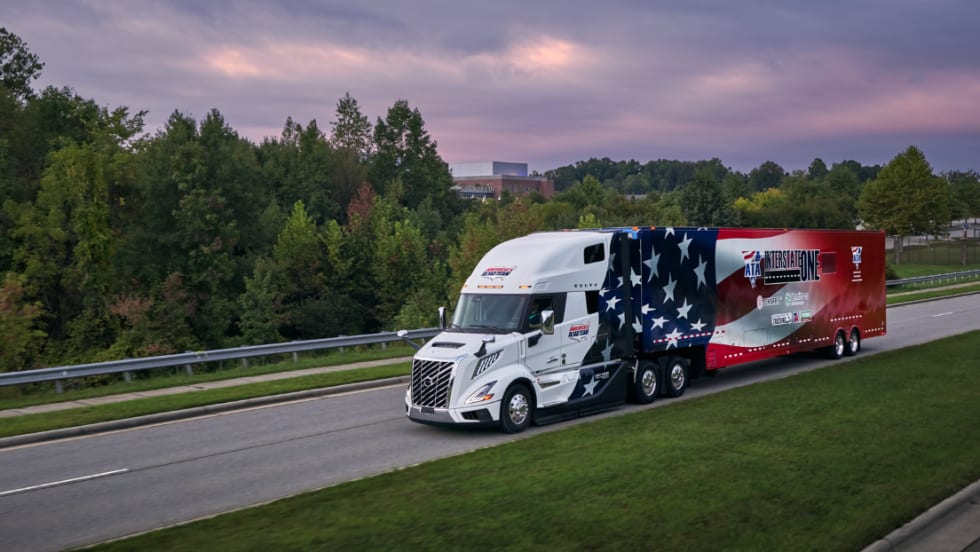
Volvo to Sponsor America’s Road Team for 2025
Volvo Trucks announced that it is extending its exclusive sponsorship of America’s Road Team for 2025.
Read More →
Webb to Start Taking Orders for UltraSet Pre-Adjusted Wheel Hubs
Webb, which recently acquired the Stemco Trifecta pre-adjusted hub program, will soon start taking orders for its replacement pre-assembled hub, the UltraSet.
Read More →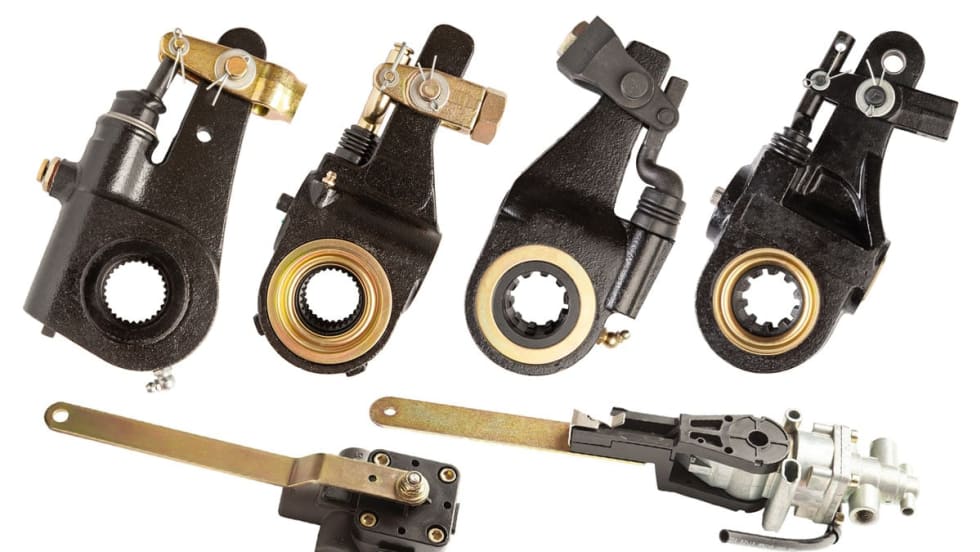
All-Makes Automatic Brake Adjusters, Ride Height Control Valves from Midland
SAF-Holland has added automatic brake adjusters and ride height control valves to its Midland All-Makes Program.
Read More →
ZF Aftermarket Expands [pro]Academy Training
ZF Aftermarket said it is expanding its ZF [pro]Academy training and will be adding 40 new modules this year.
Read More →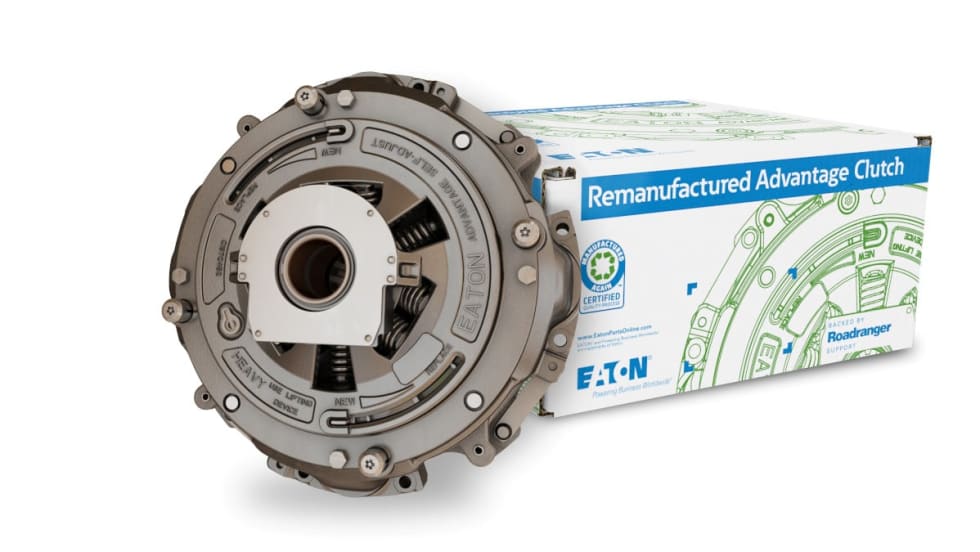
Eaton Adds Remanufactured Advantage Line of Clutches
Eaton has added its Advantage clutches to its remanufactured product line. The clutches feature a unique strap drive intermediate plate designed to allow customers to choose the latest OE specification
Read More →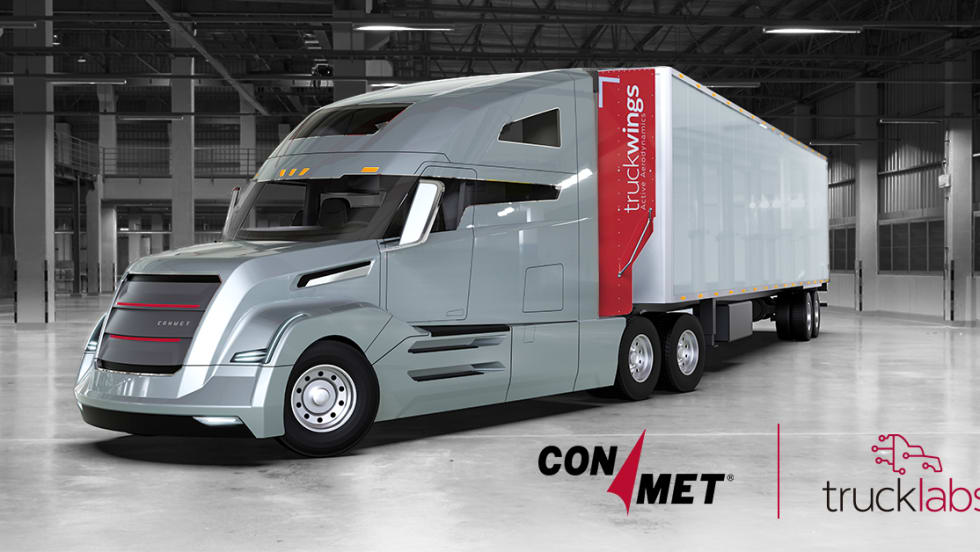
ConMet Acquires TruckLabs, the Creator of TruckWings
Commercial truck and trailer parts provider ConMet acquired TruckLabs, the company that created TruckWings, an aerodynamic device that attaches to truck cabs and deploys to close the gap between truck and trailer. TruckLabs now operates as a subsidiary of ConMet.
Read More →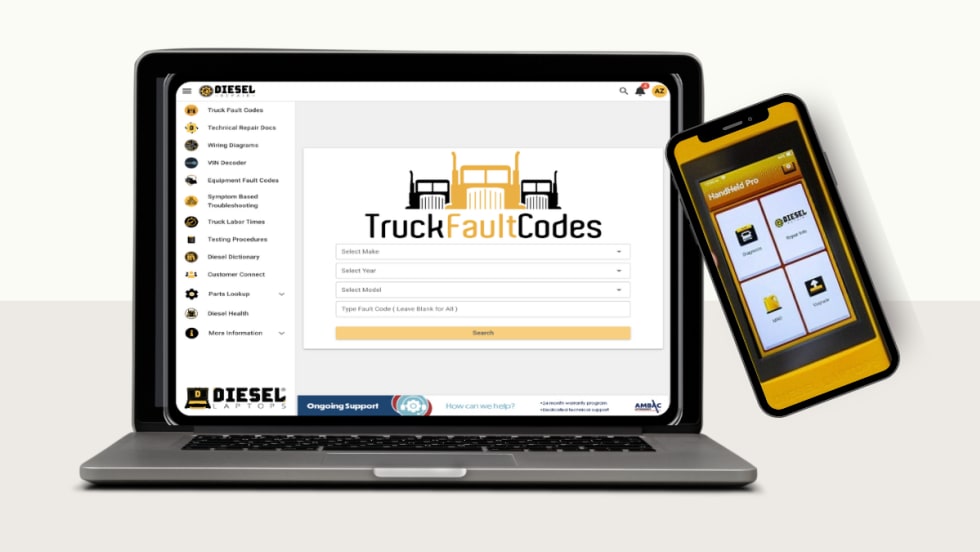
Diesel Laptops Releases Fault-Code-to-Part-Number Tool
Diesel Laptops said its Truck Fault Codes allows users to input a fault code and immediately identify and order the parts needed to complete repair work.
Read More →