




Texting Ban Is Step One in Campaign Against Distracted Driving
The federal ban on truck driver texting announced yesterday is just the opening salvo in a campaign to control distracted driving
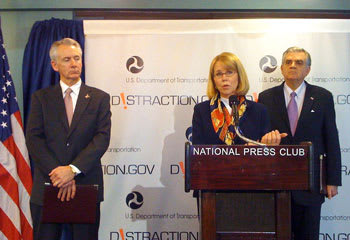
From left to right: Bill Graves, president and CEO, American Trucking Associations; Anne Ferro, administrator, Federal Motor Carrier Safety Administration; and Ray LaHood, secretary of transportation.
The federal ban on truck driver texting announced yesterday is just the opening salvo in a campaign to control distracted driving.
"We take texting while driving as an epidemic," Transportation Secretary Ray LaHood said yesterday after he announced that DOT has banned truck and bus drivers from texting while they are driving, and will levy civil and criminal penalties up to $2,750 for violations.
"We think it's our responsibility and obligation to do whatever we can in the near term before we get to a rule to send a signal that we're serious about this," LaHood said.
The ban, which took effect immediately, is based on an interpretation of a federal rule that says DOT can regulate equipment that decreases safety.
With this approach, DOT has leapfrogged the time-consuming regulatory process. The Federal Motor Carrier Safety Administration has begun work on a proposed rule on distracted driving that is likely to include a texting ban but also will cover the use of other onboard equipment. The guidance that was issued yesterday does not prohibit use of onboard technology such as electronic dispatching and fleet management systems. These devices will be covered in the proposed rule. That rule will take many months to complete, however, and LaHood is anxious to get things moving.
"We have the authority to do it and we're doing it," he said. "The message is that this is serious business. People think they can drive safely while using a cell phone and they can't, they can't text and drive safely. Frankly, I'm very impatient about this."
The ban has been in the works since last October, when LaHood announced his intention at a national conference on distracted driving.
"We need to continue the momentum," he said yesterday, to the applause of practically everyone in the commercial transportation and safety community.
THE CHEERING SECTION
"American Trucking Associations supports DOT's action," said ATA President and CEO Bill Graves. "We thank Secretary LaHood for the initiative and will partner with DOT to make it successful."
The cheering section for the ban included a number of Washington interest groups that are at odds more often than in agreement. On hand in support were Citizens for Reliable and Safe Highways, Advocates for Auto and Highway Safety and the Truck Safety Coalition, as well as the Commercial Vehicle Safety Alliance, the Teamsters union, the AFL-CIO and the American Bus Association, among others.
The Owner-Operator Independent Drivers Association was partway on board, saying that while it supports a texting ban, it is worried that the "regulatory guidance" that FMCSA used to install the ban short-circuits the regulatory process.
THE DATA
There is consensus among regulators and industry alike that distracted driving is a serious problem. According to the National Highway Traffic Safety Administration, nearly 6,000 people died in 2008 in crashes involving a distracted driver. Not all of these incidents necessarily involved a cell phone - there are many other kinds of distractions - but NHTSA says that on any given day more than 800,000 drivers are using a hand-held cell phone.
Moreover, researchers have shown that texting while driving, in particular, is an utterly reckless act. The Virginia Tech Transportation Institute has demonstrated that that risk goes up when a driver splits his attention between driving and some other task, particularly one that requires him to look away from the road. The more complex the task, the greater the risk: texting, for example, increases risk of an accident more than 23 times.
FMCSA Administrator Anne Ferro yesterday said that texting can force drivers to take their eyes off the road for as long as 4.6 seconds - long enough to cover a football field, including the end zones, if the vehicle is going 55 mph.
"This guidance helps to establish a uniform, safe application of a texting ban," she said. "It takes us a giant step toward meeting our safety mission, which has three core priorities: to raise the bar to entry, to maintain high standards for continuing to operate in the industry, and to remove high-risk operators and high-risk behaviors."
THE ENFORCEMENT QUESTION
LaHood and Ferro were asked to address the question of enforcement: How can state and local police monitor driver behavior?
From LaHood's perspective, enforcement is difficult - "we need to figure it out" - but is just one aspect of a long-term campaign to get people to take individual responsibility for not letting themselves be distracted when they are driving, the same way that public awareness efforts have spread the use of seatbelts and reduced drunken driving.
Ferro also acknowledged that it might be hard for a patrolman to actually see a truck driver texting, but noted that the enforcement does not begin and end there. Carriers and drivers need to be aware that investigators can determine if a distraction such as texting was the cause of a crash.
"Texting can be a criminal violation if it precipitates a fatal or injury crash," she said.
ATA's Graves added the observation that the ban has another use: "It becomes a motivator, a tool companies use to say, in effect, that for safety purposes, insurance purposes, we must adhere to the law that says you cannot be texting or receiving messages. A lot of our companies are already doing that."
Meanwhile, some 19 states have already banned texting while driving, and more are considering such bans. And Congress has legislation that would create incentives for states to pass and enforce prohibitions on texting and hand-held cell phone use while driving.
More Drivers
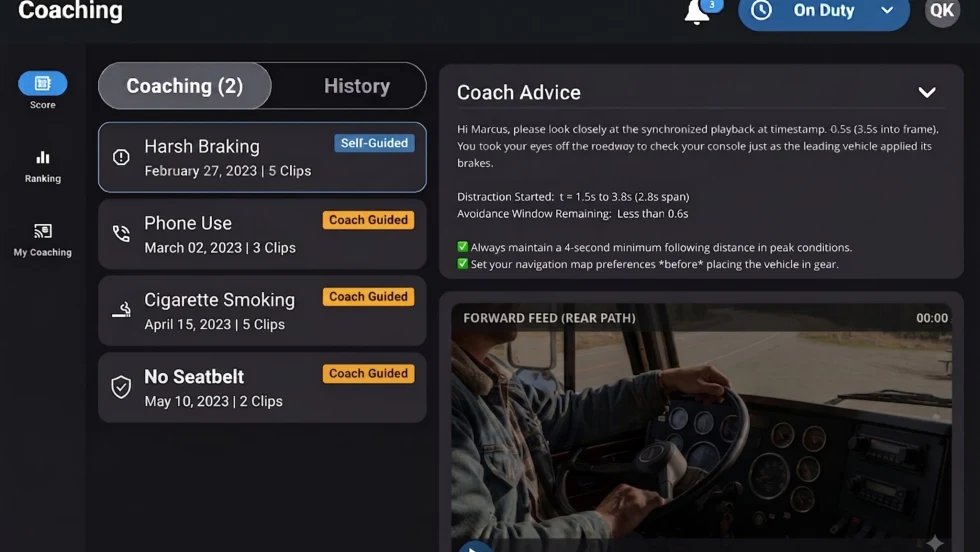
Platform Science Adds Dispatch and Safety Tools
Four additions to PS Fleet help fleets monitor loads, manage driver coaching, share truck locations and adjust video system settings.
Read More →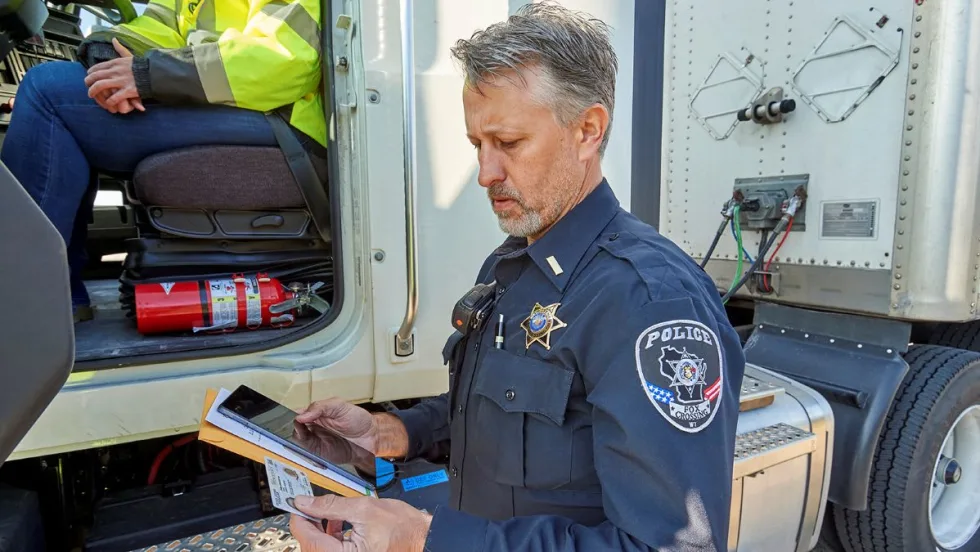
When Language Stops the Truck: The Return of ELP Out-of-Service Orders
English language proficiency rules for commercial drivers aren’t new, but renewed out-of-service enforcement has raised the stakes. Here’s what carriers need to know before a driver reaches a roadside inspection.
Read More →
Samsara Launches Custom AI Agent Builder
Agent Studio lets fleets create AI tools for hours-of-service monitoring, reporting and driver support, including agents that communicate by phone.
Read More →
Trucker Path Expands Reserved Parking Network
Trucker Path has added close to 6,000 more truck parking spaces to its Trucker Path Reserved Parking Network with the addition of Safe Truck Parking.
Read More →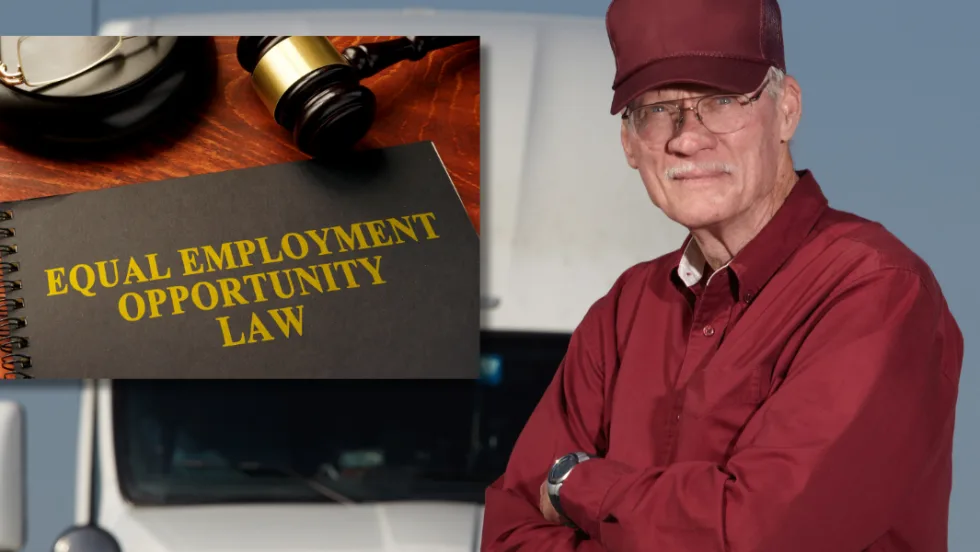
EEOC Sues Texas Trucking Company Over Driver Age Limits
The agency says Trancasa USA rejected applicants over 65 and applied tougher driving-record standards to those over 60.
Read More →
Nussbaum, Roehl Announce Second Driver Pay Increase This Year
This year has seen a swath of major truck driver pay increases as freight capacity has tightened.
Read More →
From One Generation to the Next: How Mentorship Builds Safer Truck Drivers
After three decades in trucking, Harold Perry shares what he's learned about driver safety, mentorship, and helping the next generation build confidence behind the wheel.
Read More →
Truck Drivers Need More Than Another Alert
Fleets have more visibility into truck health, safety events, and driver activity than ever. The next challenge is turning all that information into useful guidance for the person who has to decide what to do next.
Read More →
FMCSA Removes 110 Truck Driver Training Schools from Certified ELDT List
Federal regulators also are targeting more than 160 additional training providers and launching a nationwide audit of third-party CDL skills testers as part of a broader crackdown on trucking fraud.
Read More →
Hours of Service Pilot Programs: FMCSA Readies for 2027 Rollout
Two pilot programs could eventually reshape hours-of-service rules, giving truck drivers options to pause their 14-hour clock or use longer split sleeper rest periods.
Read More →