




Teamsters Target Swift CEO Jerry Moyes' Power
A Teamsters Union proposal that it says addresses trucking company Swift Transportation’s “dual class stock structure” is getting a boost from the country’s largest proxy voting advisory firm.
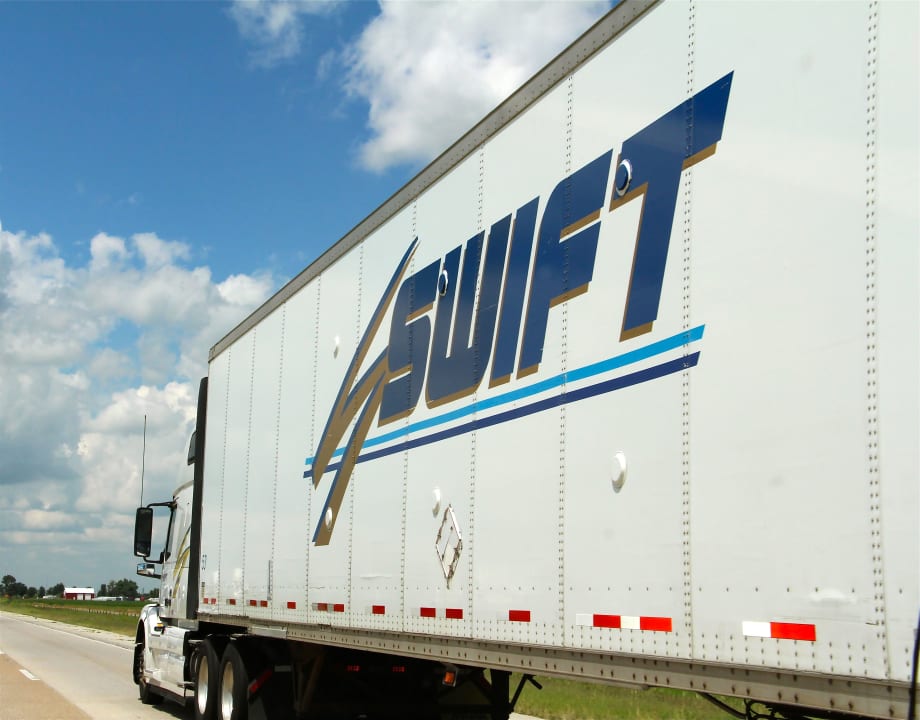
The Teamsters claim Jeffy Moyes has too much power at Swift Transportation, and a stockholders' group is backing them up. Photo by Evan Lockridge
A Teamsters Union proposal that it says addresses trucking company Swift Transportation’s “dual class stock structure” is getting a boost from the country’s largest proxy voting advisory firm.
Institutional Shareholder Services is recommending Swift shareholders approve a measure during the company’s annual meeting on May 8 that addresses CEO Jerry Moyes having “majority voting control of the company despite owning a minority of the outstanding shares.”
(ISS is a proxy advisory firm. Hedge funds, mutual funds and similar organizations that own shares of multiple companies pay ISS to advise, and often vote their shares, regarding shareholder votes.)
ISS also recommends, for the second consecutive year, that shareholders withhold votes from incumbent members of the board’s audit committee, (Richard Dozer, David Vander Ploeg, and Glenn Brown), citing concerns about the excessive pledging of stock as collateral for personal loans by the company’s CEO and controlling shareholder, Moyes.
“ISS recommends withholding support from these independent directors because it is the responsibility of the audit committee to oversee the management of enterprise and financial risks as well as potential conflicts of interest,” the Teamsters said in a release.
“The board’s inability to rein in the excessive pledging of stock by CEO Moyes or the hundreds of millions of dollars in related-party transactions with Moyes-controlled businesses reveals significant deficiencies on our board and raises serious questions about the true independence and effectiveness of our directors,” said Teamsters General Secretary-Treasurer Ken Hall in a letter last November to Swift Chairman William Post. “We believe that at the core of the problem at Swift is its dual class stock structure, which gives disproportionate voting power and control to a single holder of a minority of the outstanding shares.”
According to the union, federal records show last October Moyes and certain related parties entered into a new loan arrangement that appears to have increased Moyes’ voting control for another three years. It also claims Swift continues to engage in related party transactions with other Moyes-controlled businesses, including Swift's recent acquisition of Central Refrigerated Transportation, another Moyes-controlled company, for $225 million.
A study completed in 2012 by ISS and the Investor Responsibility Research Center Institute found that companies with dual-class capital structures underperformed compared to non-controlled companies as well as to companies that are controlled through ownership of a majority of a single class of shares, over 3-year, 5-year and 10-year measurement periods, according to the union. ISS maintains that unequal rights can serve to entrench management if members of the board or executives own a large voting percentage based on ownership of super-voting stock.
“Until there can be meaningful board oversight of management and true accountability at Swift Transportation, Jerry Moyes will continue to use the corporate coffers as his own personal piggy bank,” Hall said.
More Fleet Management

Color Match Smarter: Tools That Restore & Perform
For fleet managers and collision repair professionals keeping heavy-duty trucks on the road, getting the color right the first time isn't just about appearance — it's about efficiency, turnaround time, and bottom-line results. Discover how today's digital color tools are transforming the repair process from guesswork to precision.
Read More →
FMCSA Pauses Biennial-Update Enforcement Amid Motus Transition
Carriers whose updates were due on or after June 1 have more time, while FMCSA works to stabilize its new registration system and warns of phishing sites impersonating its new carrier registration system, Motus.
Read More →
2026 Blueprint for Countering Smarter Supply Chain Theft
Cargo theft is no longer just the cost of doing business. It's a multi-billion-dollar criminal enterprise exploiting vulnerabilities across your fleet, drivers, and supply chain.
Read More →


How Telematics Improves Visibility, Control, and Performance in Refrigerated Fleets
Explore how telematics help refrigerated fleets improve visibility, uptime, efficiency, compliance, and cargo protection across connected cold chain operations.
Read More →
What the U.S.-Canada Trade War Means for Trucking
Escalating U.S.-Canada tariffs could disrupt cross-border freight, reduce truck volumes, raise costs, and create new uncertainty for carriers on both sides of the border.
Read More →
What Are Trucking’s Top Concerns for 2026?
The American Transportation Research Institute wants to know what's worrying trucking fleet managers, drivers, and other stakeholders in its annual Industry Issues survey.
Read More →
American Trucking Associations Looks for a New Leader
ATA President and CEO Chris Spear abruptly left his job at the association on August 21, at a pivotal time for the trucking industry.
Read More →
Public Wi-Fi Cybersecurity Risks: How Truck Drivers and Fleets Can Protect Their Data
Public Wi-Fi can expose truck drivers and fleets to credential theft, malware, and other cyber threats. Here’s how to reduce the risk on the road.
Read More →
For Nicky Cupp, Fleet Innovation Starts With Frustration
HDT Truck Fleet Innovator Nicky Cupp turns everyday pain points at Fraley & Schilling into opportunities for better technology and smarter processes.
Read More →
Adam Buttgenbach’s Approach to Electric Trucks: Start With Where They Fit
HDT Truck Fleet Innovator Adam Buttgenbach helped PepsiCo build one of North America’s largest EV fleets by focusing on where electric trucks make operational sense.
Read More →