




Driver Qualification Files, Equipment Compliance Among Fleet Challenges in Survey
Fleet managers are continuing to face the day-to-day challenges of staying up to date with regulatory changes and improving driver knowledge and skills, according to a J.J. Keller survey.


According to a survey of fleet managers, keeping up with regulatory changes and improving driver knowledge are key challenges.
Photo: Canva
Among fleet managers' biggest challenges are the day-to-day challenges of staying up to date with regulatory changes and improving driver knowledge and skills, according to a recent survey — with drivers knowing how to safely operate a specific vehicle making a big jump in priority compared to last year.
The study, The State of Fleet Management: Insights on Priorities for Today’s Fleet Managers, is based on a survey fielded in February 2023 and is the third such study conducted by the J.J. Keller Center for Market Insights, the research arm of J.J. Keller & Associates.
Survey respondents are trucking fleets, both for-hire and private. In terms of size, 67% were less than 25 trucks, 17% were 25-99 trucks, and 17% were 100+ trucks.
“Until you wear the shoes of a fleet manager, there is no way to truly understand the unique challenges in safety," said Joshua Lovan, business industry advisor at J.J Keller. "Today’s fleet managers are responsible for driver coaching, injuries, accidents, and there are no excuses for lack of preparation."
Study Highlights
The number of fleet managers who believe it’s most important for their drivers to safely and correctly operate their specific vehicle types increased 39% from 2022.
Knowing quickly when a vehicle or trailer is damaged or non-compliant jumped 24% from 2022.
Having all driver files together in one place so fleet managers can quickly and easily prove compliance increased 13% from 2022.
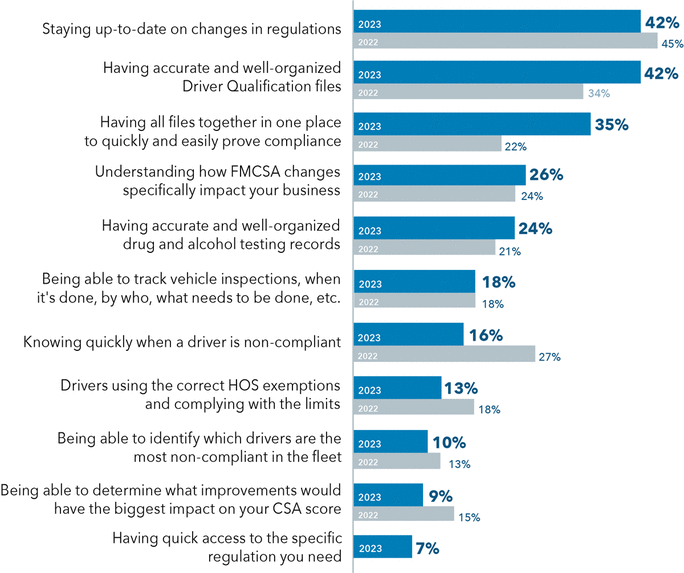
Of fleet managers surveyed, 42% report staying up to date on regulatory changes is a major challenge.
Chart: J.J. Keller Center for Market Insights
Keeping Up with Regulatory Changes
Forty-two percent of fleet managers who participated in the study stated that “staying up to date on changes in regulations” was the most important aspect of Federal Motor Carrier Safety Administration compliance.
Comments from respondents regarding the most challenging aspects of their job included, “compliance and keeping up with rule changes,” and, “ensuring that all vehicles are compliant at any given time.”
According to one respondent, this includes, “keeping up with the different OSHA or FMCSA requirements. Also keeping up with different state, city, and county guidelines regarding safety and DOT requirements.”
Another respondent commented that they struggled with “ensuring all required steps are completed for hiring drivers.”
Improving Driver Knowledge and Skills
As fleet managers continually assess and work to improve the knowledge and skills of their drivers, some areas were identified as more important than others.
Safely and correctly operating a specific vehicle type topped the list with 62% of respondents agreeing it was the most important driver knowledge and skill — a 39% increase over 2022, when distracted driving was the top of the list.
This was followed by knowing:
How to avoid injury while working and driving (28%)
The correct action to take in an accident (27%)
How to avoid distracted driving (26%)
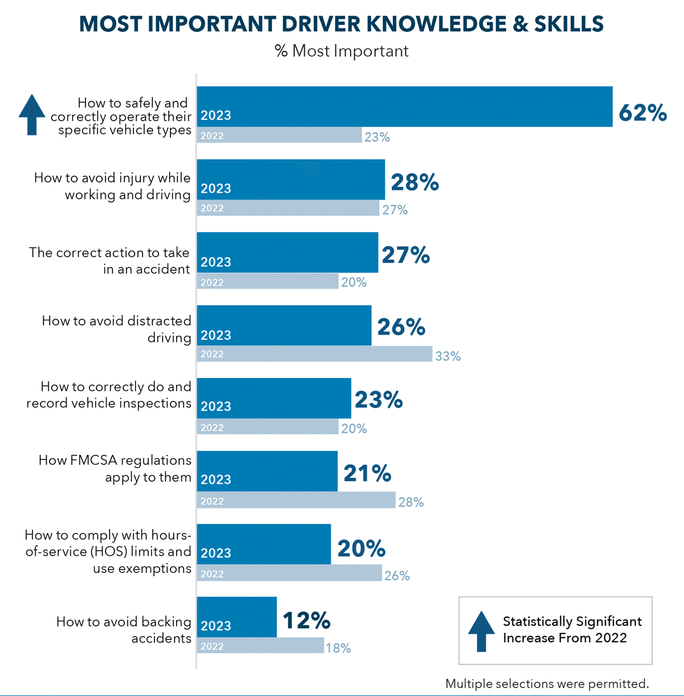
Fleet managers report having drivers trained to safely and correctly operate their specific vehicle type is important.
Chart: J.J. Keller Center for Market Insights
“Drivers will naturally respond more positively if their company’s goals are centered around safety, so it was no surprise that 63% of fleet managers believe their company mostly or completely emphasizes continuous learning,” said Lovan.
When it comes to training their drivers, respondents believe it’s most important that drivers apply what they learn in training (52%) and that the training is specific to their unique needs (45%). Being able to prove that the content was understood saw a 12% increase from 2022 to 2023.
However, 37% of respondents stated that they receive less than ideal support from their company for continuous learning.
Prioritization of Challenges
As the risk of “nuclear verdicts” and FMCSA audits continue to increase, fleet managers are likely to continue to prioritize staying up to date with regulatory requirements and improving driver knowledge and skills
“Driver safety and regulatory compliance were top trends in both the 2023 data and in our findings from previous years of research,” said Wendy Blezek Fleming, J.J. Keller customer and market insights manager. “We appreciate that ensuring safety for drivers and the public is a very important challenge as a fleet manager and applaud the efforts of our survey respondents to keep their teams and others safe.”
More Fleet Management

Color Match Smarter: Tools That Restore & Perform
For fleet managers and collision repair professionals keeping heavy-duty trucks on the road, getting the color right the first time isn't just about appearance — it's about efficiency, turnaround time, and bottom-line results. Discover how today's digital color tools are transforming the repair process from guesswork to precision.
Read More →
FMCSA Pauses Biennial-Update Enforcement Amid Motus Transition
Carriers whose updates were due on or after June 1 have more time, while FMCSA works to stabilize its new registration system and warns of phishing sites impersonating its new carrier registration system, Motus.
Read More →
2026 Blueprint for Countering Smarter Supply Chain Theft
Cargo theft is no longer just the cost of doing business. It's a multi-billion-dollar criminal enterprise exploiting vulnerabilities across your fleet, drivers, and supply chain.
Read More →


How Telematics Improves Visibility, Control, and Performance in Refrigerated Fleets
Explore how telematics help refrigerated fleets improve visibility, uptime, efficiency, compliance, and cargo protection across connected cold chain operations.
Read More →
What the U.S.-Canada Trade War Means for Trucking
Escalating U.S.-Canada tariffs could disrupt cross-border freight, reduce truck volumes, raise costs, and create new uncertainty for carriers on both sides of the border.
Read More →
What Are Trucking’s Top Concerns for 2026?
The American Transportation Research Institute wants to know what's worrying trucking fleet managers, drivers, and other stakeholders in its annual Industry Issues survey.
Read More →
American Trucking Associations Looks for a New Leader
ATA President and CEO Chris Spear abruptly left his job at the association on August 21, at a pivotal time for the trucking industry.
Read More →
Public Wi-Fi Cybersecurity Risks: How Truck Drivers and Fleets Can Protect Their Data
Public Wi-Fi can expose truck drivers and fleets to credential theft, malware, and other cyber threats. Here’s how to reduce the risk on the road.
Read More →
For Nicky Cupp, Fleet Innovation Starts With Frustration
HDT Truck Fleet Innovator Nicky Cupp turns everyday pain points at Fraley & Schilling into opportunities for better technology and smarter processes.
Read More →
Adam Buttgenbach’s Approach to Electric Trucks: Start With Where They Fit
HDT Truck Fleet Innovator Adam Buttgenbach helped PepsiCo build one of North America’s largest EV fleets by focusing on where electric trucks make operational sense.
Read More →