




Supreme Court Refuses to Hear Biodiesel Standard Case
The U.S. Supreme Court on Monday declined to hear a request from the oil and chemical industry to strike down the Renewable Fuel Standard (RFS). In refusing to hear the case, the Court has Affirmed EPA's renewable fuels standard
The U.S. Supreme Court on Monday declined to hear a request from the oil and chemical industry to strike down the Renewable Fuel Standard (RFS). In refusing to hear the case, the Court has Affirmed EPA's renewable fuels standard.
The National Petrochemical and Refiners Association, along with the American Petroleum Institute submitted a petition in July for the U.S. Supreme Court to take up the case. The request centered on whether a federal agency that misses a statutory deadline for writing regulations may engage in retroactive rulemaking based on implied, rather than express, authorization from Congress, according to a court filing.
A spokesman for the NPRA said the organization was disappointed with the decision.
NPRA's and API's original petition challenging the RFS2 regulations was rejected on December 21, 2010, in a unanimous decision by the U.S. Court of Appeals for the District of Columbia (D.C. Circuit).
On February 3, 2011, NPRA and API filed a petition in the D.C. Circuit requesting an En Banc Rehearing -- a request for all the judges that comprise the D.C. Circuit to review a matter previously decided by a three-judge panel of the Court. The Court rejected that request in April.
NPRA and API filed their current petition for a writ of certiorari (a request to review) with the Supreme Court on July 22, 2011.
The National Biodiesel Board, a supporter of the Renewable Fuel Standard, said it was pleased that the Supreme Court put an end to the litigation.
"The RFS program is working just as Congress intended. It's creating jobs across the country. It's breaking our addiction to oil. It's helping clean our air, and it's reducing greenhouse gases," said Anne Steckel, NBB's vice president of federal affairs. "This year alone, the biodiesel industry is on pace to produce at least 800 million gallons of advanced biofuel while supporting more than 31,000 jobs. We're pleased to see the Supreme Court put an end to this litigation as we continue building a strong U.S. biodiesel industry."
Biodiesel is currently produced in nearly every state in the country and can be used in existing diesel engines and meets strict specifications of ASTM D6751.
More Drivers
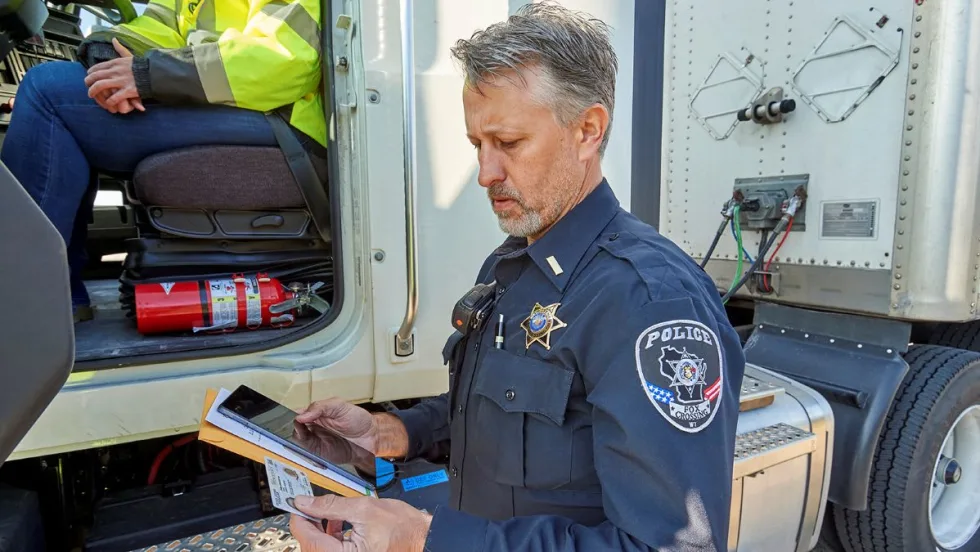
When Language Stops the Truck: The Return of ELP Out-of-Service Orders
English language proficiency rules for commercial drivers aren’t new, but renewed out-of-service enforcement has raised the stakes. Here’s what carriers need to know before a driver reaches a roadside inspection.
Read More →
Samsara Launches Custom AI Agent Builder
Agent Studio lets fleets create AI tools for hours-of-service monitoring, reporting and driver support, including agents that communicate by phone.
Read More →
Trucker Path Expands Reserved Parking Network
Trucker Path has added close to 6,000 more truck parking spaces to its Trucker Path Reserved Parking Network with the addition of Safe Truck Parking.
Read More →
EEOC Sues Texas Trucking Company Over Driver Age Limits
The agency says Trancasa USA rejected applicants over 65 and applied tougher driving-record standards to those over 60.
Read More →
Nussbaum, Roehl Announce Second Driver Pay Increase This Year
This year has seen a swath of major truck driver pay increases as freight capacity has tightened.
Read More →
From One Generation to the Next: How Mentorship Builds Safer Truck Drivers
After three decades in trucking, Harold Perry shares what he's learned about driver safety, mentorship, and helping the next generation build confidence behind the wheel.
Read More →
Truck Drivers Need More Than Another Alert
Fleets have more visibility into truck health, safety events, and driver activity than ever. The next challenge is turning all that information into useful guidance for the person who has to decide what to do next.
Read More →
FMCSA Removes 110 Truck Driver Training Schools from Certified ELDT List
Federal regulators also are targeting more than 160 additional training providers and launching a nationwide audit of third-party CDL skills testers as part of a broader crackdown on trucking fraud.
Read More →
Hours of Service Pilot Programs: FMCSA Readies for 2027 Rollout
Two pilot programs could eventually reshape hours-of-service rules, giving truck drivers options to pause their 14-hour clock or use longer split sleeper rest periods.
Read More →
Medical Cards, English Proficiency Reshape Roadcheck Violations
Medical-card violations jumped to the top of the driver out-of-service list during CVSA’s 2026 International Roadcheck, while English-language proficiency violations appeared among the leading violations for the first time.
Read More →