




Support Building for Keystone XL Pipeline from Canada
The campaign in support of a new pipeline connecting secure sources of energy in Canada to consumers in the United States got a huge boost this week. Members of Congress from Florida to Utah co-signed a letter to the State Department urging the agency to approve the final permitting documents for the Keystone Gulf Coast Expansion
The campaign in support of a new pipeline connecting secure sources of energy in Canada to consumers in the United States got a huge boost this week. Members of Congress from Florida to Utah co-signed a letter to the State Department urging the agency to approve the final permitting documents for the Keystone Gulf Coast Expansion.
The project, supported in full by Consumer Energy Alliance and its network of more than 165 affiliates, is projected to generate more than $20 billion in total economic impact and create more than 13,000 high-wage construction and manufacturing jobs.
"Every single agency that has looked at this pipeline has concluded it can be built safely, and with minimal impact on the environment," said Michael Whatley, vice president of CEA. "With the Keystone XL, we're talking about a project that's expected to create more than 13,000 new jobs, and help transport more than 1.1 million barrels a day of secure Canadian energy to U.S. businesses and consumers at an otherwise very difficult time for our economy. Now is the time to convert that enormous potential into real-world reality, and we couldn't be happier to see so many lawmakers lining up to lend a hand to the effort."
In the letter to Secretary Clinton organized by U.S. Rep. Doug Lamborn (R-Colo.), the lawmakers note that pipelines are among "the safest, most efficient and economical way to transport" these resources into the United States, while also acknowledging Canada's commitment "to develop this vast resource in the most environmentally responsible manner possible." According to government estimates, per-barrel greenhouse gas emissions associated with oil sands development have been reduced by an average of 33 percent over the past two decades, with some facilities achieving reductions of 45 percent.
American access to an additional 1.1 million barrels of secure, affordable energy from Canada would provide immediate benefits to sectors of the economy most heavily dependent on reliable sources of fuel. "The trucking industry depends upon a plentiful supply of diesel fuel to deliver virtually all consumer goods," said Richard Moskowitz, vice president and regulatory affairs counsel for the American Trucking Associations and chairman of the CEA board. "This pipeline is critically important to our goal of bolstering U.S. energy security, and its construction will be a source of much needed jobs at a critically important time."
A copy of the lawmakers' letter can be accessed here. Additional information on the Keystone pipeline project can be accessed on TransCanada's website, or at ConsumerEnergyAlliance.org.
More Drivers

Truck Drivers Need More Than Another Alert
Fleets have more visibility into truck health, safety events, and driver activity than ever. The next challenge is turning all that information into useful guidance for the person who has to decide what to do next.
Read More →
FMCSA Removes 110 Truck Driver Training Schools from Certified ELDT List
Federal regulators also are targeting more than 160 additional training providers and launching a nationwide audit of third-party CDL skills testers as part of a broader crackdown on trucking fraud.
Read More →
Hours of Service Pilot Programs: FMCSA Readies for 2027 Rollout
Two pilot programs could eventually reshape hours-of-service rules, giving truck drivers options to pause their 14-hour clock or use longer split sleeper rest periods.
Read More →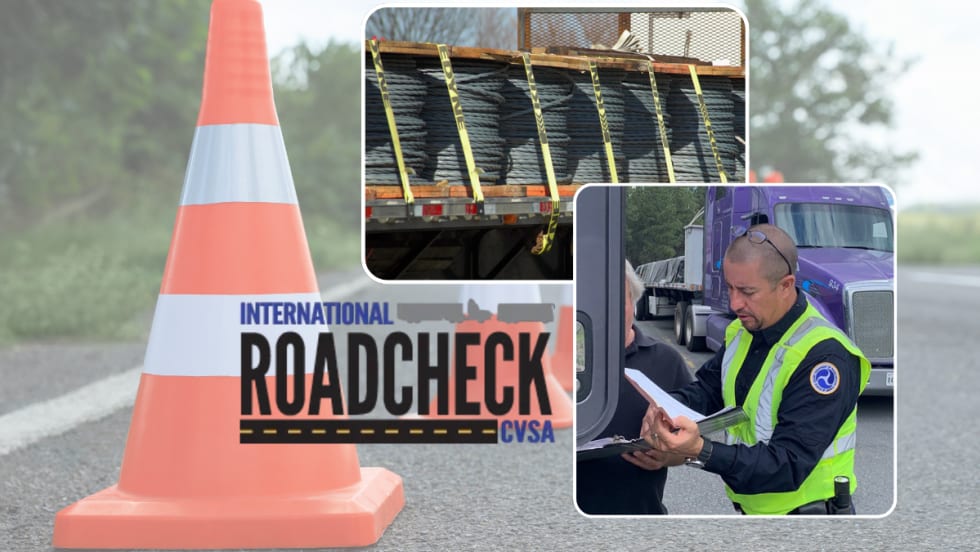
Medical Cards, English Proficiency Reshape Roadcheck Violations
Medical-card violations jumped to the top of the driver out-of-service list during CVSA’s 2026 International Roadcheck, while English-language proficiency violations appeared among the leading violations for the first time.
Read More →
Driver Trust Can Make or Break the Success of Fleet Safety Technology
New Teletrac Navman research suggests that onboarding, transparency about driver data, and positive feedback can play a significant role in how commercial drivers respond to safety and coaching technology.
Read More →
EEOC Sues KLLM Over Alleged Sex Discrimination in Driver Training
KLLM is facing a federal sex-discrimination lawsuit over policies the EEOC alleges put female truck driver trainees at a disadvantage.
Read More →
FMCSA Moves to Codify English Language Requirements for Commercial Drivers
By changing regulations on English-language proficiency requirements for commercial drivers, rather than relying on a guidance memo, the FMCSA said future administrations won't be able to walk back the Trump administration's stricter enforcement with just a memo.
Read More →
Drivers Put Western Star Trucks to the Test at Star Nation Experience
Watch to get an inside look at the Western Star trucks, technology, and community behind the Star Nation Experience 2026!
Read More →
Trump Administration Looks to Put More Veterans Behind the Wheel
The Freedom Haulers program pulls together existing and expanded programs at several federal agencies to recruit veterans to drive commercial heavy-duty trucks and cut the red tape for them to get a CDL, training, and employment.
Read More →
Putting Mack’s Command Steer to the Test
A test drive of Mack’s Command Steer active steering system evaluates how it can make truck driving easier and less tiring.
Read More →