




Suncor, Petro-Canada to Merge
Two of Canada's biggest oil companies announced they plan to merge: Suncor Energy and Petro-Canada. The new entity will operate under the Suncor name, but will keep the Petro-Canada brand name for refined products
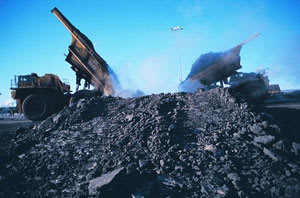
Lower crude oil prices have made oil sand mining, like this Suncor operation, less profitable.
Two of Canada's biggest oil companies announced they plan to merge: Suncor Energy and Petro-Canada. The new entity will operate under the Suncor name, but will keep the Petro-Canada brand name for refined products.
"This merger creates a made-in-Canada energy leader with the assets, cost structure and financial strength to compete globally," said Rick George, who is president and chief executive officer of Suncor and who will assume the same role with the merged entity. "The combined portfolio boasts the largest oil sands resource position, a strong Canadian downstream brand, solid conventional exploration and production assets, and low-cost production from Canada's east coast and internationally."
The combined company would be the largest oil company in Canada and have a market capitalization of about $38 billion, reports the Associated Press - much smaller than global giants such as ExxonMobil and ConocoPhillips, with market capitalizations of $326.6 billion and $55.97 billion respectively.
But the merger will give the new company the benefits of some economies of scale. The merging companies estimate they will save more than $300 million (Canadian) in annual operating expenditures, resulting from efficiencies in overlapping operations, streamlining business practices, and improved logistics. The companies also expect to achieve annual capital efficiencies of approximately $1 billion (Candadian) through elimination of redundant spending and targeting capital budgets to high-return, near term projects.
"The merger will be good for shareholders of both companies with reduced capital requirements, operating efficiencies and complementary integration opportunities between upstream and downstream assets," said Ron Brenneman, who is currently president and chief executive officer of Petro-Canada and who will assume the role of executive vice chairman in the merged company. "The increased scale provides more stability in volatile markets, plus the financial and organizational capability to successfully take on large-scale projects in the future."
But the merger may not be enough to fix the problem, writes Keith Johnson in the Wall Street Journal's environmental blog. "At first glance, it doesn't look like the marriage between two of Canada's biggest oil players will address the fundamental problem in accelerating oil-sands development: It's just too expensive at current crude prices. It also doesn't address the uncertainty around how climate-change legislation might impact the economics of this carbon-heavy fuel."
Suncor and Petro-Canada anticipate that the proposed merger will be completed in the third quarter of 2009.
More Drivers

From One Generation to the Next: How Mentorship Builds Safer Truck Drivers
After three decades in trucking, Harold Perry shares what he's learned about driver safety, mentorship, and helping the next generation build confidence behind the wheel.
Read More →
Truck Drivers Need More Than Another Alert
Fleets have more visibility into truck health, safety events, and driver activity than ever. The next challenge is turning all that information into useful guidance for the person who has to decide what to do next.
Read More →
FMCSA Removes 110 Truck Driver Training Schools from Certified ELDT List
Federal regulators also are targeting more than 160 additional training providers and launching a nationwide audit of third-party CDL skills testers as part of a broader crackdown on trucking fraud.
Read More →
Hours of Service Pilot Programs: FMCSA Readies for 2027 Rollout
Two pilot programs could eventually reshape hours-of-service rules, giving truck drivers options to pause their 14-hour clock or use longer split sleeper rest periods.
Read More →
Medical Cards, English Proficiency Reshape Roadcheck Violations
Medical-card violations jumped to the top of the driver out-of-service list during CVSA’s 2026 International Roadcheck, while English-language proficiency violations appeared among the leading violations for the first time.
Read More →
Driver Trust Can Make or Break the Success of Fleet Safety Technology
New Teletrac Navman research suggests that onboarding, transparency about driver data, and positive feedback can play a significant role in how commercial drivers respond to safety and coaching technology.
Read More →
EEOC Sues KLLM Over Alleged Sex Discrimination in Driver Training
KLLM is facing a federal sex-discrimination lawsuit over policies the EEOC alleges put female truck driver trainees at a disadvantage.
Read More →
FMCSA Moves to Codify English Language Requirements for Commercial Drivers
By changing regulations on English-language proficiency requirements for commercial drivers, rather than relying on a guidance memo, the FMCSA said future administrations won't be able to walk back the Trump administration's stricter enforcement with just a memo.
Read More →
Drivers Put Western Star Trucks to the Test at Star Nation Experience
Watch to get an inside look at the Western Star trucks, technology, and community behind the Star Nation Experience 2026!
Read More →
Trump Administration Looks to Put More Veterans Behind the Wheel
The Freedom Haulers program pulls together existing and expanded programs at several federal agencies to recruit veterans to drive commercial heavy-duty trucks and cut the red tape for them to get a CDL, training, and employment.
Read More →