




States Set Off Alarms about Highway Funding Cut-Off; Safety at Risk
State departments of transportation are setting off emergency flares to get Congress's attention over yesterday's cut-off of federal highway and transit funds. "Last night the highway and transit programs in our country came to a screeching halt,
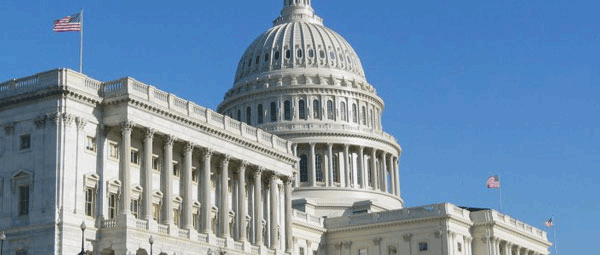
State departments of transportation are setting off emergency flares to get Congress's attention over yesterday's cut-off of federal highway and transit funds. "Last night the highway and transit programs in our country came to a screeching halt,"
said Butch Brown, executive director of the Mississippi DOT, at a press conference yesterday. "To allow this to happen by taking no action I think is unforgivable. We have needs in this country that must be satisfied every day. Transportation is the vehicle that makes that possible."
He was referring to the $157 million that the Federal Highway Administration sends the state transportation departments each day from the Highway Trust Fund - reimbursements for federal-aid road projects that the states have undertaken. That cash flow, plus another $157 million each week for transit projects, was interrupted Sunday night after Congress was unable to come to terms on legislation to extend the current highway program.
The Department of Transportation yesterday furloughed nearly 2,000 employees without pay. The furloughs affect employees at the Federal Motor Carrier Safety Administration, the Federal Highway Administration, the National Highway Traffic Safety Administration and the Research and Innovative Technology Administration.
"As American families are struggling in tough economic times, I am keenly disappointed that political games are putting a stop to important construction projects around the country," said Transportation Secretary Ray LaHood. "This means that construction workers will be sent home from job sites because federal inspectors must be furloughed."
BUNNING'S BLOCK
At issue is a short-term extension of the federal highway program, which Sen. Jim Bunning, R-Ky., blocked last Friday. Bunning objected to the extension, arguing that it should be paid for by funds in the Recovery Act. When Senate Majority Leader Harry Reid, D-Nev., declined to accept that approach, Bunning threatened a filibuster.
The extension is needed to give Congress time to pass a jobs measure that includes an extension of the highway program through the end of the year.
Brown, who is President of the American Association of State Highway and Transportation Officials, said the shut-off will lead to severe cash flow shortages. "If we're not reimbursed, if we don't have the capacity to receive funds, we're going to be in deep trouble," he said.
Backed by more than a dozen other state DOT chiefs, Brown explained that without a reliable flow of federal funds states cannot plan highway projects, advertise for bids or let contracts.
Moreover, he said, payments in support of state safety programs have been suspended.
"Highway safety is now at risk," Brown said. "It has been undermined. It's been short-circuited. You may still see patrolmen. You may still see safety inspections on trucks. But it's not going to be the same as it was under an ongoing program."
CVSA ON SAFETY
Steve Keppler, interim executive cirector of the Commercial Vehicle Safety Alliance, said that if the shut-off goes past mid-week, it will create a safety problem.
The CVSA membership is made up of state police who specialize in truck safety enforcement, and approximately half of their work is funded by federal dollars under the Motor Carrier Safety Assistance Program administered by the Federal Motor Carrier Safety Administration. Keppler estimates that the states spend between $500 and $600 million a year for safety enforcement, and the federal government adds an additional $300 million.
"Particularly in the smaller states, federal money is a larger portion of their safety program," Keppler said. "Some of the larger states have more of a percentage of state money than federal money."
Most of the federal safety money goes to personnel costs, he said. "Safety officer's salaries are tied to federal funding. Without funding, people get laid off and it's very difficult to hire them back."
LOOKING FOR A RESOLUTION
There was no satisfactory answer yesterday afternoon to the question of when this situation will be resolved.
"We are hopeful that work is in progress in both (chambers of Congress) bodies to resolve that matter," said John Horsley, Executive Director of AASHTO.
Brown and several other state DOT officials indicated that while the states have varying flexibility depending on their budgetary condition and project schedules, the situation will reach a tipping point late this week if Congress does not act.
Past Thursday, Brown said, the state DOTs will have to change the way they operate. "We're not going to add any (projects), we're going to slow them down and if we can't get a resolution to the problem in a timely fashion we'll have to cancel them."
If a project is canceled, it cannot be picked up where it was left off, Brown said. "Nobody wants to come in and pick up the pieces on a project that's been idle for any period of time. You've got to do everything that you've done already before. It takes time, costs a lot of money."
Pete Rahn, Director of the Missouri DOT, said that last week his state had to cancel a $60 million letting for projects, and this week will not to advertise for the $70 million March letting.
"If Congress does not act, and act soon, the next step will not only be the suspension of new projects, but will have to consider suspension of ongoing contracts that people are working on currently," Rahn said.
More Drivers

FDA Eases Path for Oral-Fluid Testing
Federal actions could advance oral-fluid drug testing for truck drivers, but lab certification delays and marijuana rescheduling questions remain.
Read More →
Why Hiring Truck Drivers Is Getting Harder
Higher recruiting costs, a shrinking driver pool, and renewed pay competition are raising the stakes for fleets heading into 2027.
Read More →
Roehl Offers Truck Drivers $10,000 Retention Incentive
Payments begin after the first load and continue in mileage-based installments for eligible experienced drivers joining the fleet.
Read More →
Platform Science Adds Dispatch and Safety Tools
Four additions to PS Fleet help fleets monitor loads, manage driver coaching, share truck locations and adjust video system settings.
Read More →
When Language Stops the Truck: The Return of ELP Out-of-Service Orders
English language proficiency rules for commercial drivers aren’t new, but renewed out-of-service enforcement has raised the stakes. Here’s what carriers need to know before a driver reaches a roadside inspection.
Read More →
Samsara Launches Custom AI Agent Builder
Agent Studio lets fleets create AI tools for hours-of-service monitoring, reporting and driver support, including agents that communicate by phone.
Read More →
Trucker Path Expands Reserved Parking Network
Trucker Path has added close to 6,000 more truck parking spaces to its Trucker Path Reserved Parking Network with the addition of Safe Truck Parking.
Read More →
EEOC Sues Texas Trucking Company Over Driver Age Limits
The agency says Trancasa USA rejected applicants over 65 and applied tougher driving-record standards to those over 60.
Read More →
Nussbaum, Roehl Announce Second Driver Pay Increase This Year
This year has seen a swath of major truck driver pay increases as freight capacity has tightened.
Read More →
From One Generation to the Next: How Mentorship Builds Safer Truck Drivers
After three decades in trucking, Harold Perry shares what he's learned about driver safety, mentorship, and helping the next generation build confidence behind the wheel.
Read More →