




Standards Group Removes Temperature Compensation From Agenda
The National Conference on Weights and Measures will not consider installing automatic temperature compensation devices at retail fuel pumps
The National Conference on Weights and Measures will not consider installing automatic temperature compensation devices at retail fuel pumps.
The conference voted to remove the item from its agenda, citing consensus against the devices as well as economic cost factors, lack of consumer benefit and absence of uniformity in the marketplace.
The issue, which is often called "hot fuel," involves expanded diesel fuel or gasoline that is sold at retail pumps at temperatures higher than the government standard of 60 degrees. That is the temperature/volume used in the petrochemical industry to measure petroleum liquids at the refinery and every point after the refinery, except at the retail pump.
At the 60-degree standard, a gallon of fuel delivers a certain amount of measurable energy, referred to as Btu. But when expanded by higher temperatures, that same amount of fuel actually delivers less energy, according to automatic temperature compensation advocates. The warmer the fuel, the less measurable energy and fewer miles to the gallons a vehicle will receive. For example, if a vehicle averages six mpg, 200 gallons of 98-degree fuel is going to take that vehicle 36 fewer miles than 60-degree fuel.
The temperature gauges, which had been pushed by such groups as the Owner-Operator Independent Driver Association, were meant to make up the difference in price. The OOIDA created www.turndownhotfuel.com, a website designed to educate consumers on the need for automatic temperature compensation at all retail fuel pumps.
NATSO, the trade organization that represents truckstops, announced its support of the conference's decision Friday, saying that it levels the playing field for consumers, who would have incurred the cost of implementing the new standard.
"We're pleased that the National Conference on Weight and Measures voted to keep fairness and transparency in fuel pricing and delivery," said Lisa Mullings, NATSO CEO. "The current system yields the most benefits for consumers, who ultimately would have paid the price for changing requirements."
NATSO says consumers would have had to make up for the costs associated with implementation because states are struggling with the economic downturn.
More Drivers

Samsara Launches Custom AI Agent Builder
Agent Studio lets fleets create AI tools for hours-of-service monitoring, reporting and driver support, including agents that communicate by phone.
Read More →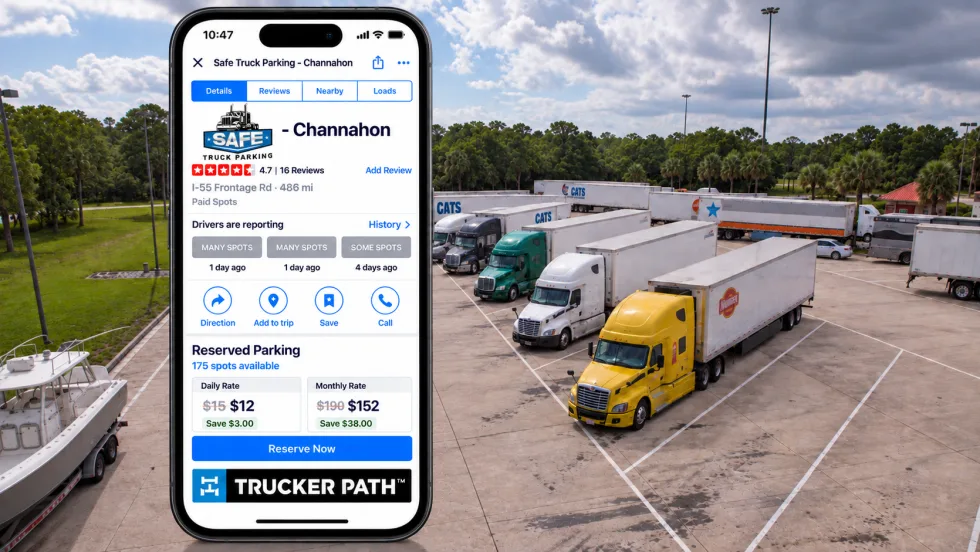
Trucker Path Expands Reserved Parking Network
Trucker Path has added close to 6,000 more truck parking spaces to its Trucker Path Reserved Parking Network with the addition of Safe Truck Parking.
Read More →
EEOC Sues Texas Trucking Company Over Driver Age Limits
The agency says Trancasa USA rejected applicants over 65 and applied tougher driving-record standards to those over 60.
Read More →
Nussbaum, Roehl Announce Second Driver Pay Increase This Year
This year has seen a swath of major truck driver pay increases as freight capacity has tightened.
Read More →
From One Generation to the Next: How Mentorship Builds Safer Truck Drivers
After three decades in trucking, Harold Perry shares what he's learned about driver safety, mentorship, and helping the next generation build confidence behind the wheel.
Read More →
Truck Drivers Need More Than Another Alert
Fleets have more visibility into truck health, safety events, and driver activity than ever. The next challenge is turning all that information into useful guidance for the person who has to decide what to do next.
Read More →
FMCSA Removes 110 Truck Driver Training Schools from Certified ELDT List
Federal regulators also are targeting more than 160 additional training providers and launching a nationwide audit of third-party CDL skills testers as part of a broader crackdown on trucking fraud.
Read More →
Hours of Service Pilot Programs: FMCSA Readies for 2027 Rollout
Two pilot programs could eventually reshape hours-of-service rules, giving truck drivers options to pause their 14-hour clock or use longer split sleeper rest periods.
Read More →
Medical Cards, English Proficiency Reshape Roadcheck Violations
Medical-card violations jumped to the top of the driver out-of-service list during CVSA’s 2026 International Roadcheck, while English-language proficiency violations appeared among the leading violations for the first time.
Read More →
Driver Trust Can Make or Break the Success of Fleet Safety Technology
New Teletrac Navman research suggests that onboarding, transparency about driver data, and positive feedback can play a significant role in how commercial drivers respond to safety and coaching technology.
Read More →