




Spot Market Flatbed Rates Continue Rise; Vans, Reefers Fall Again
The number of available loads on the spot truckload freight market increased 3.5% during the week ending July 30, sending load-to-truck ratios higher at the close of July, but only flatbed rates are continuing to head higher.

The number of available loads on the spot truckload freight market increased 3.5% during the week ending July 30, sending load-to-truck ratios higher at the close of July, but only flatbed rates are continuing to head higher.
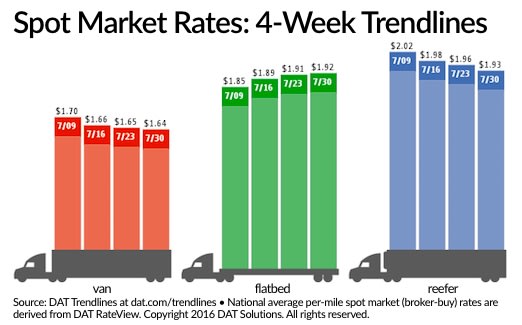
New figures provided by the freight matching service provider DAT Solutions, based on its load boards, show the number of flatbed load posts fell 3% and truck posts declined 7% compared to a week earlier, causing the load-to-truck ratio to increase 5% to 14.4 loads per truck.
The national average flatbed rate increased 1 cent to $1.92 per mile. All reported rates include fuel surcharges.
Most major flatbed markets were down but one bucked that trend, Raleigh, N.C., where strong construction activity helped propel spot rates up 14 cents last week to an average of $2.54 per mile. The lane from Raleigh to Tampa has gained 35 cents in the past month to $2.55 per mile.
On the dry van side, there is one surprise. According to DAT, the monthly average spot rate of $1.64 per mile in July is 2 cents higher than the average in June, when shippers typically have more demand for truckload capacity.
The number of van-load posts increased 6% last week while the van load-to-truck ratio rose slightly to 2.8 loads per truck on a 5% drop in the number of posted trucks. Regionally, markets with the highest average outbound rates showed little or no change compared to the previous week, but ranged from a low of $1.58 per mile in Dallas to a high of $2.12 in Los Angeles.
Meantime, the national average spot reefer rate fell another 3 cents to $1.93 per mile. That’s below the June average but only by 4 cents. By comparison, last year’s national reefer rate dropped 10 cents from June to July
The number of reefer load posts gained 13% last week while truck posts fell 5%, which led to an 18% jump in the reefer load-to-truck ratio to 5.1 loads per truck.
Overall activity in DAT’s spot freight market happened as the total number of available loads increased 3.5%, truck posts declined 5% and the national average price of diesel slipped 3 cents to $2.35 per gallon.
“The typical mid-July slump isn’t as bad for some truckers as it was in previous years,” said DAT Analyst Peggy Dorf in a post on the company’s blog. “A downturn in July is a normal seasonal trend on the spot market, but it’s sometimes followed by a rebound in August and September. Reefers may get a pay raise then, too, when grocers stock up on fresh food for back-to-school season.”
More Fleet Management
Why This Trucking Recovery Is Different
Freight demand remains sluggish, but rising costs and tougher enforcement have taken enough capacity out of the market to change the outlook for motor carriers.
Read More →
Platform Science Adds Dispatch and Safety Tools
Four additions to PS Fleet help fleets monitor loads, manage driver coaching, share truck locations and adjust video system settings.
Read More →
PrePass Intelligence Mines Fleet Bypass, Toll and Safety Data
PrePass Intelligence helps fleets measure bypass savings, flag potential toll overcharges, and spot suspicious transactions by combining data from separate systems.
Read More →
Motive Adds AI Agents for Fleet Operations
New tools automate follow-up on fleet data, from maintenance work orders to driver alerts, with two-way voice conversations planned for later this year.
Read More →
Can You Beat Our Trucking Trivia Challenge?
Test your truck knowledge with 19 trivia questions from Heavy Duty Trucking Exchange. Can you keep up with the fleet pros?
Read More →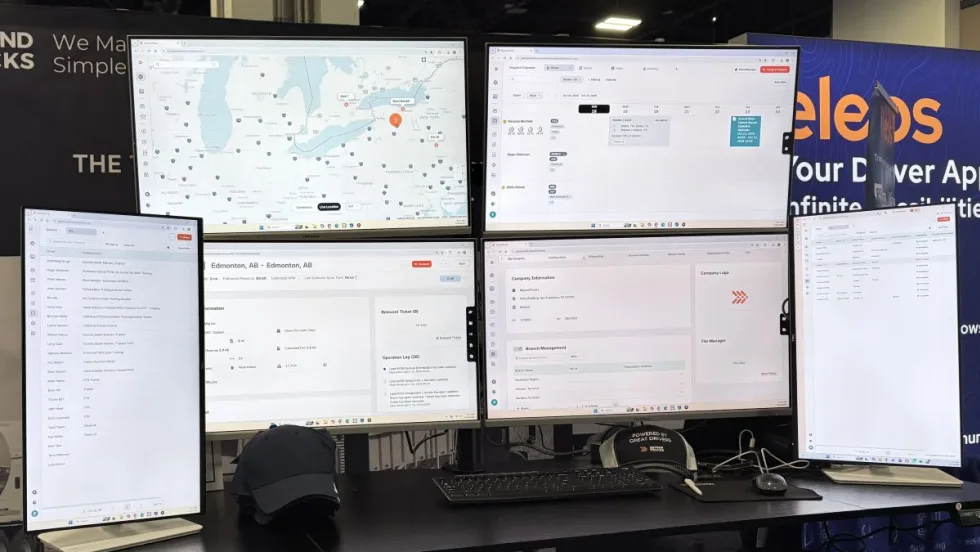
BeyondTrucks Adds Rules Checks to Dispatch
New Compatibility Engine checks driver qualifications, equipment requirements and fleet policies before loads are dispatched.
Read More →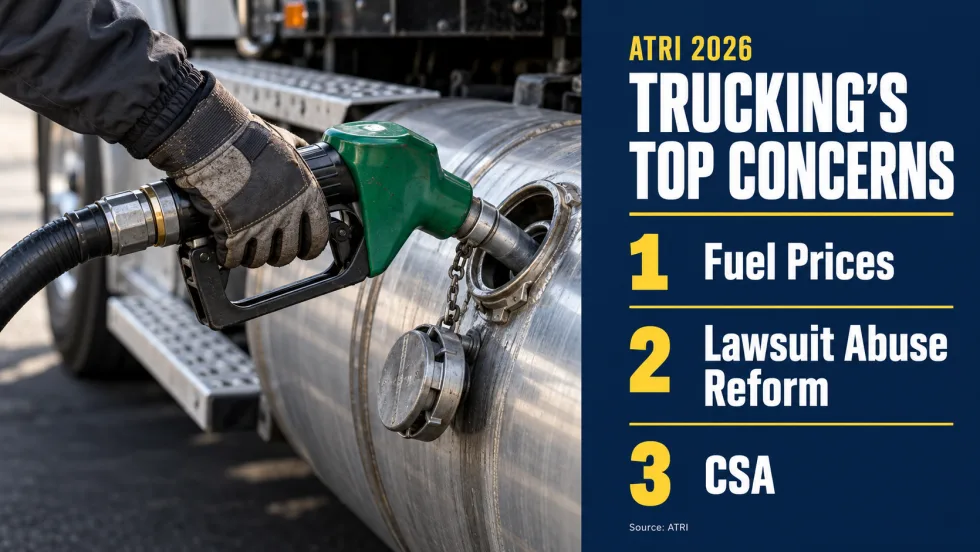
Diesel Prices Hijack Trucking’s Worry List
ATRI’s annual survey finds cautious optimism about freight, but diesel costs, litigation, and insurance continue to squeeze fleets. Drivers have different priorities on several issues.
Read More →
Nomination Deadline Extended for HDT Emerging Leaders
Just a few more days to nominate accomplished trucking fleet professionals under 40 who are making an impact and helping lead the industry forward for the HDT Emerging Leaders award. Deadline extended to October 20!
Read More →
What Will ATA’s New Leader Bring to Trucking's Table?
Incoming President and CEO Mark Colson’s record in Alabama offers clues about his priorities and approach following Chris Spear’s abrupt departure as the head of the American Trucking Associations.
Read More →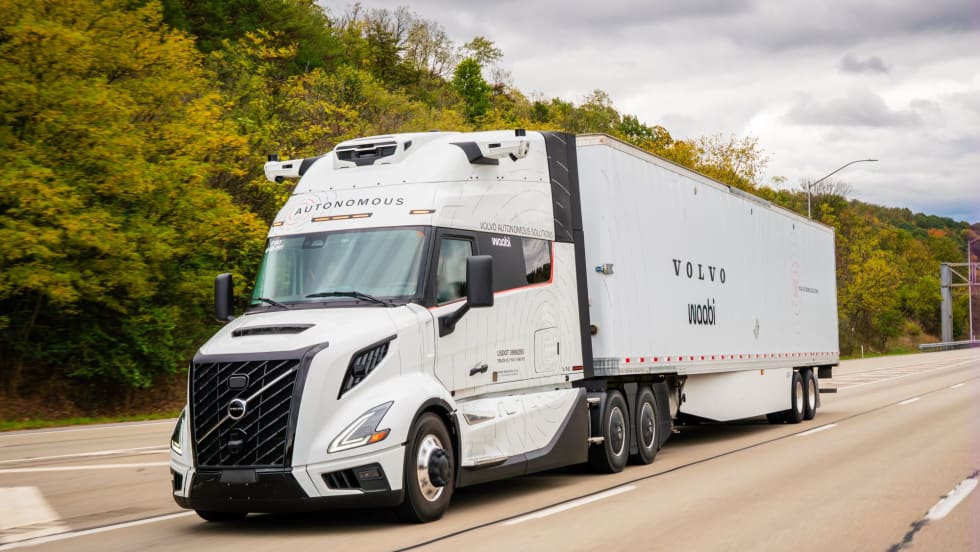
Volvo, Waabi Start Commercial Autonomous Operations in Texas
Volvo VNL Autonomous trucks, powered by the Waabi Driver, are hauling freight directly to third-party facilities for a customer in Texas.
Read More →