




Spicer Introduces Fuel-saving AdvanTEK 40 Tandem Axle
Dana Holding Corporation unveiled a new 40,000-lb tandem at the Mid-America Trucking Show aimed at a variety of Class 8 applications. The new design is said to increase fuel economy, improve reliability, reduce vehicle weight, and decrease total ownership costs.
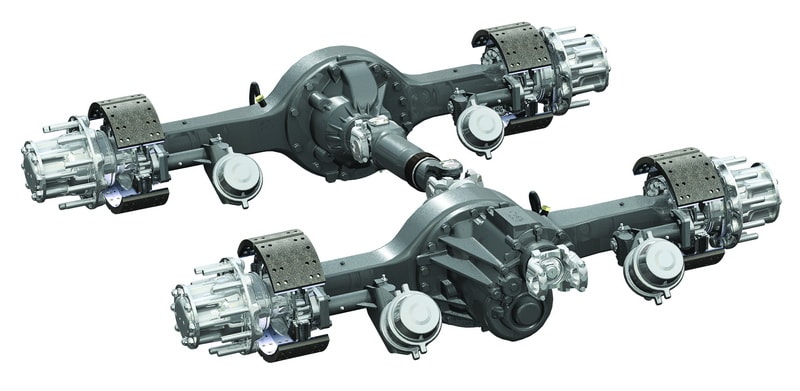
LOUISVILLE -- Dana Holding Corporation unveiled a new 40,000-lb tandem at the Mid-America Trucking Show aimed at a variety of Class 8 applications. The new design is said to increase fuel economy, improve reliability, reduce vehicle weight, and decrease total ownership costs.
Compared to other tandem-axle offerings, the Spicer AdvanTEK 40 axle is estimated to deliver more than $8,000 in operating savings over a five-year period through a combination of features including the industry’s fastest axle ratio of 2.26:1, lower axle weight, optimum inter-axle driveline angles, and reduced lubrication quantity.
“The Spicer AdvanTEK 40 axle represents the next generation of tandem axles designed for fleets looking to drive efficiency gains and increase their return on investment,” said Pat D’Eramo, president of Dana Commercial Vehicle Driveline Technologies. “We have engineered performance improvements into every aspect of the Spicer AdvanTEK 40 axle to quickly deliver significant benefits that extend to vehicle owners in the resale market, as well.”
The Spicer AdvanTEK 40 axle was developed with faster axle ratios to handle higher input torques, lowering engine rpm at cruise speed while increasing axle efficiency by up to 1.2 percent. The Spicer AdvanTEK 40 axle will be offered with ratios ideally suited for direct-drive transmission drivetrains requiring rear axle ratios from 2.26 to 2.79 and overdrive transmission drivetrain ratios from 2.93 to 3.91.
The Spicer AdvanTEK 40 axle weighs up to 21 pounds less than competitive 40,000-lb. tandems on the market today, Spicer claims. It is available with options such as Dana’s patented wheel differential locks, lubrication pump, breather, and Spicer LMS and LMSi hubs. Other options include thick-wall housings and Dana’s versatile SelecTTrac solution for maximizing GAWR rating for aluminum hubs and maximizing bearing life in single wide-based tire configurations.
Optimum inter-axle driveline angles allow for parallel axle installation, avoiding installation variables and vehicle issues with certain air-ride suspensions. Further refinements in the design of the Spicer AdvanTEK 40 axle deliver improved durability of U-joints, less vehicle downtime, and lower maintenance costs, the company says.
The Spicer AdvanTEK 40 tandem axle is on display this week at the Mid-America Trucking Show next week in booth 30555. Dana will start production on Spicer AdvanTEK 40 axle in early 2014.
For more information, visit www.dana.com/commercialvehicle
More Drivers

Truck Drivers Need More Than Another Alert
Fleets have more visibility into truck health, safety events, and driver activity than ever. The next challenge is turning all that information into useful guidance for the person who has to decide what to do next.
Read More →
FMCSA Removes 110 Truck Driver Training Schools from Certified ELDT List
Federal regulators also are targeting more than 160 additional training providers and launching a nationwide audit of third-party CDL skills testers as part of a broader crackdown on trucking fraud.
Read More →
Hours of Service Pilot Programs: FMCSA Readies for 2027 Rollout
Two pilot programs could eventually reshape hours-of-service rules, giving truck drivers options to pause their 14-hour clock or use longer split sleeper rest periods.
Read More →
Medical Cards, English Proficiency Reshape Roadcheck Violations
Medical-card violations jumped to the top of the driver out-of-service list during CVSA’s 2026 International Roadcheck, while English-language proficiency violations appeared among the leading violations for the first time.
Read More →
Driver Trust Can Make or Break the Success of Fleet Safety Technology
New Teletrac Navman research suggests that onboarding, transparency about driver data, and positive feedback can play a significant role in how commercial drivers respond to safety and coaching technology.
Read More →
EEOC Sues KLLM Over Alleged Sex Discrimination in Driver Training
KLLM is facing a federal sex-discrimination lawsuit over policies the EEOC alleges put female truck driver trainees at a disadvantage.
Read More →
FMCSA Moves to Codify English Language Requirements for Commercial Drivers
By changing regulations on English-language proficiency requirements for commercial drivers, rather than relying on a guidance memo, the FMCSA said future administrations won't be able to walk back the Trump administration's stricter enforcement with just a memo.
Read More →
Drivers Put Western Star Trucks to the Test at Star Nation Experience
Watch to get an inside look at the Western Star trucks, technology, and community behind the Star Nation Experience 2026!
Read More →
Trump Administration Looks to Put More Veterans Behind the Wheel
The Freedom Haulers program pulls together existing and expanded programs at several federal agencies to recruit veterans to drive commercial heavy-duty trucks and cut the red tape for them to get a CDL, training, and employment.
Read More →
Putting Mack’s Command Steer to the Test
A test drive of Mack’s Command Steer active steering system evaluates how it can make truck driving easier and less tiring.
Read More →