




Sluggish Growth in Freight Volumes; Rates Remain Flat
Freight shipment volumes continued their sluggish pace upward in March, increasing 2.1% from February, according to the Cass Freight Index. Freight spending, meanwhile, increased 1%. This is the second month in a row that shipment growth exceeded cost growth, signifying that rates have remained relatively flat.

Freight shipment volumes continued their sluggish pace upward in March, increasing 2.1% from February, according to the Cass Freight Index. Freight spending, meanwhile, increased 1%. This is the second month in a row that shipment growth exceeded cost growth, signifying that rates have remained relatively flat.
Moderate contract rates, which shippers negotiated last year while they were expecting significant increases in 2012, has resulted in the dampening of what would otherwise be rising rates. Rates on the spot market rose throughout most of March in response to increasing demand and tightening capacity.
March Shipment Volumes
The 2.1% month‐to‐month rise in freight volumes followed a 2.5% jump last month -- sluggish shipment growth compared to 2011. Year over year, March shipments are 1.3% lower than a year ago. Record high inventories, combined with low demand, are likely the culprits for the unseasonably low growth, Cass says.
Looking at freight volumes by mode, truck shipments have been on the rise, particularly at the end of March, and intermodal loadings were 2.4% higher than a year ago. Not all modes experienced gains, however: Rail carloads for the first three months of 2012 were down 2.2% compared to the same period in 2011.
The Institute for Supply Management's manufacturing activity index edged up again in March and, at 54.3 remains above the 50 level needed to indicate expansion. The Production sub‐index rose 3%, but another future indicator for freight movements, New Orders, was down 0.4%.
March Freight Expenditures
The 1% gain in freight spending in March was much lower than that for the same period last year. Dollars spent for freight were 4.3% higher than March 2011. Although many costs, especially labor and fuel, have been on the rise in the first quarter, rates are not rising to recoup the added cost. Industry surveys of both shippers and carriers have indicated that sharp increases in rates are expected, but so far demand has not been strong enough to support rate hikes.
Truck capacity is still decreasing and many carriers have indicated that they do not plan to expand their fleets. In fact, many have equipment parked because they have been unable to find drivers. The driver shortage continues to become a more serious problem as the economy gains strength; mid‐size trucking firms have been shifting to intermodal as a way to deal with the shortage. They are also investing in more trailers instead of new complete rigs.
The economy is showing signs of sustainable growth well into 2012, Cass says. Businesses hired more than 200,000 new employees in March, retail sales are inching up, and Consumer Confidence grew again. Consumer spending has increased each month this year, but consumer credit has increased along with it. Although the expansion in the manufacturing sector slowed somewhat in March, it is still growing. Imports were down during the first quarter, and the nation's ports have seen a drop in the number of incoming containers.
Exports, on the other hand, are growing despite the shaky state of the global economy.
Many are forecasting a strong peak shipping season this year, but that will depend on retailers' ability to bring down their high inventory levels. The inventory-to-sales ratio (an indicator of inventory levels to support monthly sales) has been flat for almost five months, meaning there has been little progress in reducing inventories, which have reached pre‐recession levels.
The Cass Freight Index represents monthly levels of shipment activity, in terms of volume of shipments and expenditures for freight shipments. Cass Information Systems processes more than $20 billion in annual freight payables on behalf of its clients. The Cass Freight Index is based upon the shipments of hundreds of Cass clients representing a broad spectrum of industries. The index uses January 1990 as its base month.
More Fleet Management

Nomination Deadline Extended for HDT Emerging Leaders
Just a few more days to nominate accomplished trucking fleet professionals under 40 who are making an impact and helping lead the industry forward for the HDT Emerging Leaders award. Deadline extended to October 20!
Read More →
What Will ATA’s New Leader Bring to Trucking's Table?
Incoming President and CEO Mark Colson’s record in Alabama offers clues about his priorities and approach following Chris Spear’s abrupt departure as the head of the American Trucking Associations.
Read More →
Volvo, Waabi Start Commercial Autonomous Operations in Texas
Volvo VNL Autonomous trucks, powered by the Waabi Driver, are hauling freight directly to third-party facilities for a customer in Texas.
Read More →
Samsara Launches Custom AI Agent Builder
Agent Studio lets fleets create AI tools for hours-of-service monitoring, reporting and driver support, including agents that communicate by phone.
Read More →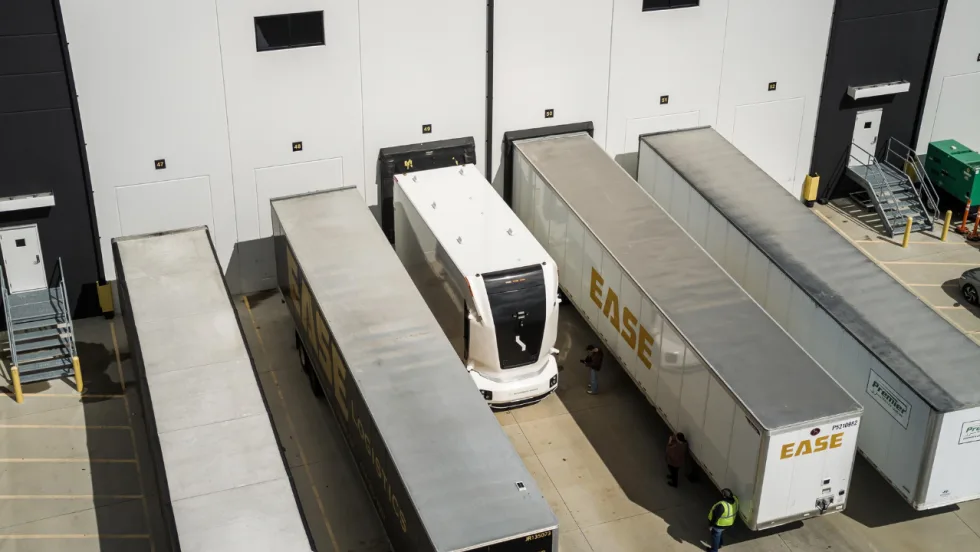
Einride Driverless Electric Trucks Begin Daily Freight Operations in Ohio
Two cabless electric trucks are hauling freight between EASE Logistics facilities in Marysville, Ohio, as part of a multi-state truck automation project.
Read More →
Geotab Links Fleet Card to Vehicle Data
The new card combines fuel discounts with telematics-based purchase controls. Geotab’s analysis also points to potential savings from choosing lower-priced fuel stops.
Read More →
How MFA Helps Protect Trucking Fleets
Multi-factor authentication adds protection when passwords are stolen. Here’s how it works and where fleets should start.
Read More →
How Better Freight Data Helps Trucking Teams Get Ahead of Disruption
Trucking and logistics teams have plenty of data. The problem is getting the right information in front of the right people soon enough to act. Better-connected data can help teams spot trouble earlier and make smarter decisions before small problems become big ones.
Read More →
Trimble: Taking Artificial Intelligence in Trucking Beyond Faster Tasks
At Insight 2026, Trimble executives argued that fleets may need to redesign workflows to get more from AI as it introduced new products and enhancements. AI’s value will depend on how fleets combine automation with their people's knowledge.
Read More →
Build a bulletproof fleet: Uniting ELDs and dash cams for total compliance
An ELD can prove compliance, but it cannot always prove what happened on the road. Discover how uniting accurate ELD data with AI-powered dash cam video can help your fleet strengthen compliance, defend against liability, protect drivers and reduce operational costs.
Read More →