




Related: Starship Rig Shooting for Top MPG
Shell’s Starship Truck Focuses on Freight Efficiency First
Shell Rotella’s next-generation concept truck, nicknamed the Starship, is set to debut early in 2018, and the company says it will focus on freight efficiency rather than raw miles per gallon.
by Staff
September 22, 2017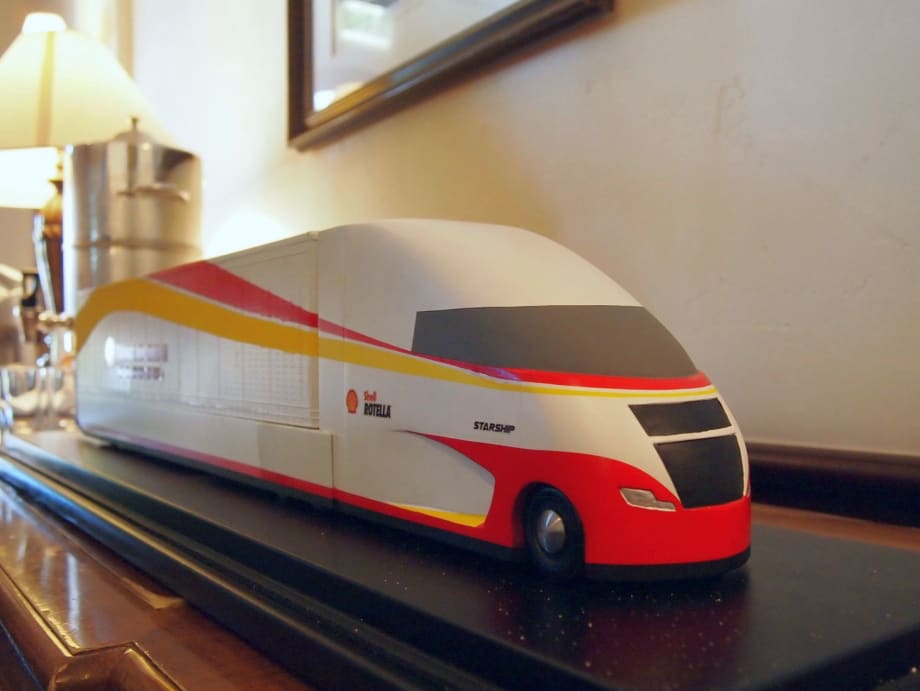
Scale model of Shell's Starship concept truck. Photo: Steven Martinez
2 min to read

Scale model of Shell's Starship concept truck.Photo: Steven Martinez
Shell Rotella’s next-generation concept truck, nicknamed the Starship, is set to debut early in 2018 and the company says it will focus on freight efficiency rather than raw miles per gallon.
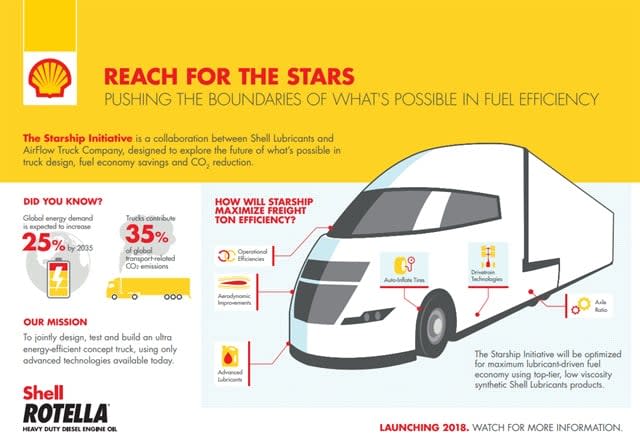
The truck, which the company has been teasing since 2015, is a collaborative effort between Shell and the Airflow Truck Company, which builds custom Class 8 trucks and trailers designed to push aerodynamic, fuel-efficient design. For this project, the cab of the truck and the trailer are being custom made to reduce weight and rolling resistance while streamlining aerodynamics.
While not designed to be put into production, the concept vehicle is also not supposed to represent a far-flung future. Bob Mainwaring, Shell Lubricants technology manager for innovation, explained to reporters at a California briefing this week that it is Shell’s vision for 5-15 years in the future.
A lot of emphasis was placed on freight ton efficiency as the primary metric for the Starship vehicle, eschewing fuel economy as the be-all and end-all of fuel efficiency. Mainwaring described freight ton efficiency as maximizing the usefulness of fuel mileage. When tuning a vehicle for fuel economy, the best way to achieve it is to run lightweight and slow, he said. However, using gallons per ton-mile instead of miles per gallon incentivizes carrying as much weight as possible as efficiently as possible.
“Go Slow, Go Heavy” is the mantra for thinking about how to improve freight efficiency. An example Shell gave was that a car with one passenger might achieve 30 mpg and be considered fuel efficient. But that same car carrying three people and only hitting 28 mpg is actually being far more efficient overall. In other words, the more goods you carry, the more efficient your fuel usage actually is.
To improve freight efficiency, the Starship project has emphasized aerodynamics, lightweighting, reducing rolling resistance, and use of low-viscosity oils. When the Starship is finally unveiled next year, Shell plans to take the vehicle coast to coast to test it, from California to Florida on a drive designed to maximize efficiency and generally avoiding congestion when possible. The company says it isn’t aiming for specific number goals and is treating the Starship as “thought leadership on wheels.”
More Fuel Smarts

Electric Yard Tractors Move Beyond Pilots
Operating-cost savings have overtaken sustainability goals as the leading reason surveyed fleets are adopting battery-electric terminal tractors, according to new NACFE research.
Read More →
Geotab Links Fleet Card to Vehicle Data
The new card combines fuel discounts with telematics-based purchase controls. Geotab’s analysis also points to potential savings from choosing lower-priced fuel stops.
Read More →
Fleet Economics Shape Electric Truck Outlook
ACT Research expects costs, charging infrastructure, and technology improvements to drive zero-emission commercial vehicle adoption as federal regulations and incentives retreat.
Read More →
Wex Adds Cardless Fuel Payments for Over-the-Road Customers
A new fuel card feature for Wex customers offers convenience and security.
Read More →
New California Law Could Shed Light on Electric Truck Prices
Why do battery-electric Class 8 trucks remain so expensive? A California bill signed by Gov. Gavin Newsom would give fleets and state agencies more visibility into what manufacturers charge.
Read More →
How Volvo Updated Its D13 for EPA 2027 [Watch]
Volvo’s updated D13 promises lower emissions without sacrificing performance or fuel economy. Take a closer look at what changed inside the engine in this HDT Spotlight video.
Read More →
Diesel Price Spike Shortens Payback for Natural Gas Trucks, Report Says
Energy Vision estimates fleets could recover the higher purchase price of an RNG-fueled Class 8 tractor in 1.3 to 2.8 years under current fuel-price scenarios.
Read More →
Calstart Becomes Catalyst Mobility, Reflecting Broader Focus
Calstart is now Catalyst Mobility, reflecting the nonprofit’s growing national role in clean transportation, including zero-emission trucks, infrastructure and incentive programs.
Read More →
Record Diesel Prices Squeeze Trucking Fleets
Average U.S. diesel prices have climbed to nearly $6 a gallon, surpassing the 2022 record as tight refinery capacity and Middle East disruptions keep fuel costs elevated.
Read More →
East Coast Port Launches $45M Electric Truck Push
The Port Authority of New York and New Jersey announced millions in incentives for zero-emission drayage trucks, yard tractors, and new charging hubs near the port.
Read More →