




Senate Bill Would Create Infrastructure Tax Credit
New bipartisan legislation introduced in the Senate could help bridge the highway funding gap by expanding the use of tax-exempt bonds and implementing a new tax credit to help state and local governments pay for infrastructure projects.


Photo: U.S. DOT
New bipartisan legislation introduced in the Senate could help bridge the highway funding gap by expanding the use of tax-exempt bonds and implementing a new tax credit to help state and local governments pay for infrastructure projects.
Co-sponsored by Sen. Ron Wyden (D-OR), Ranking Member of the Finance Committee, and Sen, John Hoeven (R-ND), the “Move America Act of 2015” is designed to leverage additional private investment in public infrastructure.
The bill seeks to create Move America Bonds, to expand tax-exempt financing for public-private partnerships, and Move America Credits, to leverage additional private equity investment at a lower cost for States.
According to the bill’s sponsors, passage of Move America would provide the “cheaper and more flexible access to debt and equity” that states and local governments need to expand their investments in roads, bridges, ports and other transportation infrastructure.
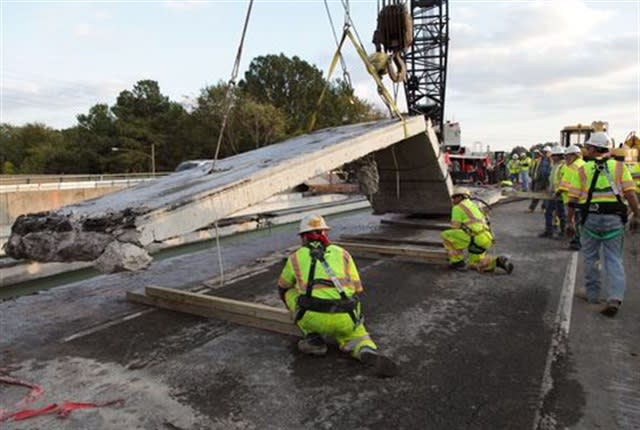
Photo: U.S. DOT
The bill would provide:
Up to $180 billion in tax-exempt bond authority for States over the next 10 years
Up to $45 billion in infrastructure tax credits for States over the next 10 years
“Flexible public-private partnership ownership arrangements” for roads, bridges, ports, rail, and airports
“Move America will turbocharge investment and give states and localities the flexibility they need to quickly and efficiently break ground on projects,” said Sen. Wyden. “An injection of private capital, in addition to sustainable funding for transportation programs, will help get America’s economic engine running at full speed.”
Sen. Hoeven stated that the bill enjoys bipartisan support and that the sponsors “seek to do it in a way that incentivizes private investment, leverages the P3 program and is fully paid for so that it doesn’t increase the deficit.”
Numerous transportation-related and other business lobbying groups have endorsed the Move America program, including: American Association of Port Authorities, American Association of State Highway Transportation Officials, American Road and Transportation Builders, Associated General Contractors of America, Highway Users Alliance, The Business Roundtable, and the United States Chamber of Commerce.
In its statement on the measure, the Chamber of Commerce first noted that its top transportation funding priority is “identifying the transportation-related, ongoing, sustainable, and substantial revenue sources that will support passage of a long-term highway and transit authorization bill.”
The Chamber then said it is “strongly supportive of new tools such as those in the Move America proposal that promote private investment in transportation and other infrastructure. It is smart business for the federal government to help make infrastructure project economics attract private capital.”
The Highway Users Alliance called the bill’s Move America Bonds “a valuable supplement to any future funding solution that helps bring Congress closer to a long-term highway bill.”
More Fleet Management

What the U.S.-Canada Trade War Means for Trucking
Escalating U.S.-Canada tariffs could disrupt cross-border freight, reduce truck volumes, raise costs, and create new uncertainty for carriers on both sides of the border.
Read More →
What Are Trucking’s Top Concerns for 2026?
The American Transportation Research Institute wants to know what's worrying trucking fleet managers, drivers, and other stakeholders in its annual Industry Issues survey.
Read More →
American Trucking Associations Looks for a New Leader
ATA President and CEO Chris Spear abruptly left his job at the association on August 21, at a pivotal time for the trucking industry.
Read More →
Public Wi-Fi Cybersecurity Risks: How Truck Drivers and Fleets Can Protect Their Data
Public Wi-Fi can expose truck drivers and fleets to credential theft, malware, and other cyber threats. Here’s how to reduce the risk on the road.
Read More →
For Nicky Cupp, Fleet Innovation Starts With Frustration
HDT Truck Fleet Innovator Nicky Cupp turns everyday pain points at Fraley & Schilling into opportunities for better technology and smarter processes.
Read More →
Adam Buttgenbach’s Approach to Electric Trucks: Start With Where They Fit
HDT Truck Fleet Innovator Adam Buttgenbach helped PepsiCo build one of North America’s largest EV fleets by focusing on where electric trucks make operational sense.
Read More →
Deen Albert: Let Automation Do the Math, People Make the Decisions
HDT Truck Fleet Innovator Deen Albert makes sure people are still at the heart of operations at Grand Island Express, even while adopting artificial intelligence tools. AI-assisted dispatch helped boost revenue 25% with the same number of trucks.
Read More →
Trimble’s New AI Agent Takes Aim at Fleet Back-Office Busywork
Arc Agent works across Trimble TMS products to automate repetitive tasks such as freight orders, maintenance, invoices, fuel costs and more.
Read More →
How HDT’s 2026 Truck Fleet Innovators Are Rethinking Fleet Operations
Meet five trucking leaders who are challenging assumptions, solving operational problems, and putting innovative ideas to work.
Read More →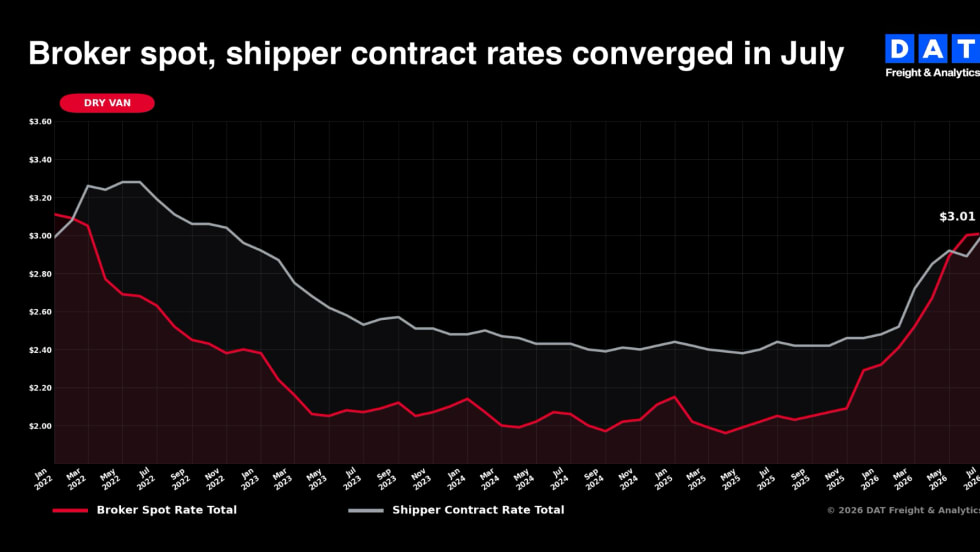
Tight Trucking Capacity Pushes Rates Higher Even as Freight Volumes Fall
“Spot rates moving ahead of contract rates have historically signaled a tightening market, but we haven’t seen a capacity-driven market quite like this one,” said DAT's Dean Croke.
Read More →