




Sandy Recovery Efforts Continue as Latest Storm Moves On
Despite the arrival of another storm last night, recovery efforts from the hurricane-turned-superstorm Sandy continue throughout the Northeast, while fuel problems have a domino effect in the Southeast
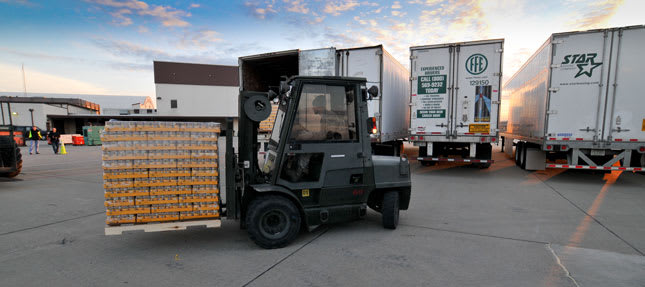
A truckload of donated pet supplies arrives at the Federal Emergency Management Agency commodities center at Charleston, W.V., Yeager Field.
Despite the arrival of another storm last night, recovery efforts from the hurricane-turned-superstorm Sandy continue throughout the Northeast, while fuel problems have a domino effect in the Southeast.
Permitting Help from the DOT
The Federal Highway Administration is working with the Federal Motor Carrier Safety Administration and the American Association of State Highway Officials to speed up permitting for carriers moving temporary mobile housing units from Maryland and Alabama to New Jersey.
Under normal circumstances, carriers have to work with states to get permits from each state they travel through. FHWA is coordinating with AASHTO to cut through some of the red tape and get all necessary permits at the same time. In addition, FHWA is also working with states to allow nighttime moves, which aren't normally allowed.
The Pipelines and Hazardous Materials Safety Administration is also helping speed the transport of hazardous materials - including much-needed fuel - to and from hurricane disaster areas with fast-tracked emergency special permits.
Several permits have been issued to expedite gasoline and diesel transport into New Jersey and New York. Another permit has been issued that allows a large retail store to move goods quickly from damaged stores to temporary facilities nearby so people still have access to needed goods.
Trucking Fuel
Those in the private sector are also increasing efforts to help out in the wake of Superstorm Sandy.
One of the key needs in the area has been fuel.
Taylor, MI-based Atlas Oil, wasted no time, announcing Oct. 30 that it was sending trucks and fuel to assist with relief efforts. Atlas partnered with one of FEMA's primary emergency fuel contractors to provide needed fuel trucks to assist with relief efforts in the New Jersey area. Atlas Oil's Emergency Services division has built a reputation of responding to emergencies such as power outages caused by storms. The company frequently fills generators for hospitals, data centers and other mission critical companies.
Tow truck drivers up and down the East Coast created a supply line of diesel and gasoline to keep local tow providers responding to distressed motorists in storm-damaged areas. Agero, which has a nationwide network of more than 30,000 independently owned roadside assistance providers, mobilized tow providers in storm-damaged areas.
More than 40 service providers from New England, the Philadelphia area, North Carolina, the District of Columbia and Maryland were organized by Agero last Thursday. By the end of Friday, the supply line had transported more than 100 truckloads of fuel - some carried on flatbed trucks in 55-gallon drums - to a 4,000-gallon, temporary fuel depot that the group had established in the storm-damaged area. The depot has been keeping local tow trucks refueled with diesel and resupplied with unleaded gasoline, delivering gasoline to stranded motorists and towers. When no gasoline was available, Agero's providers were towing motorists back to their residences until fuel did become available.
Even though contracted only to deliver fuel or tow disabled vehicles, Agero providers also used their equipment to recover customers' vehicles from high water or rubble. When they found storm victims in critical need, they provided fuel for portable generators.
Ripple Effect
Fuel shortages in the Northeast have caused a ripple effect, leading to warnings of potential shortages in some areas of the Southeast.
Glen Sokolis, president of Sokolis Group, a Pennsylvania-based fuel management consulting firm, points out that 7% of the U.S. refined petroleum products comes out of the New Jersey and Pennsylvania area.
"This is causing problems across the whole country," he says. "Think of it like flight delays; it is a trickle down issue."
The domino effect of fuel delivery issues in the Northeast could be felt as far south as South Carolina due to delivery delays on the Colonial Pipeline system. While some delivery points along Colonial Pipeline system are receiving timely shipments, some locations experience delays ranging from one day to as long as eight days.
Line space on Colonial Pipeline is being sold at a premium, and greater demand for fuel in the Northeast is cutting shipping volumes to the Southeast and Mid-Atlantic.
Donating
The New Jersey Motor Truck Association is holding a non-perishable food drive at its headquarters in East Brunswick tomorrow from 9 a.m.-3 p.m., collecting meals in a can, canned tuna, peanut butter, canned fruits and vegetables, canned soup, shelf-stable milk, cereal, baby food (not in glass jars) and diapers.
NAFA Fleet Management Association, a not-for-profit association of fleet managers based in Princeton, N.J., will be making contributions to several relief funds established in the areas hardest hit.
"After Hurricane Katrina, NAFA donated $3,200 to relief funds in New Orleans, contributing $100 for each NAFA chapter," said NAFAs Executive Director Phillip E. Russo. "This time, we will be donating the same amount on behalf of each chapter but dividing the donations among funds in each state."
Trucking companies in many states have been donating transportation for relief supplies gathered as far away as Florida and Los Angeles. In Binghamton, N.Y., for instance, Kocak Trucking volunteered to transport a trailer load of donations to the Ocean County Food Bank in New Jersey.
Logistics Aid
The American Logistics Aid Network (ALAN) continues to work together with Voluntary Organizations Active in Disaster (VOAD) and emergency management agencies to meet critical needs resulting from last weeks Hurricane Sandy.
This week, ALAN has helped to streamline relief efforts by sharing vital information and making connections related to warehouse space to store and sort in-kind donations, Information for transportation waivers and permits enabling retailers and VOADs to make deliveries of relief supplies, and long-haul resources for debris removal, among others.
We have seen an outpouring of support from the supply chain community, said ALAN president Jock Menzies. To date, donation offers have included warehouse space, office space, material handling equipment, and engineering expertise. We are still in the early stages of the disaster, however. The recovery from this event will be a long process most likely years rather than weeks or months. It will be critical to sustain this momentum to ensure that all needs are met.
At this time, the best way to help, according to Menzies, is to offer monetary donations to reputable disaster relief organizations or contributions of bulk commodities (http://alanaid.org/relief-needs.php). He encourages interested individuals and organizations to donate responsibly by knowing what is needed and responding to posted requests for support.
Related Stories
11/6/2012 FMCSA to Lead Interstate Petroleum Transport Team to Speed Hurricane Response
11/5/2012 Superstorm Sandy Affects Fuel Availability in Region
11/2/2012 Losses to Trucking from Sandy Will Be Recouped in Future
More Drivers

Why Hiring Truck Drivers Is Getting Harder
Higher recruiting costs, a shrinking driver pool, and renewed pay competition are raising the stakes for fleets heading into 2027.
Read More →
Roehl Offers Truck Drivers $10,000 Retention Incentive
Payments begin after the first load and continue in mileage-based installments for eligible experienced drivers joining the fleet.
Read More →
Platform Science Adds Dispatch and Safety Tools
Four additions to PS Fleet help fleets monitor loads, manage driver coaching, share truck locations and adjust video system settings.
Read More →
When Language Stops the Truck: The Return of ELP Out-of-Service Orders
English language proficiency rules for commercial drivers aren’t new, but renewed out-of-service enforcement has raised the stakes. Here’s what carriers need to know before a driver reaches a roadside inspection.
Read More →
Samsara Launches Custom AI Agent Builder
Agent Studio lets fleets create AI tools for hours-of-service monitoring, reporting and driver support, including agents that communicate by phone.
Read More →
Trucker Path Expands Reserved Parking Network
Trucker Path has added close to 6,000 more truck parking spaces to its Trucker Path Reserved Parking Network with the addition of Safe Truck Parking.
Read More →
EEOC Sues Texas Trucking Company Over Driver Age Limits
The agency says Trancasa USA rejected applicants over 65 and applied tougher driving-record standards to those over 60.
Read More →
Nussbaum, Roehl Announce Second Driver Pay Increase This Year
This year has seen a swath of major truck driver pay increases as freight capacity has tightened.
Read More →
From One Generation to the Next: How Mentorship Builds Safer Truck Drivers
After three decades in trucking, Harold Perry shares what he's learned about driver safety, mentorship, and helping the next generation build confidence behind the wheel.
Read More →
Truck Drivers Need More Than Another Alert
Fleets have more visibility into truck health, safety events, and driver activity than ever. The next challenge is turning all that information into useful guidance for the person who has to decide what to do next.
Read More →