




Safety Board Looks At NAFTA
The National Transportation Safety Board tackled highway transportation safety concerns related to the North American Free Trade Agreement last week in the third in its series of hearings on truck and bus issues in Los Angeles Oct. 20-22
The National Transportation Safety Board tackled highway transportation safety concerns related to the North American Free Trade Agreement last week in the third in its series of hearings on truck and bus issues in Los Angeles Oct. 20-22.
Under the terms of the 1993 NAFTA treaty, Mexican trucks were supposed to gain access to the four border states in late 1995 and access to the rest of the country in January 2000. The Clinton administration blocked the 1995 provision, and legislation currently in Congress would effectively block the January 2000 access.
A panel of witnesses testified before the NTSB about some of the major concerns that have kept the border closed: differences between countries regarding hours of service, the use of data recorders and the infrastructure of border inspections.
"There are over 400,000 crashes that occur every year on our highways involving large commercial trucks," said Jim Hall, NTSB chairman. "We owe it to all of our citizens to assure them that their safety will not be compromised once this phase of NAFTA takes effect."
According to the U.S. Customs Service, there were about 218,000 commercial passenger vehicle crossings from Mexico to the United States from June 1996 through May 1997. Federal Highway Administration inspectors in Texas and state inspectors in California conducted border safety inspections of 528 commercial passenger vehicles from January through May 1997. Approximately 22% of the vehicles were placed out of service for serious safety violations, such as steering or brake problems.
Those who do pass inspection often head for the hills. A DOT study conducted over a 30-month period found 105 Mexican trucks operating in the United States outside of the narrow commercial zones along the border to which Mexican trucks are currently limited.
Mexico declined to send government representation, but the Asociacion Nacioal de Transporte Privado did send a spokesperson. Leonardo Gomez Vargas responded to the statistics regarding Mexican truck out-of-service rates by stating that the private fleets -- which make up 40% of Mexico's trucks -- all meet the safety requirements of the United States and Canada. Most trucks found in the United States are not private fleet vehicles, but are drayage vehicles that haul trailers from one side of the border to the other. These drayage trucks are between 15 and 20 years old, are not well-maintained and often haul loads that exceed their ratings. Most private fleet trucks, on the other hand, are 5 to 7 years old, are equipped with current technology and are well-maintained, Vargas said.
Mexican fleets have also been working hand in hand with U.S. officials on hours-of-service regulations and logbook revisions, he said.
The overall consensus of the hearings was that while steps have been made to ensure safety on all three countries highways, more still needs to be done. Data recorders; hours-of-service regulations; insurance commonality; improved inspection facilities and inspector training; universal logbooks; compatible records and computer systems; and out-of-service rules are all topics that need direct handling.
The fourth and final NTSB truck safety hearing is scheduled for January 2000. It will cover commercial driver's licenses and medical issues.
More Drivers

Putting Mack’s Command Steer to the Test
A test drive of Mack’s Command Steer active steering system evaluates how it can make truck driving easier and less tiring.
Read More →
Competition Heating Up for Truck Drivers
New report reveals rising driver hiring costs, the return of sign-on bonuses, growing AI advantages, and the operational factors shaping driver retention.
Read More →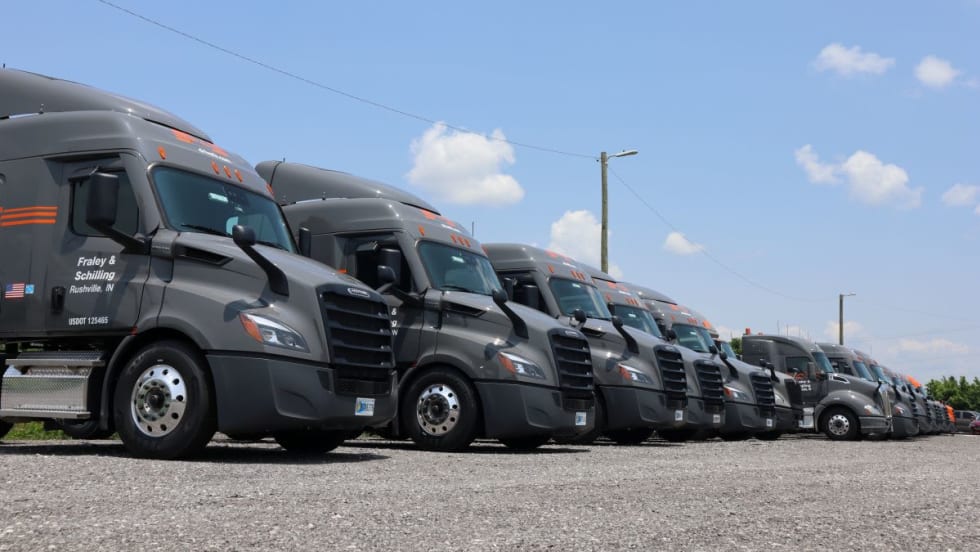
How Fraley & Schilling Improved Logbook Compliance by Over 50%
Fraley & Schilling needed a way to close a compliance workflow gap in its ELD system without adding more work from driver training, reminders, and back-office follow-ups. It found the answer in a custom driver app.
Read More →
Volvo Goes Gaming
Volvo has roared into American Truck Simulator with two new flagship trucks.
Read More →
What the Best Fleets to Drive For Teach About Driver Retention
Survey fatigue, AI-powered routing, owner-operator expectations, and the decline of social media all emerged as themes from this year's Best Fleets to Drive For program.
Read More →
Driver Retention Lessons From the Best Fleets to Drive For
What separates trucking's best workplaces from the rest? Jane Jazrawy shares the biggest lessons from this year's Best Fleets to Drive For program on driver retention, communication, AI, and workforce trends on the HDT Talks Trucking podcast.
Read More →
Farewell, CDL: Why I'm Giving Up My Commercial Driver's License
After more than 20 years as a CDL holder, HDT Executive Editor Jack Roberts is letting his commercial license expire. Not because he wants to — but because trucking's nuclear verdict crisis has made the risks of public-road test drives too great for editors, manufacturers, and everyone involved.
Read More →
How Top Trucking Fleets Improve Driver Retention [Video]
What do healthy snacks, optimized routing, and just picking up the phone have in common? They're all strategies the Best Fleets to Drive For are using to retain truck drivers.
Read More →
Trucker Path Adds Verisk CargoNet Theft Data to Navigation Platform
Trucker Path’s new cargo theft risk overlays give drivers and fleets visibility into high-risk areas, stolen commodity trends, and theft hotspots.
Read More →
Netradyne Intelligence Uses New AI Agents to Automate Response to In-Cab Camera Data
The company called the next-generation in-cab camera safety platform "a fundamental shift from systems that report on what happened to systems that actively drive what should happen next."
Read More →