




Safety Advisors Suggest Reducing In-Cab Distractions
Distracted driving is best countered by a wide-ranging effort to instill a culture of safety among all drivers, but in trucking specifically it would be helpful to reduce in-cab distractions, says a committee of safety experts
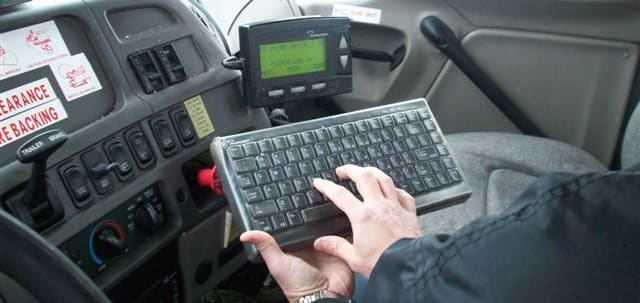
The safety committee recommended that the FMCSA take existing research as well as risks and benefits into account as it weighs the idea of prohibiting or limiting driver use of in-cab technologies while the truck is moving.
Distracted driving is best countered by a wide-ranging effort to instill a culture of safety among all drivers, but in trucking specifically it would be helpful to reduce in-cab distractions, says a committee of safety experts.
The Motor Carrier Safety Advisory Committee yesterday suggested that federal regulators look at technology standards, enforcement, driver education and data collection as they consider ways to limit distracted driving in trucks.
The committee, whose members come from the industry, the enforcement community and labor and safety advocacy groups, provides advice and recommendations to the Federal Motor Carrier Safety Administration. It has in the past weighed in on issues such as hours of service, new entrant regulations and cross-border trucking.
In a letter to FMCSA Administrator Anne Ferro, the committee recommended that the agency take existing research as well as risks and benefits into account as it weighs the idea of prohibiting or limiting driver use of in-cab technologies while the truck is moving.
The committee suggested that the agency consider alternatives to visual messaging, including incentives to promote voice-only technologies. It also urged the agency to consider a rulemaking to develop performance standards for in-cab technologies that might distract drivers.
As it assesses distracted driving enforcement the agency should consider potential sanctions, such as traffic tickets or moving violations, the committee said.
Another recommendation is that the agency ramp up a driver education program, possibly including mandatory periodic training as well as entry-level training.
The Bigger Picture
These steps should be taken as part of a larger effort, the committee said. FMCSA should work with the other administrations within the Department of Transportation, as well as the makers of vehicles and onboard gear, as part of the large-scale campaign to reduce distracted driving.
The committee is now working on recommendations for fatigue management programs, which it plans to present to the agency later this year.
Committee Members
The members of the committee are chosen by the FMCSA administrator. They are: John M. Bauer, director of global transportation for Starbucks Coffee; LaMont Byrd, director of health and safety for the Teamsters union; Bill Dofflemyer, Maryland Department of State Police; Scott G. Hernandez, Colorado State Patrol; and Thomas Jacques, Pittsburgh Police.
Others include John Lannen, executive director of the Truck Safety Coalition; Terry L. Maple, Kansas Highway Patrol; Jane Mathis, Parents Against Tired Truckers; Kevin O'Brien, New York State Department of Motor Vehicles; and David J. Osiecki, senior vice president for policy and regulatory affairs at American Trucking Associations.
The committee also consists of Stephen C. Owings, co-founder and president of Road Safe America; Peter Pantuso, president and CEO of the American Bus Association; David R. Parker, senior legal counsel at Great West Casualty Company; Robert G. Petrancosta, vice president of safety for Con-way Freight; and Robert Powell, Virginia State Police.
Also included are Danny Schnautz, a driver for Clark Freight Lines; Lester B. Sokolowski, senior vice president of sales and marketing for Strategic Safety Solutions; Judith Lee Stone, president, executive director and member of the Board of Advocates for Highway and Auto Safety; and Todd Spencer, executive vice president of the Owner-Operator Independent Drivers Association.
More Drivers

Truck Drivers Need More Than Another Alert
Fleets have more visibility into truck health, safety events, and driver activity than ever. The next challenge is turning all that information into useful guidance for the person who has to decide what to do next.
Read More →
FMCSA Removes 110 Truck Driver Training Schools from Certified ELDT List
Federal regulators also are targeting more than 160 additional training providers and launching a nationwide audit of third-party CDL skills testers as part of a broader crackdown on trucking fraud.
Read More →
Hours of Service Pilot Programs: FMCSA Readies for 2027 Rollout
Two pilot programs could eventually reshape hours-of-service rules, giving truck drivers options to pause their 14-hour clock or use longer split sleeper rest periods.
Read More →
Medical Cards, English Proficiency Reshape Roadcheck Violations
Medical-card violations jumped to the top of the driver out-of-service list during CVSA’s 2026 International Roadcheck, while English-language proficiency violations appeared among the leading violations for the first time.
Read More →
Driver Trust Can Make or Break the Success of Fleet Safety Technology
New Teletrac Navman research suggests that onboarding, transparency about driver data, and positive feedback can play a significant role in how commercial drivers respond to safety and coaching technology.
Read More →
EEOC Sues KLLM Over Alleged Sex Discrimination in Driver Training
KLLM is facing a federal sex-discrimination lawsuit over policies the EEOC alleges put female truck driver trainees at a disadvantage.
Read More →
FMCSA Moves to Codify English Language Requirements for Commercial Drivers
By changing regulations on English-language proficiency requirements for commercial drivers, rather than relying on a guidance memo, the FMCSA said future administrations won't be able to walk back the Trump administration's stricter enforcement with just a memo.
Read More →
Drivers Put Western Star Trucks to the Test at Star Nation Experience
Watch to get an inside look at the Western Star trucks, technology, and community behind the Star Nation Experience 2026!
Read More →
Trump Administration Looks to Put More Veterans Behind the Wheel
The Freedom Haulers program pulls together existing and expanded programs at several federal agencies to recruit veterans to drive commercial heavy-duty trucks and cut the red tape for them to get a CDL, training, and employment.
Read More →
Putting Mack’s Command Steer to the Test
A test drive of Mack’s Command Steer active steering system evaluates how it can make truck driving easier and less tiring.
Read More →