




Round and Round at the Hours of Service Roundtables
The hours of service roundtables are supposed to be a forum for gathering information, but at the opening session yesterday in a Washington, D.C., suburb, the dialogue often veered into debate. As witnesses around the table asserted their interests, it was easy to see why a negotiated rulemaking would not work: After years of fact-finding and a docket that would fill a fleet of trailers, the contesting parties still are at odds over fundamental issues
The hours of service roundtables are supposed to be a forum for gathering information, but at the opening session yesterday in a Washington, D.C., suburb, the dialogue often veered into debate.
As witnesses around the table asserted their interests, it was easy to see why a negotiated rulemaking would not work: After years of fact-finding and a docket that would fill a fleet of trailers, the contesting parties still are at odds over fundamental issues.
In a day-long discussion of the economic impact of reform and the fatigue research that underpins the proposal, moderator Julie Cirillo repeatedly reminded witnesses that the rule writers need data and information to evaluate the comments and complaints they have heard.
Cirillo, the acting assistant administrator of the Federal Motor Carrier Safety Administration, said the agency cannot come to new conclusions unless it gets new information.
As the roundtable sessions continue today, Congress is working toward compromise on a bill that would force the safety agency to stop working on this proposal or any similar proposal for a year. There is no official word on the compromise, but legislators have been considering language that would allow work on the rule to continue but keep a final decision bottled up until a date certain next year – perhaps next October.
Many presentations on the economic impact of the proposal repeated information that already is in the record, but in some instances Cirillo did get hard information.
Herbert Schmidt, president of truckload carrier Contract Freighters Inc., presented an analysis of driver logs that compared CFI operations under the current rules to changes that would be required under the proposed rule.
The practical effect of the proposed rule would be a 13% reduction in miles, Schmidt said. CFI would have to add more than 400 tractors and 1,100 trailers to its fleet, to haul the same amount of freight.
Elisa Braver, senior research analyst for the Insurance Institute for Highway Safety, picked up on a theme that echoes through the thinking of safety advocates and rule writers alike. Namely, that the trucking industry has multiple inefficiencies that could be tightened up to counterbalance this loss of productivity.
She wondered, for example, why trucking companies could not use relay operations and shared equipment to keep a lid on their fleets.
Schmidt explained that relay operations have a limited utility in the trucking business, due to imbalances in freight between geographic regions. And David Parker, president and CEO of Covenant Transport, added that it’s hard for competitors to share equipment: “It’s hard to become friends, when you’re constantly going after each other’s freight.”
Braver also suggested that the proposed rule, with its cutback in the overall workday, might lead to a lower driver turnover rate by improving working conditions.
Parker replied that he believes driver retention is keyed more to driver pay, and that the industry has not yet reached a salary level that is high enough to keep drivers working at a tough job.
Cirillo asked in particular for information about small trucking operations. One four-truck fleet owner, Suzie Schindewolf of Schindewolf Express, said that in a logbook comparison between the current and proposed rule, the 12-hour workday limit in the proposal would strand her driver two hours from home.
“This driver will be mad, frustrated and upset, and will try to falsify his log in order to get home,” Schindewolf said.
The only way she can adjust for the limitation is to buy another truck – a financial burden she cannot afford, she said.
Michael Koppenhofer, safety director for Watkins Motor Lines, said his analysis of the financial impact shows a $45 million price tag for the rule –$10 million up front and $35 million annually.
The problem, he said, arises from the cutback in the workday to 12 hours.
No Watkins drivers are scheduled to drive more than 10 hours now, but due to unforeseen circumstances some 4% of drivers are on the road 12 hours or more.
Cirillo pursued the point, asking what Watkins does now when a driver goes over the 15-hour limit.
Koppenhofer replied that it doesn’t happen – but if it did, the company would have the driver pull off the road and wait for his replacement to arrive.
While the safety agency calls for ever more data, much discord is generated over the data that already exists.
For example, Dave Osiecki, vice president of safety for American Trucking Associations, reported that an ATA survey found productivity losses ranging from 12% to 20% under the proposed rule.
This drew a warning from Braver of the Insurance Institute: self-reported data has a tendency to overstate costs, because industry is unwilling to bear those costs, or to reorganize its operations.
Enter Schindewolf, who said that her logbook comparison produced higher costs than she had originally predicted.
Schmidt of CFI suggested that the safety agency should get practical: Put the rule writers in the field in a truck for two weeks, including a weekend in a truckstop. “You’d see things from a much different perspective,” he said.
Cirillo replied that the people who wrote the proposed rule do have a deep knowledge of the industry. That does not mean, she granted, that the agency gets it right all the time.
More Drivers

Competition Heating Up for Truck Drivers
New report reveals rising driver hiring costs, the return of sign-on bonuses, growing AI advantages, and the operational factors shaping driver retention.
Read More →
How Fraley & Schilling Improved Logbook Compliance by Over 50%
Fraley & Schilling needed a way to close a compliance workflow gap in its ELD system without adding more work from driver training, reminders, and back-office follow-ups. It found the answer in a custom driver app.
Read More →
Volvo Goes Gaming
Volvo has roared into American Truck Simulator with two new flagship trucks.
Read More →
What the Best Fleets to Drive For Teach About Driver Retention
Survey fatigue, AI-powered routing, owner-operator expectations, and the decline of social media all emerged as themes from this year's Best Fleets to Drive For program.
Read More →
Driver Retention Lessons From the Best Fleets to Drive For
What separates trucking's best workplaces from the rest? Jane Jazrawy shares the biggest lessons from this year's Best Fleets to Drive For program on driver retention, communication, AI, and workforce trends on the HDT Talks Trucking podcast.
Read More →
Farewell, CDL: Why I'm Giving Up My Commercial Driver's License
After more than 20 years as a CDL holder, HDT Executive Editor Jack Roberts is letting his commercial license expire. Not because he wants to — but because trucking's nuclear verdict crisis has made the risks of public-road test drives too great for editors, manufacturers, and everyone involved.
Read More →
How Top Trucking Fleets Improve Driver Retention [Video]
What do healthy snacks, optimized routing, and just picking up the phone have in common? They're all strategies the Best Fleets to Drive For are using to retain truck drivers.
Read More →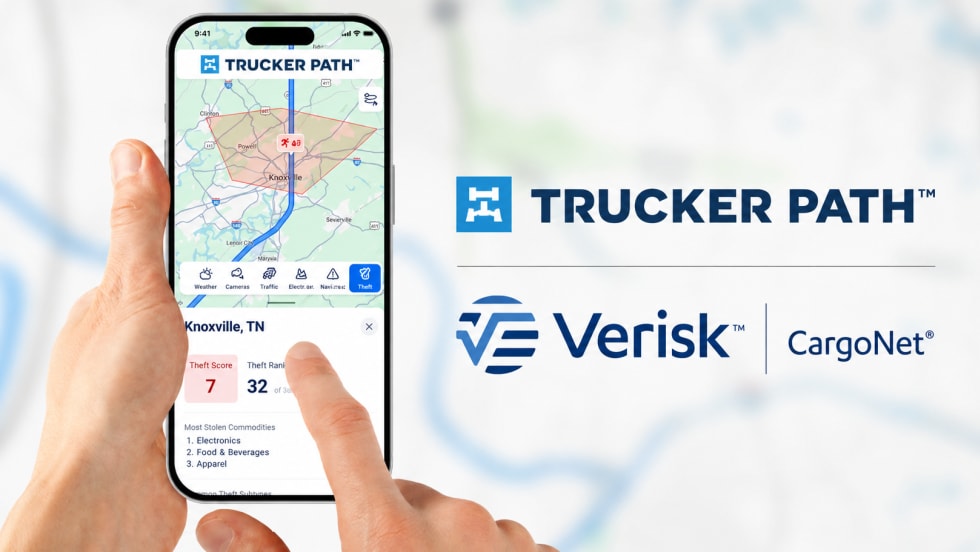
Trucker Path Adds Verisk CargoNet Theft Data to Navigation Platform
Trucker Path’s new cargo theft risk overlays give drivers and fleets visibility into high-risk areas, stolen commodity trends, and theft hotspots.
Read More →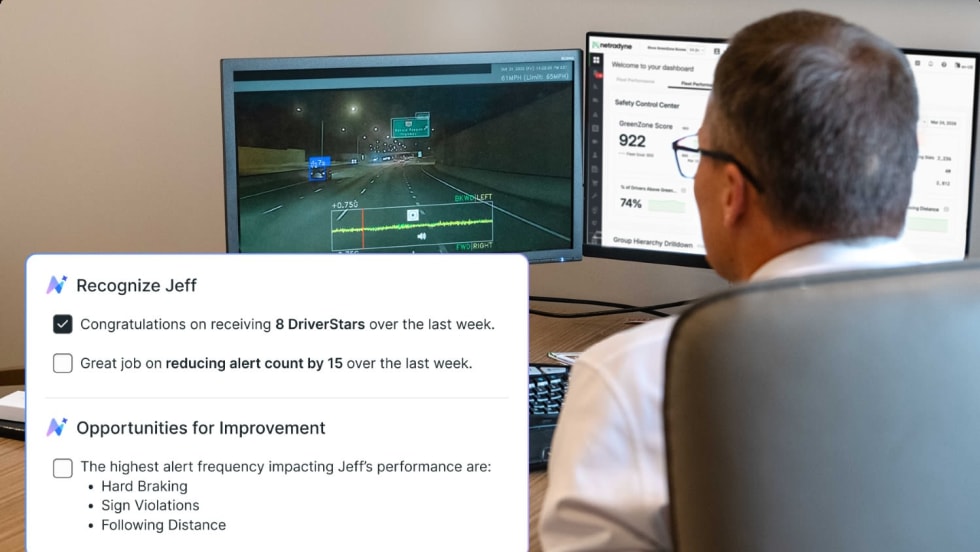
Netradyne Intelligence Uses New AI Agents to Automate Response to In-Cab Camera Data
The company called the next-generation in-cab camera safety platform "a fundamental shift from systems that report on what happened to systems that actively drive what should happen next."
Read More →
Why Truck Detention Keeps Costing Fleets Time and Money
A 2024 ATRI study found detention affects nearly 40% of truckload stops and costs the industry more than $15 billion annually. Despite the toll on drivers, fleets, and supply chains, the problem remains stubbornly persistent.
Read More →