





Dig Deeper: Smart Trailers Face a Huge Hurdle
Road Ready: New Technology Solutions Link Tractor and Trailer
Clarience Technologies announced two solutions to one of the challenges of smart trailers – digitally integrating the tractor and trailer.
April 7, 2022
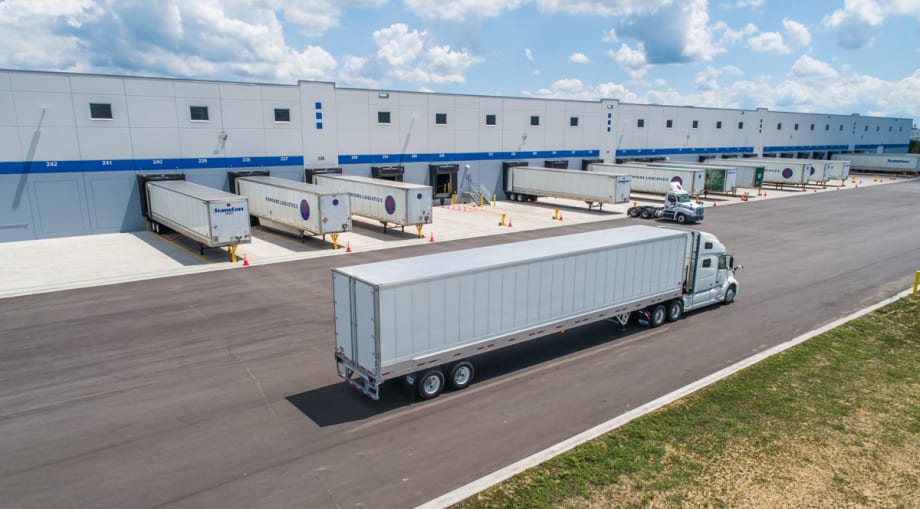
New Road Ready technology helps drivers pick up the right trailer, among other things.
Photo: Wabash
3 min to read
Clarience Technologies announced two solutions to one of the challenges of smart trailers – digitally integrating the tractor and trailer.
Clarience’s Road Ready advanced telematics and smart fleet technology provider introduced a cloud-based application program interface (API) and a virtual tether. These solutions, respectively, provide visibility and data feeds that the company said are unlike anything in the commercial transportation industry today.
Prompted by the digital transformation of the transportation industry, fleets have been seeking a better way for integrating fleet data from both truck and trailer assets, Road Ready noted in a news release. Yet, they all desire this integration for different reasons. With Road Ready, fleets have the flexibility to choose the truck/trailer connectivity option that best fits their needs.
Cloud-Based API for Single View of Fleet Health
The most basic integration of both truck and trailer assets, Road Ready's cloud-based solution empowers fleets to be able to see data from both asset types in a synthesized single view.
Enabled by Clarience Technologies' acquisition of Fleetilla earlier this year, Road Ready is using the Fleetilla Connect open architecture Internet of Things platform, which uses APIs to integrate a broad set of data feeds through providers such as electronic logging devices and in-cab cameras and brings them into one interface.
Coupled with Road Ready’s FleetViz dashboard, which showcases data from the LogIQ smart partner network, this “single pane of glass” approach eliminates the need to portal hop — allowing fleets to save time, understand and potentially act upon asset insights.
“We hear the same thing, time and time again from our customers. How can you make the data easier to digest and act upon?” said Nada Jiddou, EVP of Connected Technologies at Clarience Technologies. “This integration is in response to their feedback and is a key first step in enabling a smart fleet solution that can be flexible and expanded to the needs of any fleet, at any stage in their connected technologies journey.”
In addition to enabling an easier way to visualize data, this truck and trailer connection also enhances the overall richness of fleet data, according to the company. The connection, along with data from 11 LogIQ smart partners, results in a broad view of fleet asset data. This not only helps fleets identify broader trends to act upon, but also is a starting point for future applications of artificial intelligence and machine learning.
Virtual Tether for Remote Monitoring of Tethered Status
Fleets also want to know the tether status of specific equipment to help avoid mistakes of drivers taking the wrong trailer. And drivers want information on real-time trailer conditions if something happens that needs their attention.
To relay this information, Road Ready uses a virtual tether approach. This allows the driver to integrate the truck and the trailer by plugging in to the J-560 connection — just as they're used to doing.
“Road Ready’s virtual tether was designed to eliminate the human factor in truck and trailer integration,” said Paul Sniegocki, Clarience chief technology officer. “The virtual tether enables a smooth transition to smart fleets because it empowers drivers to access safety critical information in real-time, without extensive training or changing operations.”
The virtual tether also offers real-time data benefits. Clarience officials said data collected and connected through telematics in the cloud has challenges when it comes to real-time safety-critical information. In the case of an emergency event, instantaneous information is crucial for driver safety. Edge-computing allows the virtual tether to offer real-time data that is relayed to the driver.
The virtual tether is CAN bus- and future-proofed, as it is compatible with any industry-recommended connection, effectively eliminating the need for upfitting investments, according to the company.
More Equipment

How Volvo Updated Its D13 for EPA 2027 [Watch]
Volvo’s updated D13 promises lower emissions without sacrificing performance or fuel economy. Take a closer look at what changed inside the engine in this HDT Spotlight video.
Read More →
Michelin Tire Improves Efficiency and Durability for Regional Fleets
The Michelin X Multi Energy D2 is a regional haul drive tire engineered to help fleets improve fuel efficiency, durability and traction in demanding stop-and-go operations.
Read More →
ZF Expands Commercial Vehicle Push in North America
ZF is expanding its North American commercial-vehicle presence with new transmission applications, electrification, trailer technology and autonomous-driving systems.
Read More →
Tesla Wants a Self-Driving Semi. Are Cameras Enough?
Could Tesla’s camera-only autonomous driving technology work on an 80,000-pound Semi? In this commentary, HDT's Deborah Lockridge takes a look at Tesla, Cybercab, and how autonomous trucks see the road.
Read More →
Kodiak: Driverless Long-Haul Truck Launch on Track for 2026
Kodiak AI says its driverless long-haul safety case is 93% complete and it remains on track to begin commercial operations by year-end 2026.
Read More →
What DOT’s Automated Vehicle Strategy Means for Trucking
The U.S. Department of Transportation issued a new automated-vehicle strategy that outlines plans for driverless-truck regulations, cross-state freight corridors, and federal safety standards.
Read More →
East Coast Port Launches $45M Electric Truck Push
The Port Authority of New York and New Jersey announced millions in incentives for zero-emission drayage trucks, yard tractors, and new charging hubs near the port.
Read More →
PlusAI Going Public to Fund Autonomous Truck Launch
A SPAC deal could provide PlusAI with up to $300 million as it works toward a 2027 commercial launch of factory-built autonomous trucks.
Read More →
NHTSA Moves to Rewrite Truck Fuel-Economy Rules
The National Highway Traffic Safety Administration says it lacks authority to regulate medium- and heavy-duty truck engines separately from complete vehicles, but the existing standards have not yet been eliminated.
Read More →
Detroit Opens Orders for EPA 2027 Engines
Detroit isn’t starting from scratch to meet EPA 2027 diesel emissions standards. Its Gen 6 DD13 and DD15 engines keep much of today’s platform while updating the fuel and aftertreatment systems.
Read More →