




Report: ZEV Transition Will Cost U.S. Trucking $1 Trillion
Preparing today’s commercial vehicle fleet for electrification would require the commercial vehicle industry to invest upwards of $620 billion in charging infrastructure alone, according to a new report.

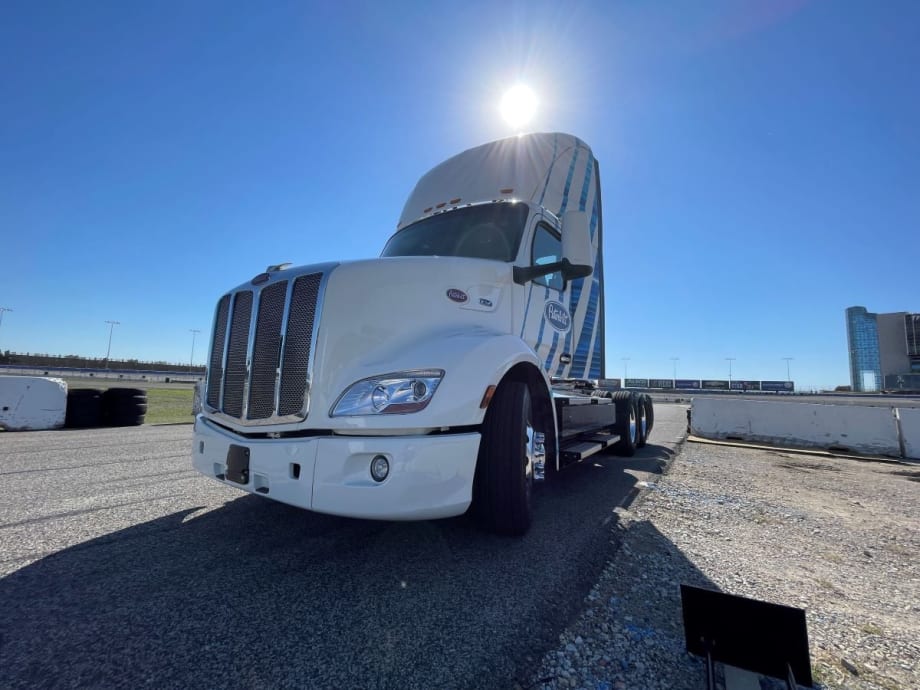
A report on commercial vehicle electrification by Roland Berger has exposed a massive investment gap as state and federal policymakers mandate increased adoption rates of battery-electric commercial vehicles.
Photo: Jack Roberts
The Clean Freight Coalition, a transportation advocacy group, unveiled a new study that puts the price tag for fully transitioning the U.S. trucking industry over to battery-electric vehicles at $1 trillion.
The coalition is an alliance of truck transportation stakeholders committed to a clean energy future for America’s trucking industry, according to the group. Participating associations span motor carriers of various sizes and freight sectors, as well as truck dealers, truck stop operators, and the bus industry.
The study was conducted jointly with several trucking industry organizations. Joining CFC executive director Jim Mullen at the online press briefing March 19 were:
American Trucking Associations President and CEO Chris Spear
American Truck Dealers President Laura Perrotta
American Bus Association President and CEO Peter Pantuso
National Association of Truck Stop Owners President and CEO Lisa Mullings
National Tank Truck Carriers President and CEO Ryan Streblow
National Motor Freight Traffic Association Executive Director Debbie Sparks
Truckload Carriers Association President Jim Ward
A Realistic Forecast for Commercial Vehicle Electrification Infrastructure
The report was completed by the consulting group Roland Berger. Its goal was to forecast a realistic infrastructure buildout for the electrification of medium- and heavy-duty commercial vehicles. In doing so, the study exposed what Mullen called a “massive investment gap" as state and federal policymakers mandate increased adoption rates of battery-electric commercial vehicles.
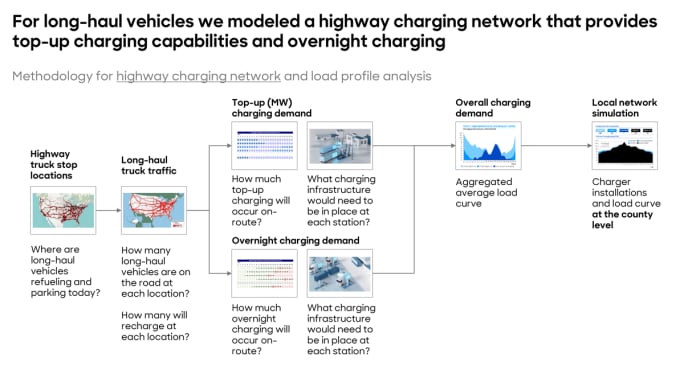
The analysis focuses on characterizing the investment needs and challenges across both charging infrastructure and energy infrastructure.
Source: Clean Freight Coalition
Among the key findings in the report:
Preparing today’s commercial vehicle fleet for electrification would require the commercial vehicle industry to invest upwards of $620 billion in charging infrastructure alone.
Utilities would need to invest $370 billion to upgrade their grid networks to meet the demands of just commercial vehicles.
This nearly $1 trillion expenditure does not account for the cost of new battery-electric trucks, which according to market research can be two to three times more expensive than their diesel-powered equivalents. For example, a diesel Class 8 truck costs roughly $180,000, while a comparable battery-electric truck costs over $400,000.
“What we are talking about here is a $1 trillion unfunded mandate being levied on the U.S. trucking industry,” Spear said. “In six to 10 years, the country will have fewer trucks on hand to move the amount of freight we do today, if we do not address this issue. And that reduction in trucks will be reflected in prices and the availability of products on store shelves."
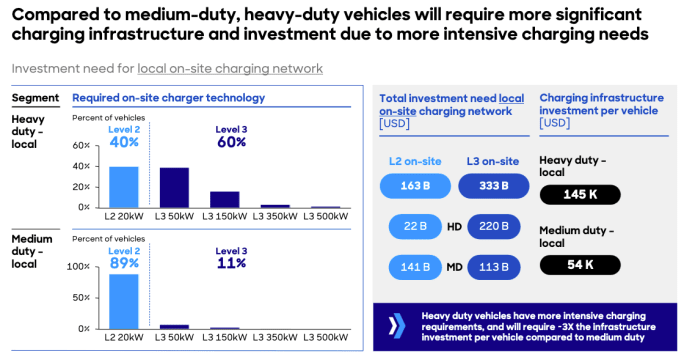
Heavy-duty electric vehicles have more intensive charging requirements and will require three times the infrastructure investment per vehicle compared to medium duty.
Source: Clean Freight Coalition
Spear stressed that ATA is not saying no to zero-emission vehicles. But, he said, the trucking industry needs a workable path and timeline to adopt these new technologies.
“This is a huge, complex, challenge,” he said. “Our industry needs both time and money to accomplish this, because this is going to be really difficult to do. We are not an industry dragging its heels. But the assumption that the trucking industry can do this alone and for free is not realistic. That is not going to happen.”
Immediate Action Needed to Make Electrified Supply Chain a Reality
Building on the report’s finding, Mullen said that U.S. policymakers must address these cost concerns and infrastructure hurdles to make an electrified supply chain function smoothly for the American economy.
The study found that while medium-duty vehicles will face fewer roadblocks, economic and operational constraints make electrification very challenging for the heavy-duty segment.
Furthermore, the study outlined the significant improvements in battery range and charging infrastructure capabilities that would be needed to support a path for the electrification of long-haul vehicles.
“Electrification means focusing on the vehicle segments that are easier first, “ said Wilfried Aulbur, senior partner, Roland Berger. “It means that we have to look at how fleets operate and potentially adjust; it means that we need better cooperation and planning across industries and governments; and it requires an openness to alternative technology paths to decarbonizing the heavy-duty segment.
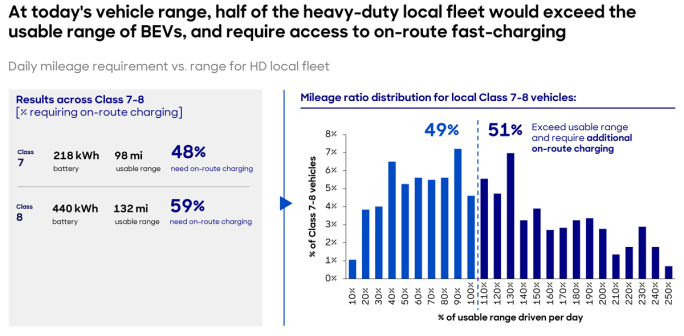
On-route charging points must align with fleet traffic volumes and existing routes.
Source: Clean Freight Coalition
"It also is clear that an industry with a yearly turnover of about $800 billion and a profit margin around 5% cannot invest $620 billion without financial support or a significant increase in freight rates.”
The report also expressed concerns that the current greenhouse gas regulations are weighted too heavily toward battery-electric vehicles over other emissions-reduction options.
“Today’s report from Roland Berger clearly demonstrates that policy must not depend on a single technology to reduce the carbon emissions from commercial trucks,” said NATSO’s Mullings. “Investing in the necessary charging stations to fuel commercial trucks is expected to require $620 billion from truck stops, fleets and ultimately consumers. To raise that kind of capital, we need to overcome the many challenges impeding businesses’ ability to recoup these vast investments.
"This report underscores the critical need for policymakers to incentivize the existing low-carbon fueling options available today, including renewable diesel and biodiesel, while the industry implements longer-term options.”
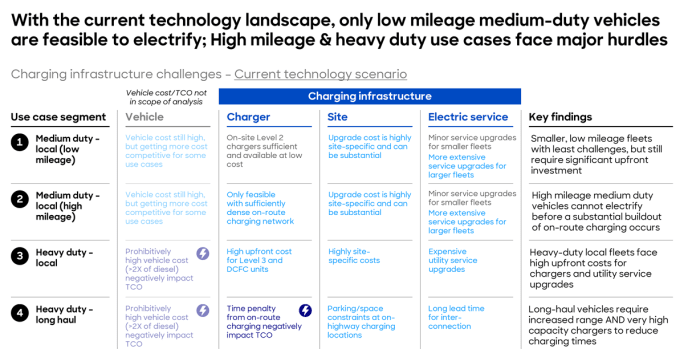
Even for many local heavy-duty use cases, fleets would need high capacity L3 or DCFC chargers on-site, but just the cost of utility service upgrades can be prohibitive.
Source: Clean Freight Coalition
ATD's Perotta said the country's commercial truck dealers already have made enormous investments to sell and service EVs — nearly $1 billion in this decade.
“Unfortunately, dealers are faced with inadequate charging infrastructure, delays when installing chargers due to parts shortages and utility workload challenges, and unaffordable upgrades required to meet new electricity demands," Perotta said. "This study puts into perspective the enormous national commercial charging needs and related costs required to meet the administration’s regulatory goals.”
Spear added, “You don’t overcome obstacles by ignoring them. This study lays out the high investment costs required to electrify the commercial vehicle industry. Policymakers should take note that pursuing technology-neutral solutions can deliver operational savings and emissions reductions at a fraction of the cost.
"A real-world understanding of the path to our shared goal of zero emissions is needed, but unrealistic timelines and expectations will break the bank.”
More Fuel Smarts

How Volvo Updated Its D13 for EPA 2027 [Watch]
Volvo’s updated D13 promises lower emissions without sacrificing performance or fuel economy. Take a closer look at what changed inside the engine in this HDT Spotlight video.
Read More →
Diesel Price Spike Shortens Payback for Natural Gas Trucks, Report Says
Energy Vision estimates fleets could recover the higher purchase price of an RNG-fueled Class 8 tractor in 1.3 to 2.8 years under current fuel-price scenarios.
Read More →
Calstart Becomes Catalyst Mobility, Reflecting Broader Focus
Calstart is now Catalyst Mobility, reflecting the nonprofit’s growing national role in clean transportation, including zero-emission trucks, infrastructure and incentive programs.
Read More →

Record Diesel Prices Squeeze Trucking Fleets
Average U.S. diesel prices have climbed to nearly $6 a gallon, surpassing the 2022 record as tight refinery capacity and Middle East disruptions keep fuel costs elevated.
Read More →
How Fuel Delivery Shapes Engine Performance
Fuel delivery depends on more than what happens at the injector. For fleet, maintenance and technical professionals, looking at the full path from pump to injector can provide useful context for understanding engine performance.
Read More →
East Coast Port Launches $45M Electric Truck Push
The Port Authority of New York and New Jersey announced millions in incentives for zero-emission drayage trucks, yard tractors, and new charging hubs near the port.
Read More →
California Bill Could Shed Light on Electric Truck Prices
Why do battery-electric Class 8 trucks remain so expensive? A California bill headed to Gov. Gavin Newsom would give fleets and state agencies more visibility into what manufacturers charge.
Read More →
Detroit Opens Orders for EPA 2027 Engines
Detroit isn’t starting from scratch to meet EPA 2027 diesel emissions standards. Its Gen 6 DD13 and DD15 engines keep much of today’s platform while updating the fuel and aftertreatment systems.
Read More →
Zero-Emission Truck Corridor Planned for West Coast
California, Oregon, Washington, British Columbia and Baja California are coordinating plans for truck charging and hydrogen fueling from Canada to Mexico.
Read More →
A Closer Look at Kenworth’s Electric T880E Vocational Truck [Video]
Learn more about Kenworth's T880E battery-electric vocational truck at the Paccar Technical Center, including its range, applications, upfitting considerations, and PTO options, in this HDT Spotlight video.
Read More →