




Report Shows U.S. Lagging Way Behind in Transportation Infrastructure
The United States' relatively low investment in virtually all aspects of mobility-related infrastructure - airports, public transit, railway systems, roads and bridges - is an "emerging crisis" that will compromise
The United States' relatively low investment in virtually all aspects of mobility-related infrastructure - airports, public transit, railway systems, roads and bridges - is an "emerging crisis" that will compromise
the ability of the nation's cities to compete globally, according to a new report co-published by the Urban Land Institute and Ernst Young.
Infrastructure 2007: A Global Perspective offers a comprehensive look at the status of current and planned infrastructure investment and development in a variety of categories in countries worldwide, with a particular focus on the United States, China, Japan, India, and Europe. The first of its kind, the report discusses the evolving infrastructure market, including private and combination public-private systems for funding, construction, operations and management.
"America is more of a follower and no longer a world leader when it comes to infrastructure," the report states. "Other countries marshal vanguard strategies and provide the contemporary lessons for developing best practices in public/private finance, intermodal transport, congestion pricing and high-speed rail...Too often (in the U.S.), projects focus on restoration rather than rethinking the model and finding possible efficiencies...There is a tendency to invest in the infrastructure we have instead of the infrastructure we will need."
The varied attitudes toward and approaches to infrastructure investment are reflected in different data provided in the report, such as: 1) Japan has 2,000 kilometers of high-speed rail and is building about 300 more kilometers by 2020; China is planning to build more than 2,500 kilometers of high-speed rail by 2020; the U.S. has about 300 kilometers, but is building none.
2) As of 2000, there were more than 750 cars per 1,000 people in the U.S.; in the U.K., just over 500 cars per 1,000 people; in China, less than 50 per 1,000 (although this number is rising, it still is far less than the U.S.).
3) Two of the 10 most expensive infrastructure projects worldwide involving private investment are in France; the third most expensive is in the United States; none are in China.
The report, first released this month at the ULI's Spring Council Forum in Chicago, is being presented to ULI members by ULI Vice Chairman Dale Ann Reiss, global director of real estate at Ernst Young in New York City.
According to Reiss, the private sector is going to play a significant role in what she predicts will be a global movement to build and modernize the world's infrastructure.
She is expecting a fundamental shift in the current business model that will change the playing field across the board. "One thing in this report that is crystal clear to a Friedmanian economist like me is that the private sector - by virtue of both the capital it controls and the skill sets it exhibits - is going to play an increasingly important role in the effective and efficient development of infrastructure here in the U.S. and abroad over the next 50 years," says Reiss. "Public-private partnerships are here to stay and may well be the only viable way for governments to reach
their infrastructure development goals."
More Drivers
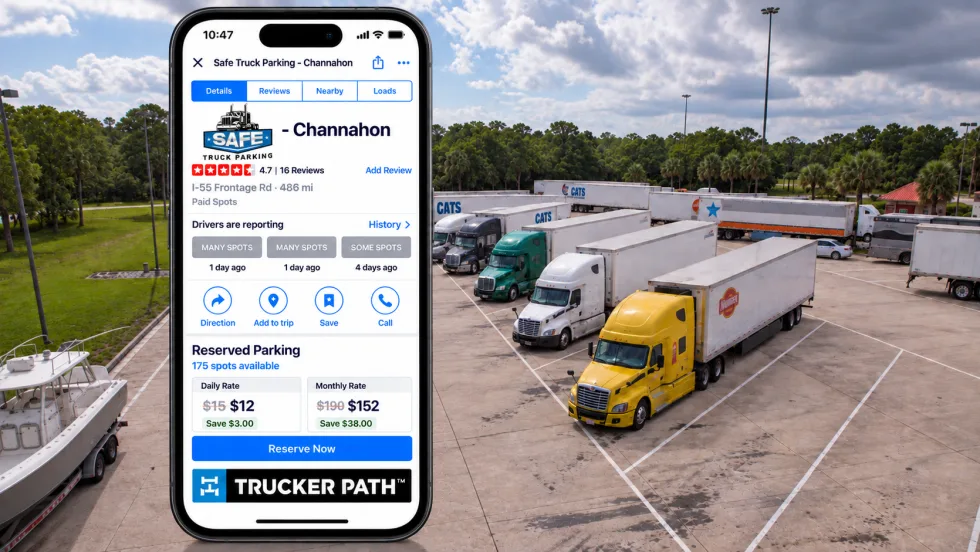
Trucker Path Expands Reserved Parking Network
Trucker Path has added close to 6,000 more truck parking spaces to its Trucker Path Reserved Parking Network with the addition of Safe Truck Parking.
Read More →
EEOC Sues Texas Trucking Company Over Driver Age Limits
The agency says Trancasa USA rejected applicants over 65 and applied tougher driving-record standards to those over 60.
Read More →
Nussbaum, Roehl Announce Second Driver Pay Increase This Year
This year has seen a swath of major truck driver pay increases as freight capacity has tightened.
Read More →
From One Generation to the Next: How Mentorship Builds Safer Truck Drivers
After three decades in trucking, Harold Perry shares what he's learned about driver safety, mentorship, and helping the next generation build confidence behind the wheel.
Read More →
Truck Drivers Need More Than Another Alert
Fleets have more visibility into truck health, safety events, and driver activity than ever. The next challenge is turning all that information into useful guidance for the person who has to decide what to do next.
Read More →
FMCSA Removes 110 Truck Driver Training Schools from Certified ELDT List
Federal regulators also are targeting more than 160 additional training providers and launching a nationwide audit of third-party CDL skills testers as part of a broader crackdown on trucking fraud.
Read More →
Hours of Service Pilot Programs: FMCSA Readies for 2027 Rollout
Two pilot programs could eventually reshape hours-of-service rules, giving truck drivers options to pause their 14-hour clock or use longer split sleeper rest periods.
Read More →
Medical Cards, English Proficiency Reshape Roadcheck Violations
Medical-card violations jumped to the top of the driver out-of-service list during CVSA’s 2026 International Roadcheck, while English-language proficiency violations appeared among the leading violations for the first time.
Read More →
Driver Trust Can Make or Break the Success of Fleet Safety Technology
New Teletrac Navman research suggests that onboarding, transparency about driver data, and positive feedback can play a significant role in how commercial drivers respond to safety and coaching technology.
Read More →
EEOC Sues KLLM Over Alleged Sex Discrimination in Driver Training
KLLM is facing a federal sex-discrimination lawsuit over policies the EEOC alleges put female truck driver trainees at a disadvantage.
Read More →