




Report: CDL Oversight Needs Work
Federal officials are not doing enough to make sure commercial driver's licenses don't get into the wrong hands. That's the conclusion of the inspector general's office at the U.S. Department of Transportation in a report released last week
Federal officials are not doing enough to make sure commercial driver's licenses don't get into the wrong hands. That's the conclusion of the inspector general's office at the U.S. Department of Transportation in a report released last week.
The CDL audit is the second in a series prompted by a request from the House Committee on Transportation and Infrastructure to look at the effectiveness of the CDL program. The first report showed that the objective of limiting drivers to one CDL has largely been achieved, but problems exist with how states disqualify commercial drivers convicted for traffic violations. This audit focused on federal oversight of the CDL program.
The Inspector General's office "found that existing federal standards and state controls are not sufficient to defend against the alarming threat posed by individuals who seek to fraudulently obtain CDLs."
While the Federal Motor Carrier Safety Administration, which oversees the CDL program, has recognized the need to close loopholes in the CDL program, the report says, more can be done.
One problem, says the report, is that while the FMCSA may have good intentions to make important changes, those changes must first go through the convoluted and lengthy rulemaking process. In 2000, the IG's office found that the DOT took nearly four years on average to issue significant rules.
Since 1998, the report notes, suspected fraud in the testing and licensing of commercial drivers has been identified in 16 states. Federal standards alone aren't enough to address how states should verify the eligibility of CDL applications.
For instance, the report found, only four out of 13 states investigators visited had laws requiring applicants to demonstrate that they are citizens or legally in the United States. Only one required proof of state residency. Neither requirement is included in federal standards. States are also not required to verify Social Security numbers. In five of those states, CDL examiners don't have to hold CDLs themselves, nor is this required by federal standards.
And although federal standards for motor carrier safety require trucking companies to ensure that their drivers can read and speak English, federal standards on CDL testing don't require states to test for language proficiency - in fact, FMCSA guidance allows states to administer the CDL test in a foreign language, and eight of the 13 states visited allowed the use of interpreters for the knowledge tests.
The Inspector General's office wants to see more "covert testing" of third-party testers - where a state employee takes the CDL test posing as an applicant. In Pennsylvania, the report says, between 1998 and 2001, 85 covert tests of third-party testers resulted in the removal of 14 driver examiners. During the IG's audit, Arkansas performed its first covert review of third-party testers. A state trooper took the driving tests at three of the 31 third-party testers. At one, the trooper passed the driving test even though his "driving test" consisted mainly of a conversation on the trooper's Army experience.
In addition, the report found, FMCSA needs to be tougher in enforcing federal CDL standards, for instance by withholding federal highway funds.
More Drivers

FMCSA Removes 110 Truck Driver Training Schools from Certified ELDT List
Federal regulators also are targeting more than 160 additional training providers and launching a nationwide audit of third-party CDL skills testers as part of a broader crackdown on trucking fraud.
Read More →
Hours of Service Pilot Programs: FMCSA Readies for 2027 Rollout
Two pilot programs could eventually reshape hours-of-service rules, giving truck drivers options to pause their 14-hour clock or use longer split sleeper rest periods.
Read More →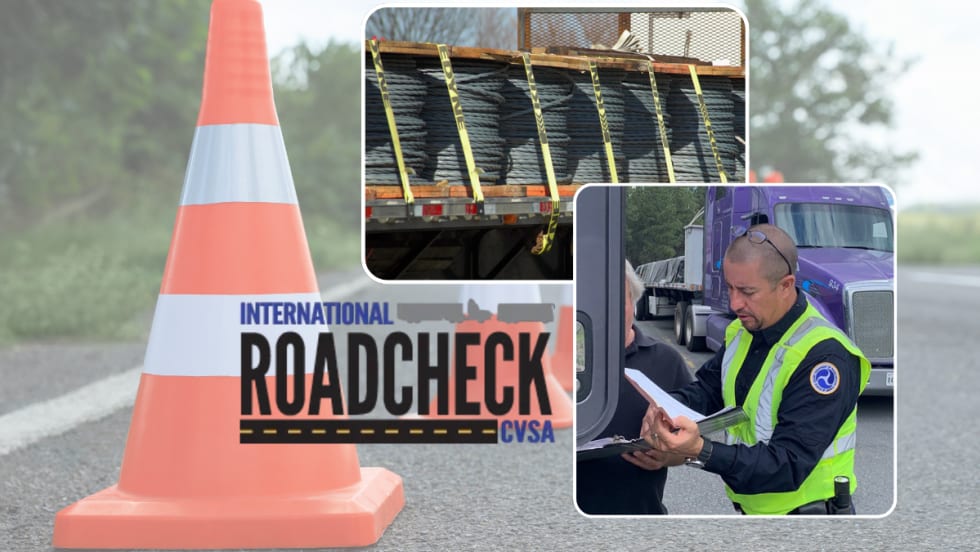
Medical Cards, English Proficiency Reshape Roadcheck Violations
Medical-card violations jumped to the top of the driver out-of-service list during CVSA’s 2026 International Roadcheck, while English-language proficiency violations appeared among the leading violations for the first time.
Read More →
Driver Trust Can Make or Break the Success of Fleet Safety Technology
New Teletrac Navman research suggests that onboarding, transparency about driver data, and positive feedback can play a significant role in how commercial drivers respond to safety and coaching technology.
Read More →
EEOC Sues KLLM Over Alleged Sex Discrimination in Driver Training
KLLM is facing a federal sex-discrimination lawsuit over policies the EEOC alleges put female truck driver trainees at a disadvantage.
Read More →
FMCSA Moves to Codify English Language Requirements for Commercial Drivers
By changing regulations on English-language proficiency requirements for commercial drivers, rather than relying on a guidance memo, the FMCSA said future administrations won't be able to walk back the Trump administration's stricter enforcement with just a memo.
Read More →
Drivers Put Western Star Trucks to the Test at Star Nation Experience
Watch to get an inside look at the Western Star trucks, technology, and community behind the Star Nation Experience 2026!
Read More →
Trump Administration Looks to Put More Veterans Behind the Wheel
The Freedom Haulers program pulls together existing and expanded programs at several federal agencies to recruit veterans to drive commercial heavy-duty trucks and cut the red tape for them to get a CDL, training, and employment.
Read More →
Putting Mack’s Command Steer to the Test
A test drive of Mack’s Command Steer active steering system evaluates how it can make truck driving easier and less tiring.
Read More →
Competition Heating Up for Truck Drivers
New report reveals rising driver hiring costs, the return of sign-on bonuses, growing AI advantages, and the operational factors shaping driver retention.
Read More →