




Reinventing the Ergonomics Rule
When Congress and President Bush killed the Clinton administration's ergonomics regulations, they left a hole begging to be filled. At this point, however, there is no agreement on what to put in it

When Congress and President Bush killed the Clinton administration's ergonomics regulations, they left a hole begging to be filled. At this point, however, there is no agreement on what to put in it.
Throughout the debate that led to the repeal of the rule, the refrain was that this was not a move against ergonomics rules in general, just this rule in particular. Many who voted against the Clinton rule said they still believe a rule is needed.
The Clinton rule aimed to reduce injuries attributed to work-related activities by requiring companies to educate employees about ergonomic risks, and create protection programs if employees were injured. Business interests said the rule would never work: It was confusing, burdensome, expensive and unlikely to be effective.
When he signed the law that repealed the rule, President Bush said that he intends to work with business and labor on a "comprehensive approach" to ergonomics that addresses the shortcomings of the Clinton rule.
Labor Secretary Elaine Chao, in whose court the ball now rests, said the new solution may come as a rule, as legislation or as guidelines. She is meeting with labor and business interests but as yet has not announced a plan.
She did note, however, that while about a third of workplace injuries are musculoskeletal in nature, the number of ergonomics-related injures is declining. She hinted that she favors prevention and compliance assistance as a remedy, rather than rules that react to an event that already has occurred.
Meanwhile, other possibilities are in the works.
Sen. John Breaux, D.-La., has introduced a bill that would require the Labor Department to issue a new rule within two years. He envisions a rule that would cap compensation at what states already offer through worker's compensation, and covers only injuries that happen on the job. Business interests said the Clinton rule would have made it easy for workers to say they were injured on the job even if they were not.
According to a report in The Washington Post, Treasury Secretary Paul O'Neill has another idea: Don't write any rules, just agree that if a company is not safe it will be shut down.
He suggested "an agreement that said within two years every organization in the United States - public, private, nonprofits - will have a lost workday rate under 2.0 or we're going to take away your license." (The lost workday rate refers to the number of days of injury or illness for each 100 employees per year.)
O'Neill cited his success at Alcoa, where he was chairman for 13 years, in bringing the lost workday rate down from 1.86 to .14.
Under his plan, O'Neill said, "I guarantee you, 95% or 98% of all the organizations in America would get under 2.0."
More Drivers

Competition Heating Up for Truck Drivers
New report reveals rising driver hiring costs, the return of sign-on bonuses, growing AI advantages, and the operational factors shaping driver retention.
Read More →
How Fraley & Schilling Improved Logbook Compliance by Over 50%
Fraley & Schilling needed a way to close a compliance workflow gap in its ELD system without adding more work from driver training, reminders, and back-office follow-ups. It found the answer in a custom driver app.
Read More →
Volvo Goes Gaming
Volvo has roared into American Truck Simulator with two new flagship trucks.
Read More →
What the Best Fleets to Drive For Teach About Driver Retention
Survey fatigue, AI-powered routing, owner-operator expectations, and the decline of social media all emerged as themes from this year's Best Fleets to Drive For program.
Read More →
Driver Retention Lessons From the Best Fleets to Drive For
What separates trucking's best workplaces from the rest? Jane Jazrawy shares the biggest lessons from this year's Best Fleets to Drive For program on driver retention, communication, AI, and workforce trends on the HDT Talks Trucking podcast.
Read More →
Farewell, CDL: Why I'm Giving Up My Commercial Driver's License
After more than 20 years as a CDL holder, HDT Executive Editor Jack Roberts is letting his commercial license expire. Not because he wants to — but because trucking's nuclear verdict crisis has made the risks of public-road test drives too great for editors, manufacturers, and everyone involved.
Read More →
How Top Trucking Fleets Improve Driver Retention [Video]
What do healthy snacks, optimized routing, and just picking up the phone have in common? They're all strategies the Best Fleets to Drive For are using to retain truck drivers.
Read More →
Trucker Path Adds Verisk CargoNet Theft Data to Navigation Platform
Trucker Path’s new cargo theft risk overlays give drivers and fleets visibility into high-risk areas, stolen commodity trends, and theft hotspots.
Read More →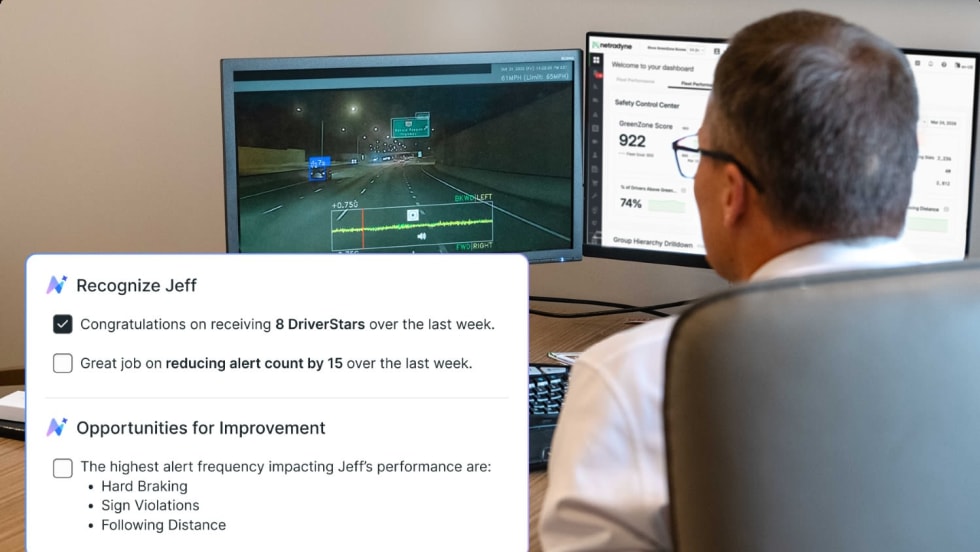
Netradyne Intelligence Uses New AI Agents to Automate Response to In-Cab Camera Data
The company called the next-generation in-cab camera safety platform "a fundamental shift from systems that report on what happened to systems that actively drive what should happen next."
Read More →
Why Truck Detention Keeps Costing Fleets Time and Money
A 2024 ATRI study found detention affects nearly 40% of truckload stops and costs the industry more than $15 billion annually. Despite the toll on drivers, fleets, and supply chains, the problem remains stubbornly persistent.
Read More →