




Refrigerated Intermodal Service Ends Between Pacific Northwest, Midwest
A refrigerated intermodal container service between the Pacific Northwest and the Midwest has ended due service from partner BNSF Railway that allegedly was not so hot.
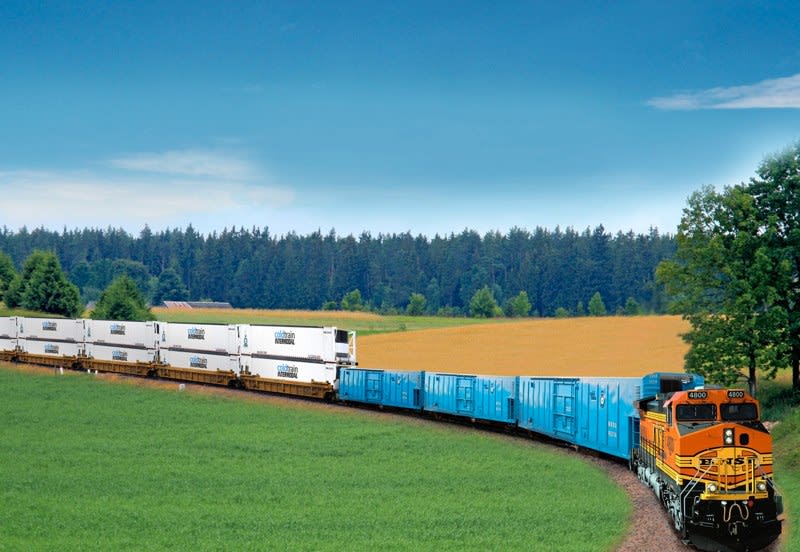
Photo: Cold Train
Photo: Cold Train
A refrigerated intermodal container service between the Pacific Northwest and the Midwest has ended due service from partner BNSF Railway that allegedly was not so hot.
The announcement by Cold Train follows a number of scheduling issues on BNSF Railway’s northern corridor line that have been occurring with BNSF beginning late last fall because of increased rail congestion as result of a surge of oil and coal shipments.
On April 24 BNSF Railway sent out an announcement to customers indicating that it would be reducing intermodal train service from Washington State to Chicago, effective mere days later, from two trains per day to one.
As a result of the scheduling change, rail transit time nearly doubled from three-days to six-days, according to Cold Train. This caused its costs of equipment, fuel and others to double, and caused many customers, especially fresh produce shippers, to look for other transportation service options, such as long-haul trucks.
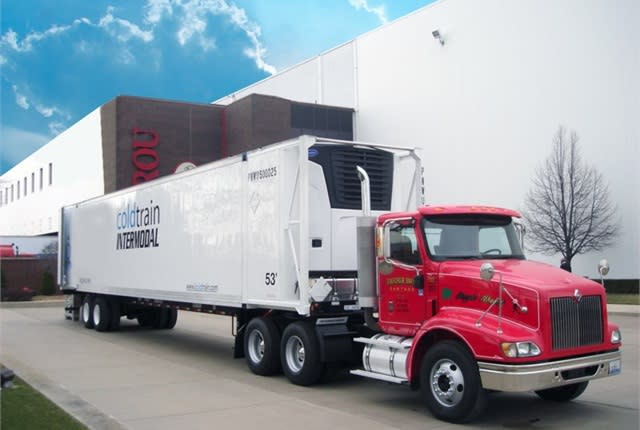
Photo: Cold Train
Cold Train said because of BNSF’s scheduling issues from November of 2013 until recently, it lost most of its fresh produce business, which was more than 70% of the company’s business. In addition to adversely impacting many Washington State fresh produce growers and shippers, Cold Train said BNSF’s scheduling changes have affected many retailers and wholesalers in the Midwest and East Coast that purchase Washington State fresh produce and frozen foods.
From April of 2010 when the Cold Train Express Intermodal Service was launched up until last fall, when BNSF’s on-time percentage allegedly began dropping and its rail schedules slowed sharply, Cold Train said had been enjoying tremendous growth with perishable shippers in the Pacific Northwest.
In 2010, Cold Train shipped approximately 100 containers of perishable commodities per month from Washington State to the Midwest. By 2013, Cold Train has been transporting nearly 700 containers per month of refrigerated products from Quincy, Wash. and Portland, Ore., and had expected to hit 1000 shipments per month by the end of this year.
A BNSF spokesperson told the Journal of Commerce it was willing to work with Cold Train or any other provider to have such service again.
In a release Cold Train said, “for the past three months we have worked with BNSF and our customers to accommodate these service changes. Our efforts have been unsuccessful.”
More Fleet Management

Color Match Smarter: Tools That Restore & Perform
For fleet managers and collision repair professionals keeping heavy-duty trucks on the road, getting the color right the first time isn't just about appearance — it's about efficiency, turnaround time, and bottom-line results. Discover how today's digital color tools are transforming the repair process from guesswork to precision.
Read More →
FMCSA Pauses Biennial-Update Enforcement Amid Motus Transition
Carriers whose updates were due on or after June 1 have more time, while FMCSA works to stabilize its new registration system and warns of phishing sites impersonating its new carrier registration system, Motus.
Read More →
2026 Blueprint for Countering Smarter Supply Chain Theft
Cargo theft is no longer just the cost of doing business. It's a multi-billion-dollar criminal enterprise exploiting vulnerabilities across your fleet, drivers, and supply chain.
Read More →


How Telematics Improves Visibility, Control, and Performance in Refrigerated Fleets
Explore how telematics help refrigerated fleets improve visibility, uptime, efficiency, compliance, and cargo protection across connected cold chain operations.
Read More →
What the U.S.-Canada Trade War Means for Trucking
Escalating U.S.-Canada tariffs could disrupt cross-border freight, reduce truck volumes, raise costs, and create new uncertainty for carriers on both sides of the border.
Read More →
What Are Trucking’s Top Concerns for 2026?
The American Transportation Research Institute wants to know what's worrying trucking fleet managers, drivers, and other stakeholders in its annual Industry Issues survey.
Read More →
American Trucking Associations Looks for a New Leader
ATA President and CEO Chris Spear abruptly left his job at the association on August 21, at a pivotal time for the trucking industry.
Read More →
Public Wi-Fi Cybersecurity Risks: How Truck Drivers and Fleets Can Protect Their Data
Public Wi-Fi can expose truck drivers and fleets to credential theft, malware, and other cyber threats. Here’s how to reduce the risk on the road.
Read More →
For Nicky Cupp, Fleet Innovation Starts With Frustration
HDT Truck Fleet Innovator Nicky Cupp turns everyday pain points at Fraley & Schilling into opportunities for better technology and smarter processes.
Read More →
Adam Buttgenbach’s Approach to Electric Trucks: Start With Where They Fit
HDT Truck Fleet Innovator Adam Buttgenbach helped PepsiCo build one of North America’s largest EV fleets by focusing on where electric trucks make operational sense.
Read More →