




Public Safety Interest Group Pushes for 68-mph Speed Governors on Trucks
In what is believed to be the first Federal Motor Carrier Safety Administration (FMCSA) petition jointly filed by a public safety interest group and a group of motor carriers, Road Safe America and Schneide
In what is believed to be the first Federal Motor Carrier Safety Administration (FMCSA) petition jointly filed by a public safety interest group and a group of motor carriers, Road Safe America and Schneider
National Inc. have petitioned the FMCSA to require electronic speed governors be set at not more than 68 mph.
The proposed regulation would affect Class 7 and 8 trucks manufactured after 1990 (in 1991 speed governors became standard equipment). Eight other motor carriers including J.B. Hunt Transport Inc., CR England Inc., Covenant Transport Inc. and Dart Transit Co., also signed the petition, which was filed with the FMCSA on Sept. 11.
Bill Graves, president and CEO of the American Trucking Associations (ATA), has already submitted a letter of support for this measure to the FMCSA. The petition will be available for public comment as soon as it is docketed for rulemaking by the FMCSA.
Recent FMCSA studies suggest that limiting the speed of commercial trucks will have a significant impact on safety. According to the FMCSA's Large Truck Causation Study, "traveling too fast for conditions” was the single most frequently cited factor in large truck crashes where trucks were assigned a critical reason.
"The 80-mph, 80,000 pound-truck has no place on our highways,” said Steve Owings, who co-founded Road Safe America after he lost his 22-year-old son, Cullum, in a high-speed truck accident. "This petition is a matter of life and death for drivers of passenger cars, as well as for professional truck drivers. And it is a matter of economic common sense for the companies that put trucks on the road.”
Don Osterberg, vice president of safety and training for Schneider National Inc., joined Steve Owings in supporting what he called "one of the most important safety initiatives in commercial vehicle transportation in the last 20 years.
“Historically, carriers have waited for regulations to come down from the federal government and not been actively engaged in the process,” said Osterberg. "What's unique in this filing is that a core group of responsible carriers is stepping up and initiating a proactive change for improving public safety. This is good for drivers, good for the motoring public and good for the entire trucking industry.”
Schneider is among a growing number of national carriers that maintains speed governors on their trucks at below 68 mph. In addition to safety improvements, carriers already governing their trucks' top speed at these levels cite savings in fuel consumption, liability costs and equipment wear and tear as business reasons for the limitation.
More Drivers

New Independent Contractor Rule Gives Trucking More Clarity
The Labor Department is once again changing how it determines who's an independent contractor. This time, the rule includes specific examples addressing trucking safety requirements, CDLs, and lease-purchase agreements.

Catching Driver Fatigue is One Thing. What You Do Next Matters Just as Much
Fleets are getting better at detecting driver drowsiness. Few have figured out what should happen next, and that gap is where the real risk still lives.

133 ELDs Revoked as ATA Pushes Certification Reform
FMCSA just removed a record number of electronic logging devices from its registry. ATA says it's time to rethink how ELDs get approved in the first place.


CVSA Sets 2027 International Roadcheck Dates
The annual 72-hour truck inspection blitz will take place May 11–13 across North America. Here's what fleets can expect and what inspectors found during the 2026 event.

FDA Eases Path for Oral-Fluid Testing
Federal actions could advance oral-fluid drug testing for truck drivers, but lab certification delays and marijuana rescheduling questions remain.

Why Hiring Truck Drivers Is Getting Harder
Higher recruiting costs, a shrinking driver pool, and renewed pay competition are raising the stakes for fleets heading into 2027.
Roehl Offers Truck Drivers $10,000 Retention Incentive
Payments begin after the first load and continue in mileage-based installments for eligible experienced drivers joining the fleet.
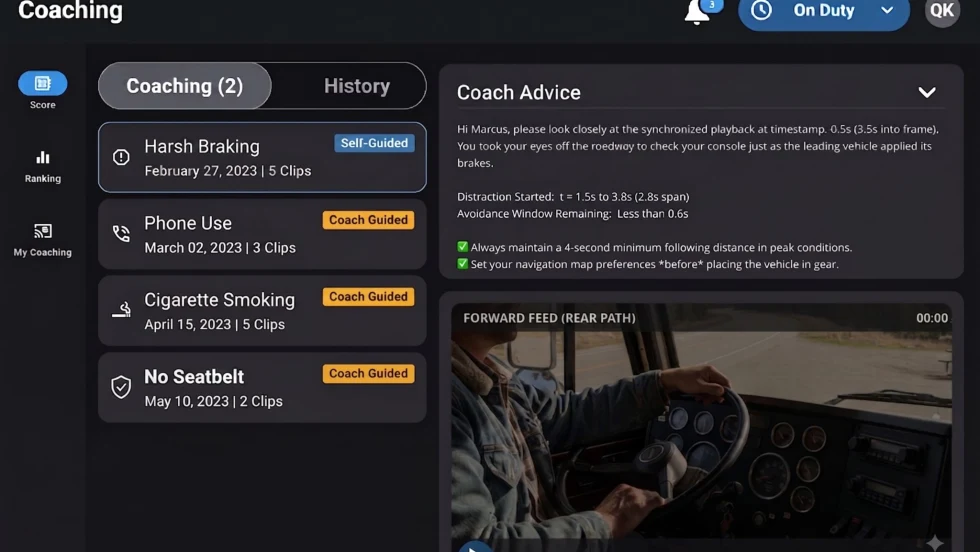
Platform Science Adds Dispatch and Safety Tools
Four additions to PS Fleet help fleets monitor loads, manage driver coaching, share truck locations and adjust video system settings.

When Language Stops the Truck: The Return of ELP Out-of-Service Orders
English language proficiency rules for commercial drivers aren’t new, but renewed out-of-service enforcement has raised the stakes. Here’s what carriers need to know before a driver reaches a roadside inspection.

Samsara Launches Custom AI Agent Builder
Agent Studio lets fleets create AI tools for hours-of-service monitoring, reporting and driver support, including agents that communicate by phone.