





Trucking Looks for New Owner-Operator Strategies as Independent Contractor Model is Threatened
Port of Oakland Sues AB5 Protesters
After an independent trucker protest brought the Port of Oakland to a crawl the week of July 18, the port responded with a lawsuit against protesters seeking to keep it from happening again.
August 5, 2022
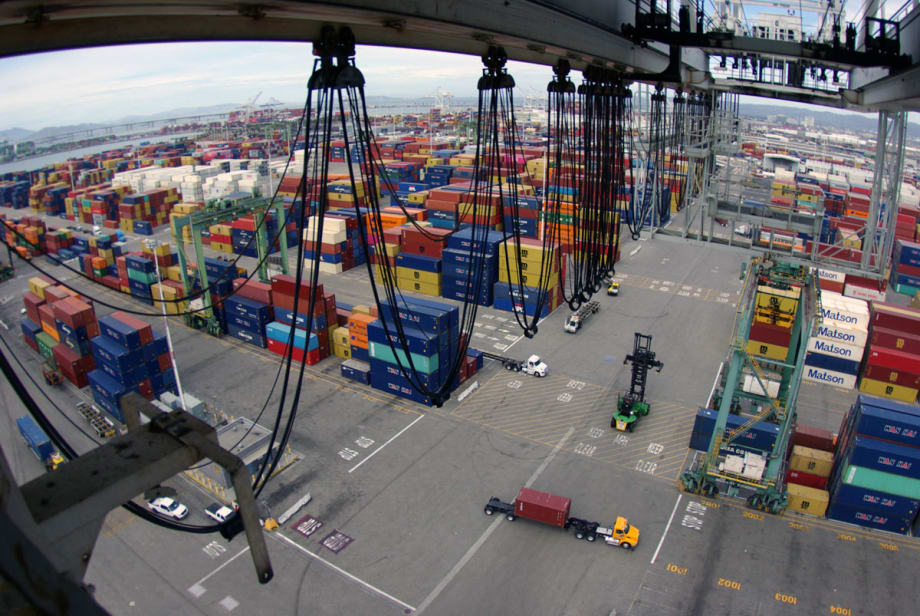
The Port of Oakland reopened on July 25 after a week of protests, as remaining protesters were moved to “free speech zones” away from the terminal gates.
Photo: Port of Oakland (file photo)
2 min to read
After an independent trucker protest brought the Port of Oakland to a crawl the week of July 18, the port responded with a lawsuit against protesters seeking to keep it from happening again.
The truckers were protesting AB5, a California law that makes it virtually impossible for trucking’s traditional owner-operator model to operate in the state. The state had been prohibited from enforcing the 2019 law, also known as the gig worker labor law, against trucking while a legal challenge claiming it was pre-empted by federal law made its way through the courts. When the U.S. Supreme Court announced June 30 it would not hear the case, meaning it could now be enforced, it triggered protests in both the Los Angeles area ports and in Oakland.
The Superior Court of California in Alameda County issued a temporary restraining order on Aug. 1 prohibiting the defendants and those working with them to “not block or impede ingress into, egress from, or the passage of vehicles or persons through, Port of Oakland facilities.”
The suit, filed July 25, targets Enrique Alvarez, Prudencio Umana, Navdeep Ngill, Filmon Teklehaimanot, and as many as 2,000 protesters for which it does not yet have identities.
The lawsuit claims that the protesters’ activities “have gone beyond peaceful protest, protected speech, and lawful petition for a redress of grievances,” citing numerous traffic and other laws that defendants allegedly violating, including:
Walking other than on left edge of roadway.
Crossing other than in crosswalk.
Failure to yield to vehicles.
Unnecessarily stopping or delaying traffic in a marked or unmarked crosswalk.
Trespassing.
Criminal nuisance.
Unlawful assembly.
Failure to disperse.
Illegally crossing street.
Congregating in streets, refusal to disperse.
Illegal street meeting.
Illegal parade.
“While the First Amendment to the United States Constitution protects speech and the right to petition for a redress of grievances, the United States Supreme Court has unequivocally and repeatedly held that the First Amendment does not permit protesters to prevent persons and vehicles from traversing public rights of way in the hopes of securing a captive audience or drawing media attention to their cause,” said the Port in its lawsuit. “Indeed, the United States Supreme Court has held that the government has an affirmative responsibility to prevent protesters from blocking streets.”
An August 29 hearing is scheduled on a preliminary injunction.
AB5 could affect some 70,000 independent contractors in the state, according to the California Trucking Association.
Learn more about AB5:
More Drivers

Truck Drivers Need More Than Another Alert
Fleets have more visibility into truck health, safety events, and driver activity than ever. The next challenge is turning all that information into useful guidance for the person who has to decide what to do next.
Read More →
FMCSA Removes 110 Truck Driver Training Schools from Certified ELDT List
Federal regulators also are targeting more than 160 additional training providers and launching a nationwide audit of third-party CDL skills testers as part of a broader crackdown on trucking fraud.
Read More →
Hours of Service Pilot Programs: FMCSA Readies for 2027 Rollout
Two pilot programs could eventually reshape hours-of-service rules, giving truck drivers options to pause their 14-hour clock or use longer split sleeper rest periods.
Read More →
Medical Cards, English Proficiency Reshape Roadcheck Violations
Medical-card violations jumped to the top of the driver out-of-service list during CVSA’s 2026 International Roadcheck, while English-language proficiency violations appeared among the leading violations for the first time.
Read More →
Driver Trust Can Make or Break the Success of Fleet Safety Technology
New Teletrac Navman research suggests that onboarding, transparency about driver data, and positive feedback can play a significant role in how commercial drivers respond to safety and coaching technology.
Read More →
EEOC Sues KLLM Over Alleged Sex Discrimination in Driver Training
KLLM is facing a federal sex-discrimination lawsuit over policies the EEOC alleges put female truck driver trainees at a disadvantage.
Read More →
FMCSA Moves to Codify English Language Requirements for Commercial Drivers
By changing regulations on English-language proficiency requirements for commercial drivers, rather than relying on a guidance memo, the FMCSA said future administrations won't be able to walk back the Trump administration's stricter enforcement with just a memo.
Read More →
Drivers Put Western Star Trucks to the Test at Star Nation Experience
Watch to get an inside look at the Western Star trucks, technology, and community behind the Star Nation Experience 2026!
Read More →
Trump Administration Looks to Put More Veterans Behind the Wheel
The Freedom Haulers program pulls together existing and expanded programs at several federal agencies to recruit veterans to drive commercial heavy-duty trucks and cut the red tape for them to get a CDL, training, and employment.
Read More →
Putting Mack’s Command Steer to the Test
A test drive of Mack’s Command Steer active steering system evaluates how it can make truck driving easier and less tiring.
Read More →