




Related: Former Pilot Flying J Execs Take Plea Bargain in Fuel Skimming Scandal
Pilot Flying J Fuel Rebate Trial Begins
The trial of four former Pilot Flying J officials accused of fuel rebate fraud started this week. The prosecution and defense offered opening statements in a Tennessee courtroom, with prosecutors painting a picture of an alleged culture of deceit at the company.
by Staff
November 7, 2017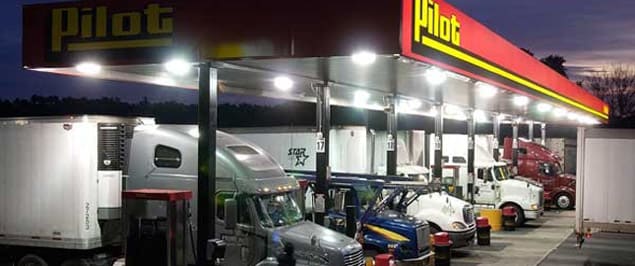
HDT file photo
2 min to read
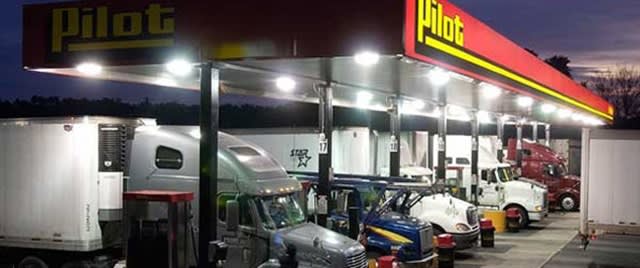
HDT file photo
The Pilot Flying J Fraud trial has started this week with the prosecution and representatives of the four accused former executives offering opening statements in a Chattanooga, Tennessee, courtroom.
Mark Hazelwood, former executive vice president and president of Pilot Flying J, Scott Wombold, former vice president of national accounts, and two former sales representatives, Karen Mann and Heather Jones, are on trial for a diesel fuel rebate scam. In a case dating back to 2012, the FBI found that Pilot defrauded as many as 5,500 customers of more than $56 million in rebates that were owed but never paid. The company reached settlements with authorities and customers in 2014 for $92 million and $87 million respectively.
In an opening statement, federal prosecutors described the sales department of Pilot Flying J as being "infected" with fraud, according to local news channel ABC 6 Wate.com. The defendants were accused of lying to and cheating customers in order to profit themselves, specifically going after customers that it saw as easier targets.
In September, four former Pilot employees plead guilty to mail fraud and wire fraud in connection with the scam, including former Pilot Sales Vice President John Freeman, former Pilot Regional Sales Manager John Spiewak, former Director of Inside Sales Vicki Borden, and former regional sales representative Katy Bibee. Prosecutors said it was likely that the 14 former Pilot employees who have pleaded guilty for their roles in this scandal will be brought in as witnesses.
Attorneys for Hazelwood and Wombold argued that their clients were only guilty by association. Attorneys for Mann and Jones argued that their clients did not intend to commit fraud and were unaware of any conspiracy to scam customers, according to a CBS Cleveland report.
The FBI and IRS raided Pilot Flying J headquarters in Knoxville, Tennessee, in 2013, gathering evidence that included emails and audio recordings of Hazelwood and his alleged co-conspirators discussing their intent to cheat less-sophisticated trucking companies out of their rebates. In one recording, Hazelwood allegedly not only gave verbal approval of the expansion of the fraud scheme but also directed his sales executives on how to choose victims.
More Fuel Smarts

How Volvo Updated Its D13 for EPA 2027 [Watch]
Volvo’s updated D13 promises lower emissions without sacrificing performance or fuel economy. Take a closer look at what changed inside the engine in this HDT Spotlight video.
Read More →
Diesel Price Spike Shortens Payback for Natural Gas Trucks, Report Says
Energy Vision estimates fleets could recover the higher purchase price of an RNG-fueled Class 8 tractor in 1.3 to 2.8 years under current fuel-price scenarios.
Read More →
Calstart Becomes Catalyst Mobility, Reflecting Broader Focus
Calstart is now Catalyst Mobility, reflecting the nonprofit’s growing national role in clean transportation, including zero-emission trucks, infrastructure and incentive programs.
Read More →

Record Diesel Prices Squeeze Trucking Fleets
Average U.S. diesel prices have climbed to nearly $6 a gallon, surpassing the 2022 record as tight refinery capacity and Middle East disruptions keep fuel costs elevated.
Read More →
Sponsored•September 9, 2026
How Fuel Delivery Shapes Engine Performance
Fuel delivery depends on more than what happens at the injector. For fleet, maintenance and technical professionals, looking at the full path from pump to injector can provide useful context for understanding engine performance.
Read More →
East Coast Port Launches $45M Electric Truck Push
The Port Authority of New York and New Jersey announced millions in incentives for zero-emission drayage trucks, yard tractors, and new charging hubs near the port.
Read More →
California Bill Could Shed Light on Electric Truck Prices
Why do battery-electric Class 8 trucks remain so expensive? A California bill headed to Gov. Gavin Newsom would give fleets and state agencies more visibility into what manufacturers charge.
Read More →
Detroit Opens Orders for EPA 2027 Engines
Detroit isn’t starting from scratch to meet EPA 2027 diesel emissions standards. Its Gen 6 DD13 and DD15 engines keep much of today’s platform while updating the fuel and aftertreatment systems.
Read More →
Zero-Emission Truck Corridor Planned for West Coast
California, Oregon, Washington, British Columbia and Baja California are coordinating plans for truck charging and hydrogen fueling from Canada to Mexico.
Read More →
A Closer Look at Kenworth’s Electric T880E Vocational Truck [Video]
Learn more about Kenworth's T880E battery-electric vocational truck at the Paccar Technical Center, including its range, applications, upfitting considerations, and PTO options, in this HDT Spotlight video.
Read More →