




Pennsylvania to Hike Tolls on Turnpike
The Pennsylvania Turnpike Commission has hiked toll rates by 3 percent for E-ZPass users and 10 percent for cash-paying motorists
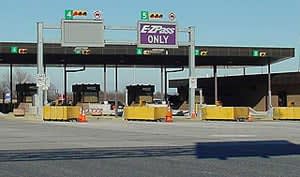
This is the first time E-ZPass users, which make up almost two-thirds of Turnpike travelers, will pay lower tolls than cash customers on the Turnpike since the system was launched.
The Pennsylvania Turnpike Commission has hiked toll rates by 3 percent for E-ZPass users and 10 percent for cash-paying motorists.
The increase takes effect Jan. 2, 2011 and applies to both truckers and passenger cars.
The Pennsylvania Turnpike Commission has increased tolls every year since 2009 as a result of Act 44 of 2007, which requires the Commission to fix and adjust toll rates as needed to meet funding and other financial obligations.
New revenue from the toll increase will fund the Turnpike's fiscal 2011 financial obligations, including $450 million to the Pennsylvania Department of Transportation to satisfy the Turnpike's Act 44 requirement, $420 million to support the Turnpike's capital-improvement plan, $306 million for Turnpike operating expenses and $298.5 million in debt-service payments.
The Commission increased tolls in January 2010 by 3 percent and January 2009 by 25 percent. Prior to 2009, the Commission increased tolls in August 2004.
"In announcing this increase, I want to make it clear to our customers and to all Pennsylvanians that we've done our best to streamline operations and become more efficient - especially after the economic downturn that impacted us as it has every other business," said Joe Brimmeier, Pennsylvania Turnpike CEO. "The Turnpike has 200 fewer employees now than at any time in the past decade, yet we're responsible for more traffic, more highway miles and more investment in our state's ground-transportation infrastructure."
The Turnpike accommodates 30 million more vehicles per year, has built and is operating 188 new lane miles and brings in nearly double the annual revenues compared to 10 years ago.
"Each time we build a new piece of tolled expressway or add lanes during a six-lane widening project, that creates more miles to take care of for maintenance crews," Brimmeier said.
This is the first time E-ZPass users, which make up almost two-thirds of Turnpike travelers, will pay lower tolls than cash customers on the Turnpike since the electronic toll-collection system was launched in the state a decade ago.
"We believe it's essential to encourage more consumers to get E-ZPass," said Brimmeier. "Besides the enhanced convenience for motorists, it's four times more efficient, processing up to 1,200 vehicles per hour compared to 300 per hour in a cash lane. Electronic toll collection is also more economical, allowing us to better manage traffic and increase capacity without adding toll-plaza lanes to accommodate growth. Plus, E-ZPass reduces idling at interchanges, which is better for the environment."
The Pennsylvania Turnpike manages more than 850,000 active E-ZPass accounts, with a total of over 1.2 million Pennsylvania Turnpike E-ZPass transponders in use. Nationally, there are more than 20 million transponders in use on E-ZPass toll roads and bridges today.
For more information, go to www.paturnpike.com.
More Drivers

Truck Drivers Need More Than Another Alert
Fleets have more visibility into truck health, safety events, and driver activity than ever. The next challenge is turning all that information into useful guidance for the person who has to decide what to do next.
Read More →
FMCSA Removes 110 Truck Driver Training Schools from Certified ELDT List
Federal regulators also are targeting more than 160 additional training providers and launching a nationwide audit of third-party CDL skills testers as part of a broader crackdown on trucking fraud.
Read More →
Hours of Service Pilot Programs: FMCSA Readies for 2027 Rollout
Two pilot programs could eventually reshape hours-of-service rules, giving truck drivers options to pause their 14-hour clock or use longer split sleeper rest periods.
Read More →
Medical Cards, English Proficiency Reshape Roadcheck Violations
Medical-card violations jumped to the top of the driver out-of-service list during CVSA’s 2026 International Roadcheck, while English-language proficiency violations appeared among the leading violations for the first time.
Read More →
Driver Trust Can Make or Break the Success of Fleet Safety Technology
New Teletrac Navman research suggests that onboarding, transparency about driver data, and positive feedback can play a significant role in how commercial drivers respond to safety and coaching technology.
Read More →
EEOC Sues KLLM Over Alleged Sex Discrimination in Driver Training
KLLM is facing a federal sex-discrimination lawsuit over policies the EEOC alleges put female truck driver trainees at a disadvantage.
Read More →
FMCSA Moves to Codify English Language Requirements for Commercial Drivers
By changing regulations on English-language proficiency requirements for commercial drivers, rather than relying on a guidance memo, the FMCSA said future administrations won't be able to walk back the Trump administration's stricter enforcement with just a memo.
Read More →
Drivers Put Western Star Trucks to the Test at Star Nation Experience
Watch to get an inside look at the Western Star trucks, technology, and community behind the Star Nation Experience 2026!
Read More →
Trump Administration Looks to Put More Veterans Behind the Wheel
The Freedom Haulers program pulls together existing and expanded programs at several federal agencies to recruit veterans to drive commercial heavy-duty trucks and cut the red tape for them to get a CDL, training, and employment.
Read More →
Putting Mack’s Command Steer to the Test
A test drive of Mack’s Command Steer active steering system evaluates how it can make truck driving easier and less tiring.
Read More →