




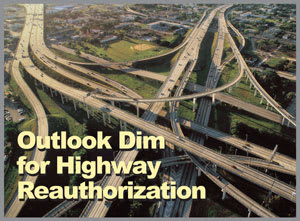
Outlook Dim for Highway Reauthorization
There is practically no chance that Congress will approve any increase in infrastructure investment this year, and only a small chance that it will pass any highway legislation at all - other than an extension of the current program that might have to include funding cuts on the order of 30 percent
There is practically no chance that Congress will approve any increase in infrastructure investment this year, and only a small chance that it will pass any highway legislation at all - other than an extension of the current program that might have to include funding cuts on the order of 30 percent.
Congressional committees are working on draft legislation for a six-year renewal of the federal surface transportation program, staff members say, but the political gridlock over money means that any long-term bill would have to make do with even less investment than is now available.
The primary transport committee in the House, Transportation & Infrastructure, is trying to get a bill together to give people an incentive to figure out how to fund the program, said committee member Tom Petri. But it would take an additional $75 billion to fund the traditional program, and even that is not adequate, he said.
The Wisconsin Republican, speaking last week to a gathering of federal and state transportation officials hosted by the Coalition for America's Gateways and Trade Corridors, noted that while the U.S. spends 2.5 percent of its gross national product on transportation infrastructure, Europe spends twice that and China is spending 9 percent. CAGTC represents more than 60 public and private organizations that want improvements in freight transportation.
'Living within our means'
The consensus among staff who spoke at the event is that Congress will not support that kind of spending.
"The reality is that I don't know that we can bring a bill to the House floor that raises any more revenue," said Jennifer Hall, a staffer on the majority Republican side of the T&I Committee. "So we're going to have to look at the revenues that are coming in and align our spending with that."
Committee demographics are a factor. The T&I Committee has 59 members, 26 Democrats who are all returning members, and 33 Republicans, 19 of whom are freshman from a very conservative freshman class, Hall said.
"That changes the dynamic for Republicans on the committee," she said. "A lot of the returning members are very supportive of robust financing and funding for infrastructure, but they are all facing the new reality, which is living within our means."
Not everyone in the transportation community agrees with the political assertion that the country is living beyond its means. Leslie Blakey, a principle in the Washington, D.C., communications firm Blakey & Agnew, which manages CAGTC, said the country is in fact living below its means in terms of investment.
The proper phrase would be, "living within our revenues," Blakey said. "We are limiting our investment to our revenues, not to our means." Americans are paying the same or less in taxes now than they did in the 1950s, she said.
Next steps in the House
Hall said the committee hopes to get something out - perhaps a bill for markup, or maybe a public draft - by the end of June. The aim would then be to get it through the House before August so it could be reconciled with a Senate bill and cleared for passage before the end of September, when the current extension of the highway program expires.
Hall's assessment was echoed by Ray Beeman, Special Advisor for Tax Reform on the House Ways & Means Committee. The T&I Committee drafts the transportation policy in the bill, but Ways & Means is in charge of funding levels.
"It will be extremely difficult to get net tax increases through the committee," Beeman said. The committee still has no ground rules on what constitutes a tax increase, and any tax action faces even greater odds unless it somehow improves the long-term health of the Highway Trust Fund, he said.
Beeman also said there is strong opposition on the committee to paying for transportation by transferring money from the general fund to the Highway Trust Fund. That's a mechanism that has been used in the past to keep the Fund solvent, most recently a year ago with the transfer of $19.5 billion.
The committee right now is in an information-gathering mode on the highway bill, he said. It has 10 new members on the Republican side who need to learn the transportation issues before they can address the bill, and it is looking at a September deadline for action.
In the Senate
Staff members from the Senate side spelled out similar difficulties with respect to funding.
Melissa Porter, senior counsel to the Senate Commerce Committee, said that until the committee has a better sense of how Congress will get the money, it's hard to look at a six-year reauthorization bill. There is discussion of shifting to a short-term bill, rather than an extension of the current program, to address policy concerns, she said.
Alex Herrgott, a Republican staffer on the Senate Environment and Public Works Committee, put it this way: "When it comes down to it, we have very little money and we have real problems, and we're going to have to have a serious discussion about the federal role."
He was referencing a key theme in the congressional discussion about the surface transportation program - that is, instead of raising more money, pare back the federal role to only projects of national significance. He gave an example of the kind of question that needs to be asked and answered: Maybe funding for programs such as the Federal Motor Carrier Safety Administration should come from general revenues rather than the Highway Trust Fund.
"We've had one conversation for the past 30 years," he said. "It is going to have to change if we're going to be responsible about how we fix roads and bridges."
But that won't be easy. Even though committees in both chambers are working on legislation that will consolidate and refocus transportation programs, no member of Congress will want to pass a bill that contains the 30 percent cut that will be necessary if no new funding is found, he said. "It doesn't matter if they are a conservative Republican or a moderate Democrat," he said.
Most states use half of their federal highway apportionment to retire debt on projects that are already built, he said. "How do you tell them they will get no new benefit and, moreover, will take more of their apportionment and move it to a program for the national benefit?"
Lost sense of purpose
For JayEtta Hecker, an economist with the Bipartisan Policy Center, the answer is that the country will have to make do with the funds that are available. "The money isn't there. The political will isn't there. There's no more smoke and mirrors left," she said.
The Center's analysis is that national transportation policy has lost a clear sense of purpose. Transportation needs goals and performance measures and accountability before the public can be expected to support it.
"We need a wholesale reexamination of what is and what is not part of the federal surface transportation system," Hecker said.
Hecker said the Center's plan calls for putting more than 80 percent of federal transportation dollars into two programs - one to maintain current assets and another to improve metropolitan accessibility. The plan also contains an expanded freight program that would require the Department of Transportation to develop a national freight strategic plan - beginning with an effort to improve freight data and analytical tools.
Sen. Jay Rockefeller, D-W.Va., chairman of the Commerce Committee, has introduced legislation intended to address the policy shortcoming that Hecker referenced. His Federal Surface Transportation Policy and Planning Act would establish overarching goals, such as increase the rail and intermodal share of freight transport, reduce per-capita vehicle miles, cut the number of traffic fatalities in half by 2030, reduce carbon dioxide emissions by 40 percent in the next 20 years and improve the overall condition of highway infrastructure.
Porter said the intent is to defi
More Drivers
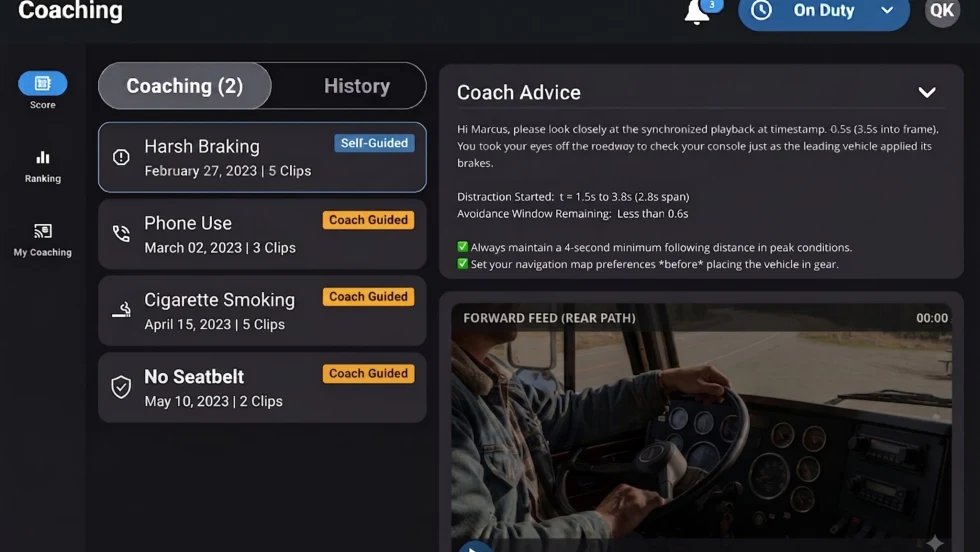
Platform Science Adds Dispatch and Safety Tools
Four additions to PS Fleet help fleets monitor loads, manage driver coaching, share truck locations and adjust video system settings.
Read More →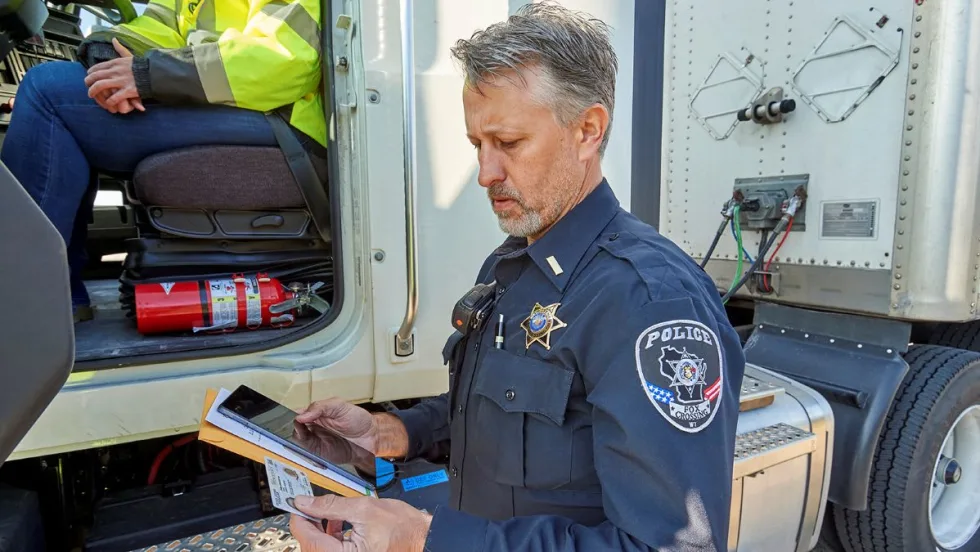
When Language Stops the Truck: The Return of ELP Out-of-Service Orders
English language proficiency rules for commercial drivers aren’t new, but renewed out-of-service enforcement has raised the stakes. Here’s what carriers need to know before a driver reaches a roadside inspection.
Read More →
Samsara Launches Custom AI Agent Builder
Agent Studio lets fleets create AI tools for hours-of-service monitoring, reporting and driver support, including agents that communicate by phone.
Read More →
Trucker Path Expands Reserved Parking Network
Trucker Path has added close to 6,000 more truck parking spaces to its Trucker Path Reserved Parking Network with the addition of Safe Truck Parking.
Read More →
EEOC Sues Texas Trucking Company Over Driver Age Limits
The agency says Trancasa USA rejected applicants over 65 and applied tougher driving-record standards to those over 60.
Read More →
Nussbaum, Roehl Announce Second Driver Pay Increase This Year
This year has seen a swath of major truck driver pay increases as freight capacity has tightened.
Read More →
From One Generation to the Next: How Mentorship Builds Safer Truck Drivers
After three decades in trucking, Harold Perry shares what he's learned about driver safety, mentorship, and helping the next generation build confidence behind the wheel.
Read More →
Truck Drivers Need More Than Another Alert
Fleets have more visibility into truck health, safety events, and driver activity than ever. The next challenge is turning all that information into useful guidance for the person who has to decide what to do next.
Read More →
FMCSA Removes 110 Truck Driver Training Schools from Certified ELDT List
Federal regulators also are targeting more than 160 additional training providers and launching a nationwide audit of third-party CDL skills testers as part of a broader crackdown on trucking fraud.
Read More →
Hours of Service Pilot Programs: FMCSA Readies for 2027 Rollout
Two pilot programs could eventually reshape hours-of-service rules, giving truck drivers options to pause their 14-hour clock or use longer split sleeper rest periods.
Read More →